

What Does Feldenkrais® Feel Like? A Practitioner Explains
A sensory tour of your first lesson: the floor, the voice, the tiny movements, the long rests, and the light, tall feeling many people stand up with.
In short
Feldenkrais feels quiet, slow, and small: you lie on a mat while a voice guides tiny movements with long rests. During a lesson people often feel warmth and heaviness. Afterwards, many feel lighter, taller, and calmer. It feels more like listening than exercising.

Prefer to ease in gently?
See a few gentle exercises for body awareness to try.
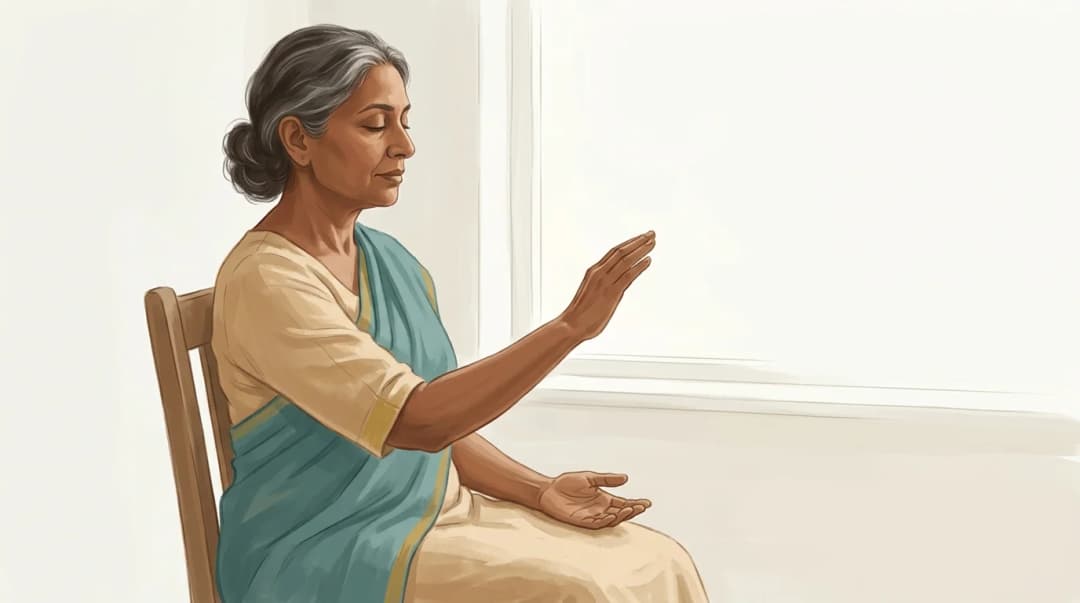
What does Feldenkrais® feel like? Mostly, it feels like lying on the floor and listening: to a calm voice, and to your own body. You are usually on a mat or a rug, sometimes on a bed or in a chair. Shoes come off. Eyes can close if you like. There is nothing to watch and nothing to copy. A teacher describes a movement, you try it slowly, and then you rest. I have watched hundreds of people through their first lesson, and almost all of them are surprised by how quiet it is.
Many people arrive after years of movement that hurt or wore them out. About 1.71 billion people worldwide live with musculoskeletal conditions, conditions that affect the muscles, bones, or joints (WHO, 2022). That is a lot of people looking for a gentler way to move. The Feldenkrais Method offers one, built on slow movement and close attention rather than effort.
Slow, small, and full of pauses
The pace surprises people first. A lesson moves slowly, with more pauses than you expect. You try a movement a few times, then you stop and lie still, sometimes for a full minute. These rests belong to the lesson; the learning settles in during them.
The size surprises people next. The movements are small. Sometimes so small that a person watching from across the room would barely see them. If you are used to exercise, you will probably make them too big at first. Many people are asked to make them smaller still, and that is often when something starts to shift.
What the movements feel like: more listening than exercising
Through it all, you are asked to notice things. Which shoulder touches the floor more. Whether your head rolls further to one side. Where your breath goes when you lift an arm. It feels more like listening than exercising. The lesson format that works this way is called Awareness Through Movement®, and the name is precise: the awareness is the work.
During a lesson, certain sensations come up again and again. Warmth. Heaviness. The floor seeming to spread and soften under you. One side of the body feeling longer, clearer, or more detailed than the other after you have worked with it. None of these are goals. They are simply what close attention tends to produce.
What Feldenkrais does not feel like
There is no stretch burn. No muscle fatigue, no sweat, no counting of reps. You will not feel your heart pound or your legs shake. It does not feel like a workout, and it does not feel like a stretch class. It does not feel like a massage either, since nobody touches you in a group or audio lesson; the change comes from your own moving and noticing. If you finish a lesson feeling worked, you probably did too much, and next time you can do less.
How people feel afterwards
Standing up after a first lesson is often the moment people understand. The common reports: lighter, taller, calmer, more room to breathe. Some feel pleasantly tired, the way you might after a good walk. And some feel nothing much at all the first time, which is normal too. Sensing small differences is a skill, and like any skill it grows. At Feldy, I teach these lessons as short audio recordings, so people can find that standing up moment at home, on their own floor.
The reactions people are shy to mention
Almost everyone meets these at some point: boredom. Drifting off in the middle of a movement. Falling asleep during a rest. And the quiet worry, am I even doing this right? Let me answer that one plainly. There is no right shape to hit. If you are moving gently, staying comfortable, and noticing something, anything at all, you are doing the lesson. Drifting and dozing usually mean your nervous system is letting go of effort, which is close to the point.
Find where to start
If you want to feel this for yourself, our somatic exercises for beginners page gives you gentle lessons to lie down with today. For a wider view of lesson formats, teachers, and costs, read our guide to getting started with Feldenkrais.
Curious which practice would feel right? Take the 60 second Movement Match quiz: answer three, and one approach comes back chosen for how you like to move.
Learn to listen to your body
Now for the practice that trains it. The Feldy program sharpens your attention through slow, attentive Feldenkrais® lessons, so everyday movement feels lighter and more your own. Gentle, guided, and self-paced.
Start my free 7-day trialNo credit card needed.
Common Questions about what Feldenkrais feels like (FAQ)
What is the best first Feldenkrais lesson to try?
A short lesson lying on your back, with gentle rolling or breathing movements, suits most people best. Look for a beginner lesson of 15 to 25 minutes, done on a carpeted floor or a firm mat. The best first lesson is any one where you can stay comfortable and curious the whole way through.
What should I avoid doing during my first Feldenkrais lesson?
Avoid pushing into pain, stretching to your limit, or trying to do the movement perfectly. Skip anything that makes you brace or hold your breath. If a position hurts, make the movement smaller, or simply imagine it, which is a normal part of the method.
Is it normal to feel nothing after my first Feldenkrais lesson?
Yes, completely normal. Some people notice clear changes after one lesson, while others need several before anything registers. Sensing small differences is itself a skill, and it sharpens with practice, so a quiet first lesson says nothing about how far you can go.
How often should I do Feldenkrais lessons?
A few lessons a week works well for most people, and short daily practice is even better. Regularity matters more than length. Ten to twenty calm minutes counts as a full practice, and because nothing is strained, you rarely need recovery days between lessons.
How long does it take to notice a change from Feldenkrais?
Many people feel lighter or taller right after a lesson, though that feeling may fade within hours at first. With regular practice over a few weeks, the changes tend to last longer and show up in daily life. Everyone has a different pace, and a slower pace is not a worse one.
How is Feldenkrais different from a gentle yoga or stretching class?
Yoga and stretching usually ask you to reach toward your full range and hold positions there. Feldenkrais asks you to stay well inside your comfortable range and pay close attention instead. You tend to leave a yoga class feeling worked and stretched, and a Feldenkrais lesson feeling rested and reorganized. Both can suit the same person on different days.
Learn to listen to your body
See the programRelated resources
Somatic Movement Classes: What They Are and How to Choose
What actually happens in somatic movement classes, the main lineages you will meet, and how to choose between in person and online sessions.
Somatic Movement Therapy: What It Is and How It Helps
Somatic movement therapy is a gentle, attention based practice that works with tension, stress, and long held pain through slow movement. What it is, and who it helps.
Your balance got better, but did your sense of where your body is get better too
Ready to start moving better?
Gentle, guided lessons for your body. Try your first one free, no credit card required.