
Foot Exercises for Arthritic Feet: A Gentle Seated Lesson
A slow lesson for stiff, achy feet. You stay seated, the movements are tiny, and you decide how much is enough on the day.
Before you begin. This is gentle movement education, not medical advice. If a joint is hot, red or swollen, or you are in a flare, rest and contact your doctor. If you have diabetes or numb feet, check with your doctor or podiatrist first and look at your feet daily.
The lesson
About 8 minutes. Move slowly, do less than you can, and stay well below any pain. Rest whenever you need to.
Prefer to listen than read?
Feldy voices gentle lessons like this for body awareness, so you can close your eyes and follow along.
- 1
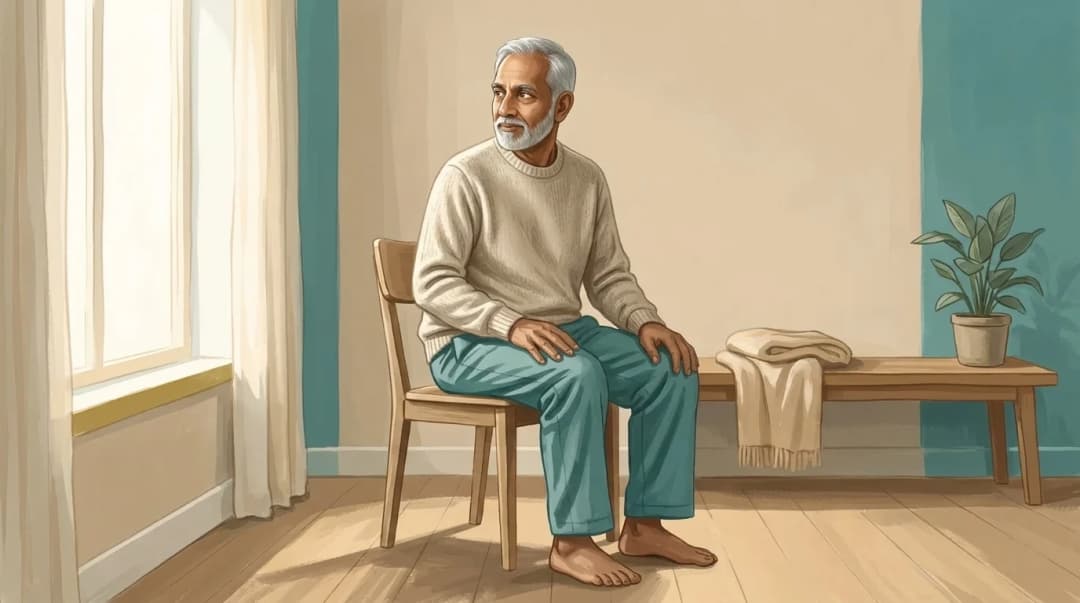
Sitting down. Sit on a steady chair with both feet flat. Keep every movement smaller than you think you need, or only imagine it.
- 2
Meeting the floor. Sense how your feet rest on the floor. Which parts press, and which barely touch? Does one foot feel heavier?
- 3
Toes lifting. Lift your toes a little, heels staying down, then lower them. Go slowly, a few times. Then stop and rest.
- 4
The arch rocking. Let one foot tip so the inner edge lightens, then the outer edge. Notice the arch. Stop and rest.
- 5
The heel sliding. Slide one heel a little back along the floor, then forward again. Notice how far the movement travels up your leg. Rest.
- 6
The closing comparison. Rest and sit still, feeling both feet on the floor. What do you notice now, compared with the start?
Let Feldy guide you, eyes closed
You just read these steps. In the Feldy program, a calm voice guides you through each gentle move, so your attention can stay in your body instead of on the screen.
Try Feldy Free for 7 daysNo credit card needed.
Foot exercises for arthritic feet can be very small and still be worth doing. Today's lesson takes about eight minutes, and you stay seated the whole time. This is a Feldenkrais® style lesson. You move slowly, you rest often, and you pay attention to what you feel.
A lesson for stiff, achy feet
Read the steps first, then try them with bare feet if that is comfortable. Choose a calmer day. Many people find it easier after a warm shower, when the feet feel looser. Nothing here needs a stretch or a count. When a movement feels unwelcome, shrink it until it is easy, or just picture it. That still counts.
Why gentle, small movements suit arthritic feet
Arthritis means a joint is inflamed or worn, which can leave it sore and stiff. Each foot has 26 bones and many joints, so there is a lot to feel. Osteoarthritis, the wear related kind, often shows up at the big toe joint and in the middle of the foot. Rheumatoid arthritis, which comes from the immune system, often starts in the small joints of the toes. The NHS notes that the small joints of the hands and feet are often the first to be affected (NHS, 2023).
Stiff joints do not like being pushed. Large, forced movements can leave a foot sorer afterward. Small, slow ones give you a chance to notice what is easy today. That is the idea behind the lesson. You are not trying to loosen anything by force. You are asking your feet to move a little, and watching how they answer.
Many people also stop sensing their feet clearly when they hurt. They guard them and walk around the soreness. A slow lesson can bring some of that awareness back. We do not claim it will lessen pain or change the joints. You may find your feet feel more familiar and a little easier to move.
When to try foot exercises for arthritic feet
Pick a time when your feet are calm. A warm shower or a few minutes with your feet in warm water can help you settle. Keep the room quiet and sit in a chair that does not wobble. Wear nothing tight on your feet or ankles.
If you are not sure how long to go, stop early. Eight minutes is a guide, not a target. The best sign that you have done enough is that you could do a little more.
Who should skip or pause
If a joint is hot, red or swollen, or you are in a flare, skip the lesson. Rest the foot and contact your doctor. Skip it too if you have an open sore or a blister on the foot.
If you have diabetes, or you cannot feel parts of your feet well, check with your doctor or podiatrist first. Look at your feet every day, because you may not feel a small injury, and test warm water with your hand rather than your feet. Speak with your doctor about any new or worsening foot symptom too.
How this differs from other approaches
Many people like towel scrunches, calf stretches or foot rolling. These are different methods with a different aim. They use effort or stretch, and some people with arthritic toes find them uncomfortable. This lesson uses attention and very small range instead.
Whatever you choose, it can sit alongside the care your doctor or podiatrist gives you.
You can also try our intrinsic foot exercises when your feet feel calm, or the seated foot exercises for seniors. Both cover different ground. If you want a wider picture of joint discomfort, our Feldypedia page on osteoarthritis and joint discomfort explains how stiff joints behave from day to day.
To practice with a guiding voice, the free trial gives you a week of Feldy lessons.
Common Questions about foot exercises for arthritic feet (FAQ)
What is the best foot exercise for arthritic feet?
There is no single best one. A good place to start is a small, slow toe lift while seated, heels down. It asks little of your joints and needs no equipment. Stop when the movement stops feeling easy, and try again another day.
What foot exercises should I avoid with arthritis?
Avoid forcing a toe into a stretch, pressing on a hard ball under a sore arch, and any movement that makes a joint hotter or sharper. Skip standing balance work unless something steady is within reach. If a movement hurts, make it smaller or stop.
Is it safe to exercise arthritic feet?
Gentle movement is often comfortable, but it depends on the day. Rest during a flare, when a joint is hot, red or swollen, and call your doctor. With diabetes or numb feet, check with your doctor or podiatrist first and look at your feet daily.
How often should I do these exercises?
A few minutes on a calmer day is plenty. Some people like to practice most days, others twice a week. Short and easy is better than long and tiring. If your feet feel more sore the next day, do less next time.
How long until I notice anything?
It varies, and nobody can promise a change. Some people notice their feet feel easier to sense after the first session. Others notice little at first. Treat it as a way to get to know your feet, not as a race.
How is this different from towel scrunches or calf stretches?
Towel scrunches ask the toes to grip, and calf stretches pull on tissue. This lesson does neither. The movements are tiny and slow, and the focus is on noticing how your foot moves, with no effort to push through.
Learn to listen to your body
See the programRelated resources
Short Foot Exercises: A Gentle Way to Sense Your Arch
A slow, seated lesson in the small doming movement behind short foot exercises, done with attention rather than effort, and comfortably below any strain.
Aqua Exercises for Arthritis: Gentle Water Movement, Feldenkrais® Style
Aqua exercises for arthritis that use the water as a soft support for sore joints, with a slow, attentive approach that stays well below any pain.
Shoulders turned further after a slow, varied lesson than after repeating one twist
Ready to start moving better?
Gentle, guided lessons for your body. Try your first one free, no credit card required.