
Wrist Strengthening Exercises: A Gentle Lesson for Easy Strength
A slow seated lesson for wrists that feel weak with jars, bags or pushing up from a chair, built on attention and light effort instead of strain.
Before you begin: general information, not medical advice. Stop if you feel pain, dizziness or anything unsafe. Safety note
This article is general information, not medical advice. Feldy's lessons are gentle movement education that sits alongside your medical care. Let curiosity lead: notice what feels easy and let that guide each movement. Move slowly, and stop if you feel pain, dizziness or anything unsafe. If you have a health condition or new symptoms, or you are unsure whether this suits you, talk to your doctor. If something feels like an emergency, seek emergency medical help.
More in our Terms: educational content and safe movement.
The lesson
About 5 to 10 minutes. Move slowly, do less than you can, and stay well below any pain. Rest whenever you need to.
Prefer to listen than read?
Feldy voices gentle lessons like this for body awareness, so you can close your eyes and follow along.
- 1
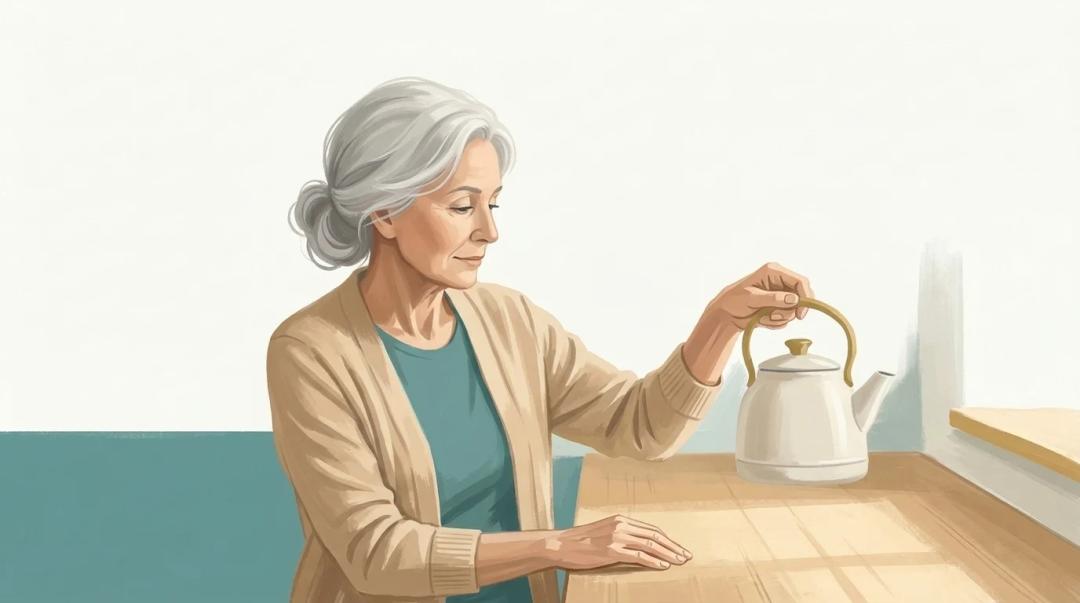
At a table. Sit at a table with one forearm resting on it, the hand just past the edge. Go only as far as is comfortable.
- 2
Scan the arm. Notice how the forearm rests on the table. How heavy does the hand feel? Is the shoulder easy?
- 3
Slow lifts. Lift the hand slowly and lower it, a few times. Notice your forearm and shoulder, then rest.
- 4
Side to side. Tilt the hand toward the thumb, then toward the little finger. Make it smaller if anything complains. Then rest.
- 5
A soft towel. Place a soft towel in your palm. Close your fingers around it gently, then open them slowly. Rest the hand.
- 6
Weight on the hands. Stand and rest both palms on the table. Lean a little weight onto your hands, then back. Rest between tries.
- 7
Compare. Sit again. Sense the hand you moved and the one you did not. What has changed, if anything?
Let Feldy guide you, eyes closed
You just read these steps. In the Feldy program, a calm voice guides you through each gentle move, so your attention can stay in your body instead of on the screen.
Try Feldy Free for 7 daysNo credit card needed.
Wrist strengthening exercises can start very gently, and the lesson above shows one way to begin. If your wrists feel weak when you open a jar, carry a bag or push up from a chair, this slow seated practice builds control first. It uses a method called Feldenkrais®, which is based on attention, not strain.
Why wrists feel weak
Strength in the wrist does not come from the wrist alone. Most of the muscles that move it sit in your forearm and reach down to the hand through long tendons. The elbow and shoulder join in too. When one part works too hard or too little, the whole arm can feel weak.
Weakness has many everyday reasons. A wrist that was sprained, even one that has healed, can feel unsure for a while. Long days with a keyboard or a phone keep the hand in a few shapes. Our Feldypedia entry on repetitive strain from keyboard use describes that pattern. Musculoskeletal conditions are very common worldwide, affecting about 1.71 billion people (WHO, 2022), so you are far from alone.
How to use these wrist strengthening exercises
Give the lesson five to ten unhurried minutes. Sit at a table, with your forearm resting on it or on your thigh. Move slowly and keep the effort light, as if you used about a quarter of your strength. A movement you can repeat easily teaches you more than one you have to push through.
Rest after every movement. If something hurts, make the movement smaller, or only imagine it. That counts as practice. If anything is sharp or keeps hurting, stop.
What the lesson asks of your hand
Each step has a small job.
- Slow lifts and lowers let you feel how the forearm does the work.
- Side to side tilts visit directions the hand rarely uses in a day.
- A soft towel in your palm gives your fingers something easy to close around. It is close to the feeling of a jar lid or a handle.
- Weight through the hands on a table lets you meet the table, while standing, with a little of your body weight. Do only as much as is comfortable.
Notice your shoulder as you go. Does it join in when the hand lifts, or stay quiet? There is no right answer. You are just learning what your arm already does.
Adding load to your wrist strengthening exercises
Once these movements feel easy, many people add a little simple loading. That might be a light can of food in your hand while you lift and lower, or a soft resistance band. Add it slowly, one change at a time. Keep every movement comfortable. Skip it whenever the wrist feels irritated.
If you have had a fracture or surgery, your treating team's plan comes first. Ask them what is right for you before you add anything.
Where Feldy fits
The daily audio lessons I record for Feldy explore the same idea across the whole body: easy effort, curious attention and plenty of rest. The free 7 day trial is a simple way to see whether the approach suits you. You can also read more on our body awareness page.
If you want a more mobile wrist before you build strength, try our lesson on wrist stretches that invite the whole arm. To sharpen your sense of where the hand is, see the proprioception exercises for the wrist.
When to talk to your doctor
Talk to your doctor if wrist pain comes with swelling, if the weakness began after a fall, or if you have numbness in your fingers. Gentle movement is not a substitute for finding out what is going on.
Find where to start
Weak wrists often come with tired shoulders and a full day. If you cannot tell where to begin, a quick quiz can suggest a movement method to try.
Curious which movement method suits you? Try the Movement Match quiz, about a minute, and see the method it suggests.
Next time you lift a mug or open a jar, notice whether your shoulder joins in or holds still.
Common Questions about wrist strengthening exercises (FAQ)
Are wrist strengthening exercises safe, and who should skip them?
For a wrist that is simply tired or feels weak, this lesson is gentle: everything is slow, light and below any pain. You can make a movement smaller or only imagine it. Skip it for now if the wrist is swollen, if it follows a fall, or if you have numbness in your fingers, and talk to your doctor first. After a fracture or surgery, your treating team's plan comes first.
How often should I do wrist strengthening exercises?
Most days, a short session of a few unhurried minutes suits the wrist better than a long one. Brief, regular visits give the arm time to get used to the work. Let comfort decide the amount on any given day. If your hands are very tired, resting them is part of the practice too.
How long until my wrists feel stronger?
Everyone is different, so there is no fixed timeline. Some people notice an easier, more even movement in a single sitting. Real change in how a jar or a bag feels usually takes weeks of regular, light practice. If nothing changes after several weeks, talk to your doctor.
How is this different from lifting weights for the wrist?
A weight routine builds load, usually with counted repetitions. This lesson works on how the wrist, forearm and shoulder share the effort, and on feeling what your hand is doing. Many people add simple loading later, such as a light can of food or a resistance band, once the movements feel easy. The two can sit side by side.
What is the best wrist strengthening exercise for opening jars?
Jar lids ask the wrist, fingers and forearm to work together. The towel step in the lesson, where you close your hand around something soft and let go slowly, is close to that task. Try it with the forearm resting, then notice whether your shoulder joins in when you open a real jar.
What should I avoid when my wrist feels weak?
Avoid anything sharp, anything that pushes into pain, and heavy weight on a bent wrist. Skip fast, jerky movements. If a step hurts, make it smaller or stop and rest. Pain that keeps coming back, or a wrist that is swollen, is a reason to talk to your doctor.
When should I see a doctor about a weak wrist?
Talk to your doctor if the weakness started after a fall, if there is swelling, or if you have numbness or tingling in your fingers. Talk to them too if it keeps getting worse, or if everyday tasks are becoming harder. Gentle movement sits alongside medical care and does not replace it.
Learn to listen to your body
See the programRelated resources
Wrist Stretches That Invite the Whole Arm: A Gentle Lesson
A short guided lesson of wrist stretches done as exploration: small circles, easy forearm rolls, and a shoulder that joins in, instead of positions you hold.
Proprioception Exercises for the Wrist: A Gentle Lesson
Gentle proprioception exercises for the wrist: a short seated lesson to sharpen your sense of where the wrist rests and moves, building steadiness through awareness.
Tennis elbow that lingers: grip gained more with motor learning added
Ready to start moving better?
Gentle, guided lessons for your body. Try your first one free, no credit card required.