

Neck Stretches for Forward Head Posture: A Gentle Feldenkrais® Lesson
Neck stretches for forward head posture that soften the pull instead of yanking on it, with a short lying down lesson that helps the head find its way home.
Before you begin. General self-care, not medical advice. Ask a doctor or physical therapist before starting new movement work if you have a diagnosed neck condition, cervical disc issues, dizziness on head turn, arm tingling, or a recent whiplash. Keep every movement well inside comfort.
The lesson
About 5 to 10 minutes. Move slowly, do less than you can, and stay well below any pain. Rest whenever you need to.
Prefer to listen than read?
Feldy voices gentle lessons like this for neck and upper back, so you can close your eyes and follow along.
- 1
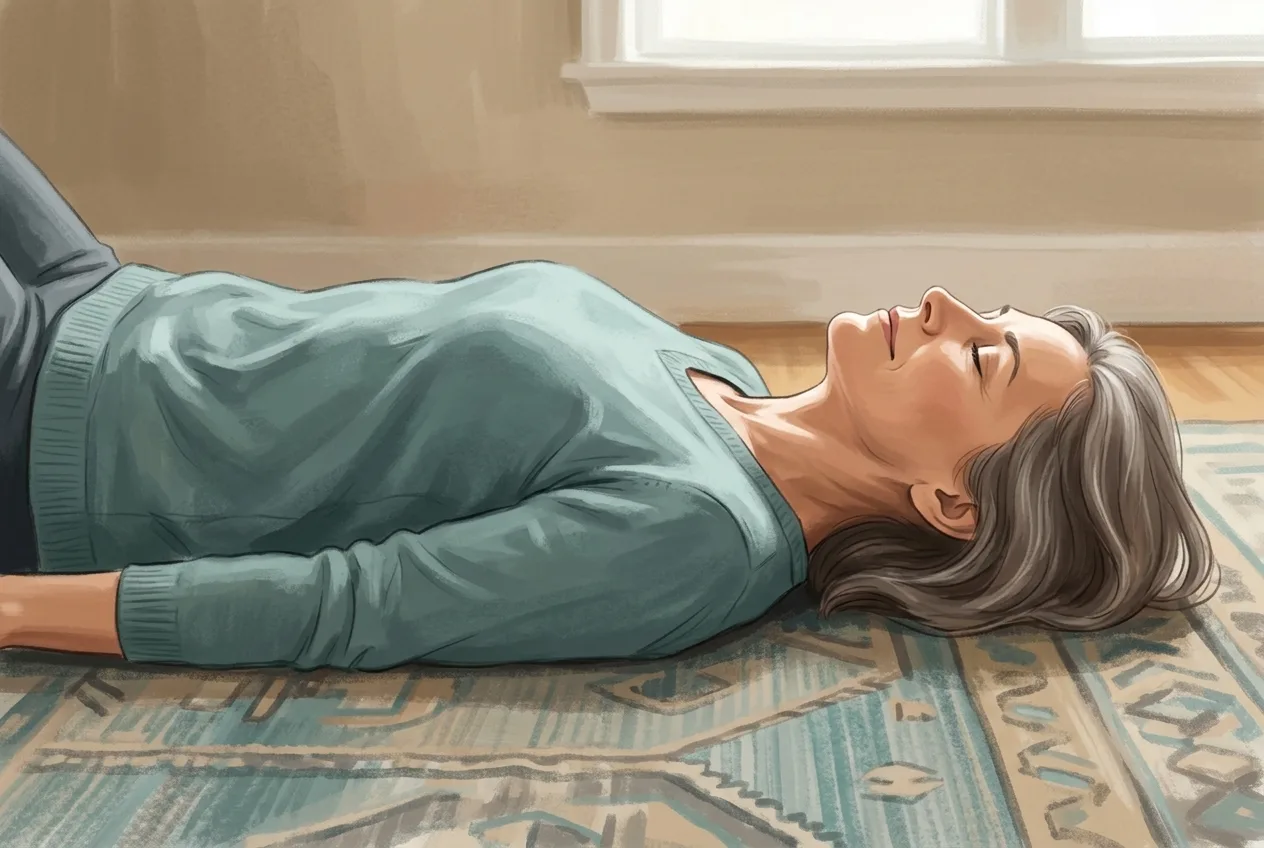
Settling with the floor. Lie on your back, knees bent, feet standing about pelvis width apart. Notice where your head rests on the floor and whether the chin points more toward the ceiling or more toward the chest.
- 2
Feeling the back of the head. Bring quiet attention to the part of the skull that touches the floor. Is it a small spot or a wide one, and does the weight feel even from left to right?
- 3
Tiny nods, no effort. Let the chin drift a very small amount toward the throat, then back to neutral, as if a tiny yes were passing through the head. Move slowly enough to feel the skin at the back of your neck lengthen and shorten.
- 4
A soft turn to each side. Slowly turn your head a little toward one shoulder, then back through the middle, then a little the other way, only as far as feels easy. Does one side move more smoothly than the other?
- 5
Rest and long exhale. Let the head settle in the middle, arms heavy. Let each out breath grow a touch longer than the in breath, and let the whole back of the neck grow quieter.
- 6
Closing scan. Notice the contact of your head with the floor now. What, if anything, feels different from when you began?
Let Feldy guide you, eyes closed
You just read these steps. In the Feldy program, a calm voice guides you through each gentle move, so your attention can stay in your body instead of on the screen.
Try Feldy Free for 7 daysNo credit card needed.
If your head sits a little in front of your shoulders by the end of the day, these neck stretches for forward head posture are not about yanking it back or holding a corrected shape. They are about softening the pull the neck is quietly making all day, so the head can find its own way to a lighter place on top of the spine. The Feldenkrais Method® approaches a stiff, over working neck by teaching it to do less, not more, and that starts by lying down and letting the floor take the weight of the head for a while.
Why forward head posture is a muscle habit, not a shape to force
The head is heavy, about the weight of a bowling ball, and every centimetre it drifts forward asks the small muscles at the back of the neck to work harder to keep the eyes level. Over hours at a screen or phone those muscles simply stay on. They do not get a chance to switch off, and after long enough that state of quiet clenching starts to feel like the neutral position. Pulling the chin back on top of an already tired neck rarely wins that argument. What tends to help is giving the neck new information: slow, small, comfortable movement, done with attention, so the nervous system can update its picture of where the head lives.
You are far from alone in this. Musculoskeletal conditions affect around 1.71 billion people worldwide (WHO, 2022), and neck strain from long hours of screen work is one of the most common flavours. The gentle route out is the one every tired neck responds to.
How these neck stretches for forward head posture actually work
The lesson above starts on the floor for a reason. Sitting and standing both keep the neck busy holding the head against gravity, so the deep muscles rarely fully quiet. Once the floor takes over that job, the neck has room to notice what it has been doing and to try something else. Tiny nods, soft side to side turns, and a longer exhale are not stretches in the usual sense. They are small conversations with a system that has been on duty all day, letting it work out for itself where the head is lightest to carry.
If you would like the wider picture, our Feldypedia entry on desk posture and chronic neck pain explains why long hours at a screen train the neck into that forward hover, and our Feldenkrais for neck tension lesson takes the same soft approach a step further. When you would rather have a voice guide you than read from a page, the Feldy free trial gives you a week of short audio lessons in this same unhurried style.
What to do the rest of the day
The lesson helps most when it lives inside a friendlier day. Raise the screen so the top of it sits at brow height. Put the phone at eye level rather than lap level when you can. Let your gaze move across whatever is around you every so often, so the eyes stop dragging the head forward toward small text. None of this is about willpower or perfect posture. It is about giving the neck fewer reasons to grip in the first place, and pairing that with these slow, small movements so it also gets clearer cues that it is safe to let go.
Find where to start
Every neck is a little different, and the question is which short lesson best suits yours today. Feldy's Movement Match quiz asks four quick questions and points you to a matched movement method, so you can start where the ease is most likely to land.
Wondering which method suits you? Take the Movement Match quiz, four quick questions in about two minutes, to find your movement method.
Any lesson that meets you where the neck actually is today is the right one to start with.
Common Questions about neck stretches for forward head posture (FAQ)
Are neck stretches for forward head posture safe to do at home?
For most people, small and slow movements kept comfortably inside an easy range tend to be a safe way to start at home. Stop if anything sharpens the pain, brings on dizziness, sends tingling down an arm, or feels unsteady. Please check with a clinician first if you carry a diagnosed neck problem, cervical disc issues, or a recent whiplash.
How often should I practice these neck stretches?
Short and frequent tends to work better than long, heroic sessions. Five to ten minutes on most days, ideally in bits sprinkled around a screen filled day, gives your nervous system many small chances to update how it carries the head, without asking the neck to work hard for long.
How long until neck stretches for forward head posture make a difference?
Many people notice the head sitting a little easier for a while after a single slow session. Steadier changes in how the neck feels through a normal day usually build over weeks of little and often practice, and depend a lot on what you do the rest of your waking hours at the desk and phone.
How is this approach different from chin tucks?
Chin tucks push the chin back to hold a target shape and often ask the neck to grip while doing it. This approach invites the head to find a lighter place through slow, small movements and attention, so the deep neck muscles get to soften rather than clench. Many people find both useful; this one is kinder on a sore or tired neck.
What is the best exercise for forward head posture?
The best exercise for forward head posture is usually the one that keeps the neck soft while it moves. Slow, small nods and turns done lying down, with careful noticing, tend to help more than pulling the chin back forcefully. What matters is smallness, ease, and repetition through the day, not the size of any single movement.
What neck stretches should I avoid with forward head posture?
It is generally wise to skip fast neck rolls, deep sustained end range stretches, and anything that yanks the head into a position that stings. Aggressive chin tucks that make the neck grip, or holds that last long enough to breed effort, are also worth easing off. The steadier direction is gentle, small, and easy to steer, keeping well below any pain.
When should I see a professional about neck pain?
Check in with a doctor or physical therapist if pain is sharp or spreading, if there is dizziness, tingling or weakness in an arm or hand, if headaches keep worsening, or if the neck simply is not settling over weeks. Get prompt care for symptoms after a fall or car accident. They can assess what is happening and tailor movement work to your situation.
A softer neck, a freer upper back
See the programRelated resources
Pain on the Right Side of Your Neck: Gentle Ways to Ease It
Why pain on the right side of the neck is usually muscular, the warning signs worth checking, and a gentle, awareness-based way to help that side settle.
Standing Desk Exercises: Gentle Movement Breaks
Standing desk exercises that ease neck, shoulder, and back tension with small, slow movement breaks you can take right where you work.
Why neck pain trials keep working on the mid back, and what the pain score misses
Ready to start moving better?
Gentle, guided lessons for your body. Try your first one free, no credit card required.