
Central Sensitization: Why Pain Gets Louder and What Helps
When the nervous system turns up the volume, light touch can hurt and pain spreads. A plain language guide to what is happening and what tends to help.
In short
Central sensitization is when the nervous system becomes more reactive, so it turns up the volume on signals from the body. Light touch can hurt, and ordinary pain can feel bigger and last longer. The pain is real. It is thought to play a role in fibromyalgia and some other long term pain conditions.

Prefer to ease in gently?
See a few gentle exercises for fibromyalgia to try.
Before you begin. General information about pain, not medical advice or a diagnosis. New pain, pain that is changing or spreading, or pain with fever, weight loss, numbness or weakness should be assessed by a doctor. Sudden loss of bladder or bowel control needs emergency care.
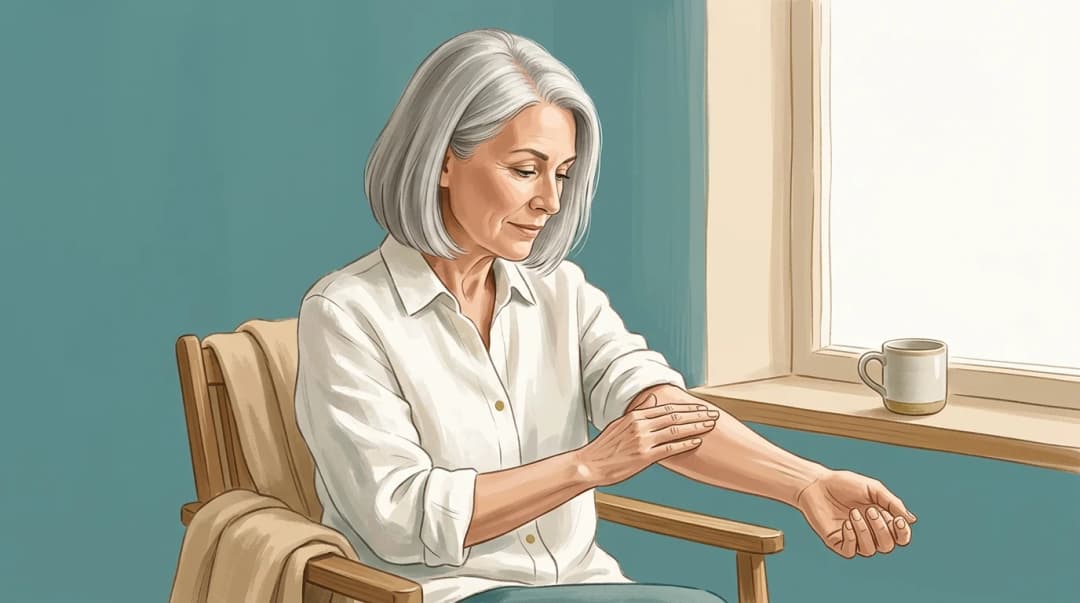
Central sensitization is a name for something many people with long term pain feel but struggle to explain. A hug hurts. The waistband of your trousers feels sore by evening. A small knock lingers for days. Pain moves around the body and does not match any single injury. If this sounds familiar, it can help to know there is a way of understanding it that makes sense, and that the pain is real.
What central sensitization means
Your nervous system is always listening to the body. Nerves send signals about pressure, temperature, and movement up through the spinal cord to the brain. The brain then decides how much attention each signal needs. Pain is one of its answers.
In central sensitization, this system becomes more reactive. The word "central" refers to the spinal cord and brain, the central part of the nervous system. "Sensitization" means it has become more sensitive. The International Association for the Study of Pain (IASP) describes it as pain signalling nerve cells in the central nervous system responding more strongly to their normal input, or to input that would usually be too weak to register, in its pain terminology.
A simple picture is a volume knob. In most people, the knob sits in the middle. Ordinary touch registers as touch. A bump registers as a small, short pain. With central sensitization, the knob has been turned up. The same signals arrive, but they come through louder.
Allodynia and hyperalgesia, explained simply
Two medical words come up again and again when people read about central sensitization.
Allodynia means pain from something that should not normally hurt. Light touch, a soft sheet on the skin, or a friendly hand on the shoulder can feel sore.
Hyperalgesia means more pain than expected from something that does normally hurt. A small knock or a pinch feels much bigger, and it often lasts longer.
Other signs people describe include pain that spreads beyond one area, extra sensitivity to light, noise, smells or cold, and pain that flares after stress or a bad night. None of these signs proves central sensitization on its own. A questionnaire called the Central Sensitization Inventory is sometimes used in clinics and research, but it does not diagnose anything by itself.
Nociplastic pain: the newer term
In 2017 the IASP added a third category to its official pain terminology. Before that, pain was mainly described in two ways. Nociceptive pain comes from tissue that is damaged or inflamed, like a sprained ankle or an arthritic joint. Neuropathic pain comes from damage to, or disease of, the nerves or the nervous system itself.
Nociplastic pain is the new category. It describes pain that arises from changed pain processing, when there is no clear tissue damage or nerve injury to explain it. Central sensitization is one of the main ideas researchers use to explain how nociplastic pain happens. The two terms overlap a lot, and you will often see them used side by side.
Many people have more than one type. Someone with knee arthritis can have nociceptive pain from the joint and also some sensitization on top of it. That mix is one reason long term pain can be hard to untangle.
Where central sensitization is thought to play a role
Researchers think central sensitization is part of the picture in several long term conditions. These include:
- Fibromyalgia, where widespread pain, tenderness, fatigue, and poor sleep go together. Some estimates cited by the NHS suggest nearly one in twenty people may be affected by fibromyalgia to some degree (NHS, 2022).
- Some chronic low back pain, especially pain that has lasted a long time and spread beyond the back.
- Irritable bowel syndrome (IBS), where the gut seems more sensitive to normal digestion.
- Migraine and some other headaches, where the head and skin can become tender during or between attacks.
- Jaw pain (TMD) and some chronic pelvic pain.
The word "some" matters. Not everyone with these conditions has marked sensitization, and the science is still developing. Our Feldypedia entry on fibromyalgia and widespread sensitivity goes into the fibromyalgia side in more depth.
Is central sensitization syndrome a diagnosis?
You may see the phrase "central sensitization syndrome" online. It is worth being clear: this is not a formal diagnosis. Some researchers use "central sensitivity syndromes" as an umbrella idea, a way to group conditions that seem to share amplified pain processing. A doctor will diagnose a specific condition, such as fibromyalgia or IBS. They may then explain that central sensitization is thought to be one part of what is going on.
The pain is real
This point deserves its own heading, because many people with this kind of pain have been told, directly or not, that it is "all in their head".
It is not. Pain always involves the brain, for everyone. A broken wrist hurts because the brain processes the signals from it. In central sensitization, the change is in how those signals are processed. Studies of pain processing in fibromyalgia find measurable differences compared with people without it. Saying the nervous system is involved does not mean you are imagining the pain, causing it, or making it up. If you have felt doubted, our explainer on whether fibromyalgia is a real condition may be a relief to read.
What tends to help central sensitization
There is no single treatment. The approaches with the most support are ones that, over time, give the nervous system less reason to stay on high alert. Most work best together, and they sit alongside care from your doctor or pain team.
Understanding your pain. Learning how pain works, often called pain education, sounds too simple to matter. Reviews suggest it can ease pain and worry for some people, especially when it is combined with movement. Knowing that a flare does not mean new damage can make it less frightening.
Gentle, graded activity. International guidelines for fibromyalgia put regular exercise high on the list. The key word is graded: start well below what you can do and build up very slowly. Our guide to the boom and bust cycle explains how to find a steady pace.
Sleep. Poor sleep and pain feed each other. Even small changes, like a regular bedtime and a darker room, can help over time.
Stress care. Stress tends to turn the volume up. Slow breathing, time outdoors, talking therapies such as CBT, and support from people who understand can all play a part.
Medical care. Some medicines used for this kind of pain act on the nervous system rather than on one sore spot. Whether any of them suit you is a conversation for your doctor.
Gentle movement that gives the system quiet input
When the volume is turned up, many people stop moving because movement hurts. That makes sense in the short term. Over months, though, less movement often leaves the body stiffer and the nervous system just as sensitive.
The alternative does not have to be hard exercise. In my teaching, people with a sensitive system often do best with movement that is small, slow, and done with attention. Lying on your back, you might roll your head a little to one side and back, then pause. You notice what moves, where you hold your breath, and what the floor feels like under you. Nothing is stretched or pushed. You stop well before anything feels sore.
This is how the Feldenkrais Method® works. The Feldenkrais® approach asks what you notice rather than how far you can go. For a nervous system on high alert, that kind of quiet, safe input can be very different from bracing against pain. Many people notice they feel calmer and move a little more easily afterwards. The research on Feldenkrais® for fibromyalgia is still small, a handful of early studies, so I offer it as one gentle option, not a proven treatment.
If you would like to try this kind of movement, our page of exercises for fibromyalgia is the best next step. The lesson there begins lying down or propped up, so on heavy days it can be done in bed. Some people also find their thinking clears a little once the body settles, which our page on fibro fog explores.
When to see a professional
Central sensitization is something to understand with your doctor, not something to diagnose yourself. Pain that is new, spreading, or changing should be checked first, so other causes can be ruled out. Get prompt medical care if pain comes with fever, unexplained weight loss, night sweats, numbness, weakness, or changes in bladder or bowel control. Sudden loss of bladder or bowel control, numbness around the groin or buttocks, or weakness in the legs that comes on quickly needs emergency care: call emergency services or go to the emergency department.
It is also worth asking for help if pain is taking over your sleep, your mood, or your daily life. A pain clinic, or a psychologist who works with pain, can add a lot, and your doctor can help you find the right support. The Feldy program for fibromyalgia is designed to sit alongside that care, not replace it.
Find where to start
A sensitive nervous system usually does better with one small, steady practice than with a big new plan. The hardest part is often choosing where to begin.
Not sure which movement method fits you? Take the 60-second Movement Match quiz, gentle on a sensitive system, it asks about pace and comfort before naming one method.
Small, safe movement for a sensitive body
Now for movement that respects a sensitive body. The Feldy program stays well below pain, giving the nervous system room to soften through gentle Feldenkrais® lessons. Gentle, guided, and self-paced.
Start my free 7-day trialNo credit card needed.
Common Questions about central sensitization (FAQ)
What is central sensitization in simple terms?
It means the nervous system has become more reactive than usual. Signals from the body get amplified on their way to the brain, a bit like a radio with the volume stuck high. Touch, pressure or movement that would normally feel fine can feel sore, and pain that does come tends to feel stronger and last longer.
Is central sensitization pain real, or is it in my head?
It is real pain. The change happens in how the nervous system processes signals, and studies of people with fibromyalgia find measurable differences in how pain is handled. Saying the nervous system is involved does not mean you are imagining it, exaggerating it, or causing it by worrying.
Is central sensitization syndrome a real diagnosis?
No, not as a formal diagnosis. Central sensitization syndrome, or central sensitivity syndromes, is an umbrella idea some researchers use to group conditions that seem to share this amplified pain processing. Your doctor will diagnose a specific condition, such as fibromyalgia, and may then explain that central sensitization is thought to be part of the picture.
How is nociplastic pain different from other kinds of pain?
Nociceptive pain comes from tissue that is injured or inflamed, like a sprained ankle. Neuropathic pain comes from damage to, or disease of, the nerves, as in some sciatica. Nociplastic pain is the newer label, adopted in 2017, for pain that comes from changed pain processing when no clear damage explains it. Many people have a mix of more than one type.
What is the best exercise for central sensitization?
The best exercise is usually the one you can do regularly without a flare the next day. For many people that means short, gentle, slow movement, started well below their limit and built up very gradually. Walking, water exercise, and quiet movement done with attention are common places to start. Intensity matters less than steady, kind repetition.
What should I avoid if I have central sensitization?
Avoid long bursts of activity on good days followed by days of payback. Avoid stretching or pressing into pain, and programs that push you to work through it. Try not to let poor sleep and stress pile up unnoticed, since both tend to turn the volume up. And avoid stopping all movement, which often leaves the system more sensitive over time.
How often should I move, and is it safe?
A few gentle minutes most days usually suits a sensitive system better than one long session a week. Judge the dose by how you feel the next day, not in the moment. Gentle movement is generally considered safe, but if you have another medical condition or your pain is new or changing, check with your doctor first.
Can central sensitization get better, and how long does it take?
The nervous system can change, and many people find their sensitivity eases over months with steady pacing, better sleep, and gentle activity. Progress is rarely a straight line, and flares still happen along the way. Think in terms of weeks and months rather than days, and notice small shifts, like a better night or an easier walk.
When should I see a doctor about widespread pain?
See a doctor if your pain is new, spreading, or clearly changing, so other causes can be checked first. Get prompt care for pain with fever, unexplained weight loss, night sweats, numbness, weakness, or changes in bladder or bowel control, and emergency care for sudden loss of bladder or bowel control. Also speak to someone if pain is affecting your sleep, mood, or ability to manage daily life.
Small, safe movement for a sensitive body
See the programRelated resources
Can Chronic Pain Make You Tired? Why, and What Helps
Yes, and it is common. Here are the plain reasons pain and tiredness travel together, and the habits that tend to give some energy back.
Is Fibromyalgia a Real Disease? A Clear, Kind Answer
Is fibromyalgia a real disease? Yes. A plain-language look at what fibromyalgia actually is, why the doubt persists, and how gentle movement helps you live with it.
If fibromyalgia is autoimmune, removing the antibodies should have helped more than this
Ready to start moving better?
Gentle, guided lessons for your body. Try your first one free, no credit card required.