

Is Sitting on Your Knees Bad? What Actually Matters
Is sitting on your knees bad for the joints? Not in itself. Duration, variety, and whether you can get up again matter far more than the position you chose.
In short
Sitting on your knees is not bad for most healthy joints. What matters is duration and variety: kneeling for long unbroken stretches compresses the front of the ankle and knee and can numb the feet, while shifting position every ten to fifteen minutes keeps it comfortable and harmless.

Prefer to ease in gently?
See a few gentle exercises for knees and hips to try.
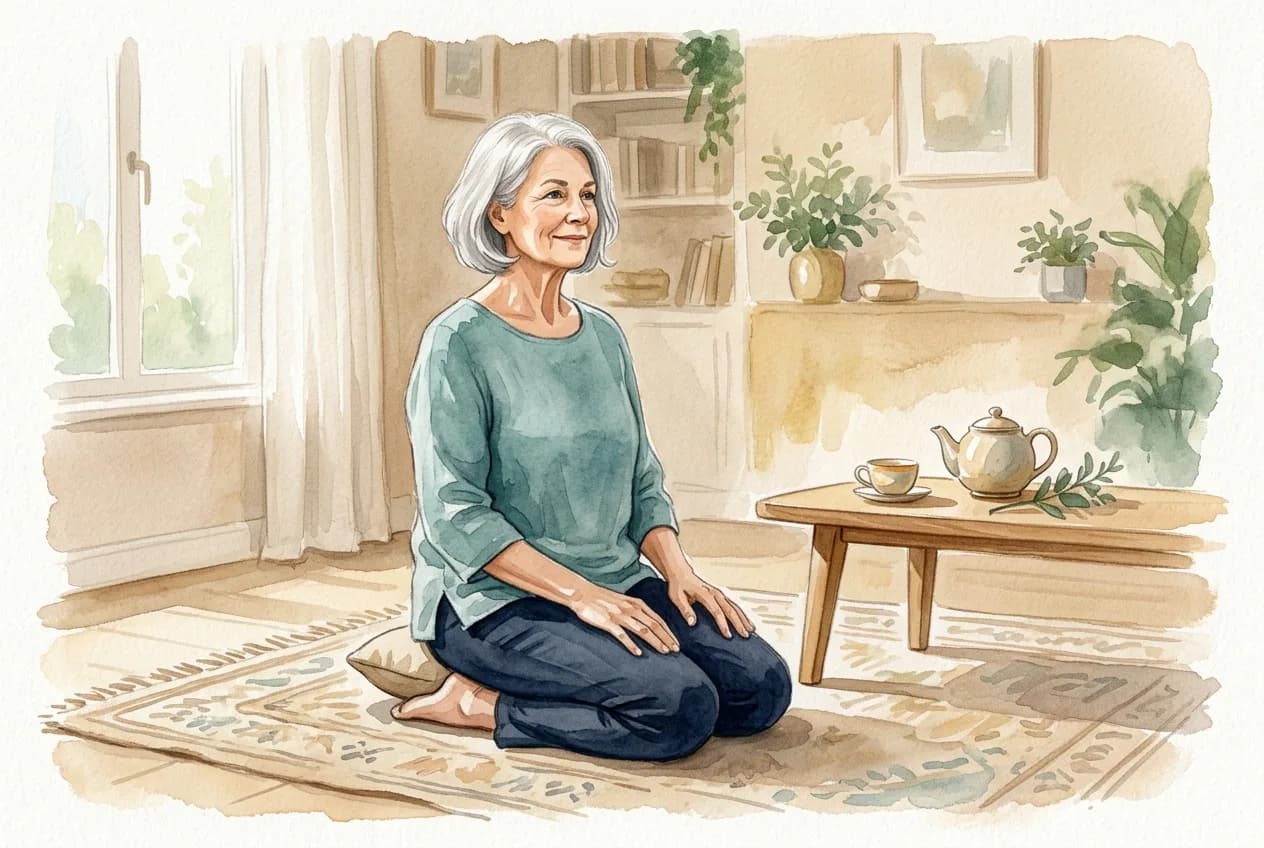
Is sitting on your knees bad for you? The short answer is no, not in itself, and the longer answer is more interesting than the question suggests. Kneeling with the shins on the floor and the weight settled onto the heels is a normal human resting position, used daily across much of the world, and there is no good evidence that a healthy knee is harmed by it. What can genuinely cause trouble is holding any single position for a long stretch, which is equally true of the chair most of us default to.
There is a reason this matters beyond comfort. Adults over 60 experience the greatest number of fatal falls of any age group (WHO, 2021), and the ability to get down to the floor and back up again is one of the everyday capacities that quietly protects people. Positions you can still reach are worth keeping.
Is sitting on your knees bad, or just uncomfortable?
Most of the worry about kneeling comes from conflating discomfort with damage. The position does three things that can feel alarming and are not: it bends the knee near its limit, it presses the front of the ankle toward the floor, and it puts steady pressure on the top of the foot. If your ankles are stiff, the first minute feels like a stretch. If you stay a while, the feet go numb, because sustained pressure on nerves interrupts their signalling. Both sensations resolve within a minute of shifting, and neither indicates harm.
Two situations do call for judgement. A knee with established arthritis may simply find deep bend under load painful, and there is nothing to be gained by proving otherwise. And after a knee replacement, kneeling advice varies with the implant and the surgeon, so it is a question for your team rather than for the internet.
What actually matters: how often you change
The most useful reframing is to stop asking which sitting position is correct. No position is. A joint is nourished by movement, and the tissue around it responds to being loaded in varied ways rather than in one perfect way. An hour spent immaculately upright in a chair is harder on a body than an hour spent moving between kneeling, cross legged, one leg out, and standing up to make tea.
This is the observation at the centre of the Feldenkrais Method®: the body thrives on options. Awareness Through Movement® lessons deliberately explore many arrangements of the same task, so the nervous system keeps a wider repertoire available rather than defaulting to one habit. Our Feldypedia piece on hip stiffness and limited mobility covers how a narrowing set of positions gradually becomes a narrowing set of abilities, and our kneeling sitting position guide covers the practicalities of making this one work. If it is a kneeling chair at a desk you are weighing, our explainer on whether kneeling is better than sitting takes that up.
Making kneeling more comfortable
If the position appeals but your ankles object, a rolled towel under the front of the ankles reduces how far they have to bend. A cushion or a low bench between your heels and your seat takes most of the load off the knees and lets you stay far longer. Both are ordinary adaptations rather than admissions of defeat, and plenty of people who kneel daily use them. If you would like to make the position a comfortable habit, our guide on how to sit on knees walks through it step by step.
The other half is the exit. If getting down to the floor or back up is the hard part, that is the skill worth practising, ideally near a chair or wall you can use for support. Our guide to getting up off the floor with bad knees breaks that down, our gentle knee proprioception exercises help the knees feel clearer about where they are, and Feldy's 7 day free trial includes lessons built around exactly these transitions.
A closing note on limits: this is general education, not advice about your particular joint. If kneeling causes real pain, if a knee swells afterwards, or if you have had joint surgery, a doctor or physical therapist should weigh in. That guidance sits alongside anything you practise at home.
Kinder movement for knees and hips
Understanding the strain is half of it. The Feldy program helps knees and hips carry less of it by reorganising how the whole body moves, through Feldenkrais® lessons. Gentle, guided, and self-paced.
Start my free 7-day trialNo credit card needed.
Common Questions about sitting on your knees (FAQ)
Is sitting on your knees bad for your joints?
For a healthy knee, no. Kneeling loads the joint in a deeply bent position, which is uncomfortable for some people and perfectly ordinary for others, and there is no good evidence that the position itself causes damage in an otherwise sound knee. Whole cultures sit this way daily into old age. The variables that matter are how long you stay in one arrangement and whether you have alternatives to move between.
Why do my feet go numb when I sit on my knees?
Because the position presses on nerves and vessels near the ankle and the top of the foot, and sustained pressure interrupts their signalling. That pins and needles feeling is a request to change position rather than a sign of harm, and sensation returns within a minute or two of moving. A cushion between the heels and the seat, or a rolled towel under the ankles, usually buys a good deal more comfortable time.
Is kneeling bad if I have knee arthritis?
It depends on your knee rather than on kneeling in general. Some arthritic knees tolerate a supported, cushioned kneel comfortably; others find deep bend under load genuinely painful, and there is no virtue in insisting. Use pain as the guide, add padding, and keep the stretches short. If you have had a knee replacement, ask your surgeon, since kneeling advice after surgery varies with the implant and the individual.
How long is too long to sit on your knees?
There is no fixed number, but most people are comfortable for ten to twenty minutes before the ankles or feet start complaining. Rather than watching a clock, treat the first hints of numbness, burning, or ache as the cue. The principle that serves joints best is variety: several positions over an hour beats one position held perfectly.
Is sitting on your knees better than sitting in a chair?
Neither is better in the abstract, and framing it as a contest misses the point. A chair is easy on the ankles and knees but tends to keep the hips at one angle for hours; kneeling asks more of the ankles and knees while offering a different hip arrangement. The healthiest pattern is having both available and moving between them, along with cross legged sitting and simply standing up.
Does floor sitting help you stay mobile as you age?
Being able to get down to the floor and back up is a genuinely useful capacity, and people who keep practising it tend to keep it. That said, floor sitting is not a treatment and should not be forced onto a painful joint. If getting up is already difficult, work on the transition itself with support nearby, or ask a physical therapist to help you build it safely.
Kinder movement for knees and hips
See the programRelated resources
The Kneeling Sitting Position: How to Sit Comfortably
The kneeling sitting position made comfortable, with body-aware ways to share your weight, ease the ankles and knees, and move into and out of it without strain.
How to Get Up Off the Floor With Bad Knees, Safely
How to get up off the floor with bad knees using a safe, gentle technique that protects the joints, leans on sturdy support, and shares the effort across your body.
Knee Proprioception Exercises: Gentle Sense and Control
Knee proprioception exercises use slow weight shifts and small controlled mini-bends to sharpen your knee's sense of where it is, for steadier, more confident standing and walking.
Ready to start moving better?
Gentle, guided lessons for your body. Try your first one free, no credit card required.