
Cure for Trigger Finger: Rest, Splint, Injection, Release
A finger that clicks or locks has a tendon catching at its base. What settles it at each stage, and how the rest of the arm can take the squeeze off the finger.
In short
There is no single cure for trigger finger that works for everyone. A mild case often settles with rest from the provoking grip and a night splint. A steroid injection resolves many more, and a small release of the tendon pulley is the definitive treatment when catching persists.

Prefer to ease in gently?
See a few gentle exercises for body awareness to try.
Before you begin. This page is general information about a finger that clicks or locks, not a diagnosis or a treatment plan. See a doctor for a finger locked bent that will not straighten, for a finger that is hot, red, or swollen, since an infection of the tendon sheath is urgent, for numbness in the hand, or for trigger finger alongside diabetes or rheumatoid arthritis.
Whether there is a cure for trigger finger depends on how far along it has got. A flexor tendon is the cord that runs from the forearm into the finger and bends it. Near the base of each finger, that cord passes under a small band of tissue called the A1 pulley. The pulley holds the tendon close to the bone, the way a belt loop holds a belt. When the tendon or its lining thickens, it no longer slides cleanly under that loop. It catches, then jerks through with a click. In a stubborn case the finger locks bent and has to be straightened with the other hand.
The medical name is stenosing tenosynovitis. Stenosing means narrowed, and tenosynovitis means a sore tendon lining. Put together, it describes a tendon that has become too thick for its own tunnel.
It is a common complaint. One review puts the lifetime chance of developing trigger finger at 2 to 3 percent, and at up to 10 percent in people with diabetes (Makkouk et al., 2008). The same review notes that it turns up most often between about 40 and 60, and more often in women than in men, though nobody is quite sure why. The NHS page on trigger finger also lists rheumatoid arthritis as something that makes it more likely.
Is there a single cure for trigger finger?
No. There is a ladder of treatments, and most people only need the lower rungs. Some fingers settle on their own once the provoking work stops.
Step one is subtraction. Work out which grip brings on the click, and give it a proper break for a few weeks, not a slightly smaller dose of the same thing.
Step two is a splint at night. Many fingers lock first thing in the morning because they sat curled all night. A small splint that keeps the finger straight while you sleep stops the tendon from wedging under the pulley overnight. Six weeks is a common trial period.
Step three is a corticosteroid injection into the tendon sheath. A doctor does this in a few minutes. It calms the swollen lining and resolves a good share of cases, sometimes after a second injection. The same review notes it works less well once the finger has been catching for more than six months, when diabetes is involved, or when several fingers are affected.
Step four is a small procedure to release the A1 pulley. A surgeon opens the band so the tendon can slide freely again. It is usually done under local anaesthetic, and it is the definitive treatment for a finger that keeps catching despite everything else. Recovery is normally a matter of weeks.
Gentle movement is not a cure for trigger finger, and it still matters
Moving the finger will not dissolve a thickened tendon or a nodule. What it can do is keep the rest of the hand from seizing up around the problem. A finger that is guarded for weeks tends to stiffen at its other joints.
Tendon gliding is the usual home practice. You move the fingers slowly through a few shapes: straight, a gentle hook, a soft fist, a flat table top. Each shape asks the tendon to slide a little further through its tunnel. You stay well within comfort and stop short of any click. Done that way, it keeps the hand supple while a splint or an injection does the heavier work.
Hard stretching is a different matter. Forcing a bent finger straight, or pulling it back to make it pop, adds friction to a lining that is already irritated. It feels productive, and it usually makes the next morning worse.
How the whole arm shapes a grip
Here is the part I see missed most often in my own teaching. A grip is not a finger event. The fingers close, but the force behind them comes from the forearm, and the forearm is steadied by the shoulder and the back. When the shoulder is held stiff, or the elbow floats away from the body, the fingers squeeze harder to make up the difference. That extra squeeze runs straight through the A1 pulley.
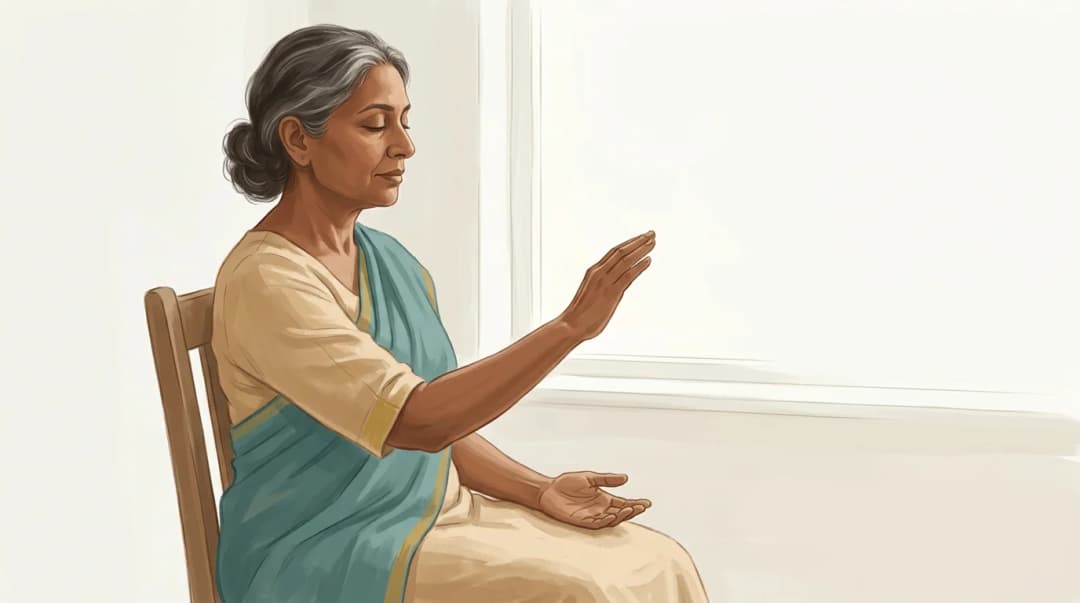
This is where the Feldenkrais Method® comes in. A Feldenkrais® lesson does not treat a tendon. It teaches you to notice how much you squeeze, and then to find a way of holding that uses more of the arm and less of the finger. In an Awareness Through Movement® lesson you might spend ten minutes simply closing and opening a hand while the forearm rests on the floor. People are often surprised at how lightly a cup or a tool can be held once the shoulder lets go. Our Feldypedia entry on musicians and repetitive strain describes how that habit of overgripping builds in people who use their hands for hours a day.
None of this replaces a splint or an injection. Feldenkrais® work sits alongside medical care, and it speaks to the reason the same finger so often starts catching again a year after treatment.
What stirs it up and what calms it
Anything that pairs a firm grip with repetition is the usual trigger. Secateurs, a heavy pan handle, a shopping bag hanging from the fingers, a steering wheel gripped for hours, and a phone held with one hooked finger all count. Mornings are often the worst time, because the finger sat bent all night.
What calms it is a real change in load. Widen a thin handle with foam or tape. Carry the bag on the forearm rather than on the fingers. Put the phone down between messages. Let the forearm rest on the desk when you use a mouse.
Where to begin today
If the thumb side of the wrist is also sore, our guide to de Quervain tenosynovitis treatment covers a close cousin of this problem, with the same overgripping story behind it. Our seated lesson of exercises for thumbs with arthritis shows how little effort a hand lesson needs. For the wider habit of noticing how you use yourself, most people at Feldy begin with the first somatic lesson for beginners and go from there.
Find where to start
There is more than one gentle movement method, and they suit different people. Knowing which one fits your hands saves weeks of guessing.
Not sure what sort of practice your hands would enjoy? Take the 60-second Movement Match quiz: answer three short questions and meet the method that fits.
When a locked finger needs a doctor
Please have the finger looked at rather than waiting it out if it is stuck bent and will not straighten, even with help from the other hand. Go the same day if the finger or palm is hot, red, or swollen, or if you feel unwell with it, because an infection inside the tendon sheath is an emergency. Numbness or tingling points to a nerve rather than a tendon and needs its own assessment. If you have diabetes or rheumatoid arthritis, get advice early, since trigger finger is more common with both and deserves a plan rather than a wait.
For anything less dramatic, the NHS advice is to see a GP when the symptoms are not improving, or when they get in the way of everyday tasks. A hand therapist can also help with splint fitting.
Learn to listen to your body
Now for the practice that trains it. The Feldy program sharpens your attention through slow, attentive Feldenkrais® lessons, so everyday movement feels lighter and more your own. Gentle, guided, and self-paced.
Start my free 7-day trialNo credit card needed.
Common Questions about the cure for trigger finger (FAQ)
What is the best cure for trigger finger?
It depends on the stage. A finger that clicks but does not lock often settles with a few weeks away from the provoking grip and a splint at night. A finger that locks, or that has clicked for months, usually does best with a corticosteroid injection. A small procedure to open the pulley is the definitive option when the catching keeps returning.
What should I avoid while a finger is catching?
Avoid the grip that set it off, whatever that is for you: secateurs, a heavy pan, a phone clamped in one hand, a tool with a narrow handle. Avoid forcing the finger straight or pulling it back until it pops, since that adds friction to a sore lining. Avoid sleeping with the hand curled tight, which is exactly what a night splint is there to stop.
Who should not try home care first?
Anyone whose finger is stuck bent and will not straighten, anyone with a hot, red, or swollen finger, and anyone with numbness in the hand should see a doctor before trying anything at home. People with diabetes or rheumatoid arthritis should also get advice early, because trigger finger is more common with both and is worth managing with a clinician from the start.
How often should I move a finger that clicks?
Little and often works better than one long session. A minute of slow tendon gliding three or four times a day, always well below the click, keeps the hand supple without stirring up the sheath. If a session leaves the finger sorer the next morning, do less the following day.
How long does trigger finger take to settle?
With rest from the provoking grip and a night splint, a mild case often eases over a few weeks to a few months. An injection can quieten the finger within days to a couple of weeks, though some people need a second one. After a release procedure the clicking stops at once and the small scar settles over several weeks. A finger that has not changed after two or three months deserves a review.
Is trigger finger the same as arthritis in the finger?
No. Arthritis affects the joints, so the finger is stiff and sore across the knuckle and the stiffness is fairly even through the day. Trigger finger is a tendon problem at the base of the finger, and the giveaway is the click or the lock. The two can happen together, which is one reason to have a hand assessed rather than guessing.
How does gentle movement compare with a splint for trigger finger?
A splint rests the tendon by stopping the finger from bending overnight. Gentle movement does the opposite job in the daytime: it keeps the rest of the hand from stiffening while the tendon rests. They work best together. Neither one dissolves the thickened part of the tendon, which is why an injection or a release is sometimes needed.
At what point should a catching finger be seen by a doctor?
Straight away for a finger locked bent that will not straighten, for heat, redness, or swelling, or for numbness. Otherwise, see a GP if the clicking is not improving after a few weeks of rest and splinting, or if it is getting in the way of daily tasks. Diabetes or rheumatoid arthritis alongside trigger finger is another reason to go early.
Learn to listen to your body
See the programRelated resources
Pain in the Inner Elbow When Straightening the Arm, Explained
The inside of the elbow complains as the arm opens out. Usually that is a tendon, sometimes a nerve, and now and then a joint that stiffened after a knock.
De Quervain Tenosynovitis Treatment: A Gentler Approach
The thumb side of the wrist hurts because of how often it is asked, not because it is weak. What treatment usually involves, and the daily habits that decide how fast it settles.
Your balance got better, but did your sense of where your body is get better too
Ready to start moving better?
Gentle, guided lessons for your body. Try your first one free, no credit card required.