
Pain in the Inner Elbow When Straightening the Arm, Explained
The inside of the elbow complains as the arm opens out. Usually that is a tendon, sometimes a nerve, and now and then a joint that stiffened after a knock.
In short
Pain in the inner elbow when straightening the arm is most often golfer's elbow: the tendon on the inside of the joint is stretched and loaded as the arm opens. Tingling in the ring and little fingers points to the ulnar nerve. Stiffness after an injury is the third source.

Prefer to ease in gently?
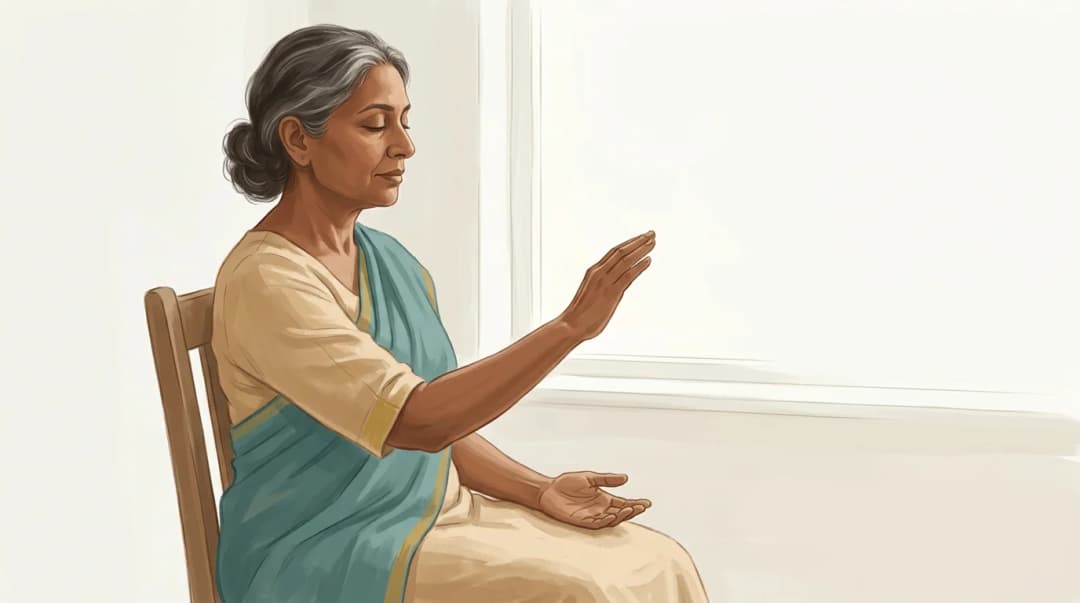
See a few gentle exercises for body awareness to try.
Before you begin. General information, not a diagnosis. See a clinician for elbow pain that began with a fall or a pop, for swelling or a hot joint, for numbness, tingling or weakness in the hand, for an elbow that will not straighten fully, or for pain that has lasted more than a few weeks.
Pain in the inner elbow when straightening the arm has a shorter list of causes than most elbow complaints. Straightening pulls on the tissues on the inside of the joint. So the real question is which tissue is being pulled. Most often it is a tendon. Sometimes it is a nerve. Now and then it is the joint itself, still stiff from an old knock.
The inner side means the side nearest your body when your palm faces forward, the little finger side. Feel for the bony bump there. That bump is where the muscles that bend your wrist and curl your fingers all anchor through one shared tendon.
Why the inner elbow hurts when you straighten the arm
The tendon, known as golfer's elbow. The clinical name is medial epicondylalgia, which only means pain at that inner bump. The forearm muscles that grip and bend the wrist begin there. When you straighten the elbow with the wrist bent back, those muscles are pulled long. Add a weight in the hand and the tendon is stretched and working at the same time. That is the moment it complains. A typical story is a sharp catch at the inner elbow when you lift a bag onto a high shelf. Pushing up from a chair with the palm flat does it too. Most people with it have never held a golf club.
The nerve. The ulnar nerve, the one behind the funny bone, runs in a groove behind that same bump. Long spells with the elbow bent, on the phone or curled up asleep, can irritate it. The signature is tingling or numbness in the ring and little fingers, sometimes with a deep ache on the inner elbow. Straightening the arm can tug on an irritated nerve as well. If your fingers tingle, this is the version to mention to a clinician.
The joint. An elbow that was sprained, knocked, or fractured months ago can lose its last few degrees of straightening. The capsule around the joint tightens, and the end of the range becomes a firm, aching stop. This one hurts at the very end of straightening and feels more like a block than a pull.
How common golfer's elbow is, and what raises the odds
Golfer's elbow is a good deal rarer than tennis elbow, its cousin on the outer side. A French occupational study examined 1,757 workers in 1993 and 1994. It found golfer's elbow in between 4 and 5 percent of them, and forceful work raised the risk while repetitive work on its own did not (Descatha et al., 2003). How hard they gripped mattered more than how often. Most of those followed up had recovered within three years.
The everyday triggers follow the same pattern. Lifting and carrying with the palm turned up. Shopping bags held by the handles for a long walk. A weekend of pruning, or a season of golf. A new gym plan with rows and curls. A mouse gripped tighter than the task needs, hour after hour. Musicians know the pattern well; our Feldypedia entry on musicians and repetitive strain describes how playing loads the forearm.
What calms an inner elbow that hurts on straightening
Start by taking the provoking load down, without stopping altogether. Carry with the palm facing your leg rather than turned up. Split a heavy bag into two lighter ones. Rest alone rarely settles a tendon, but rest from the one task that spikes it usually helps within weeks.
Then soften the grip. Most of us hold tools, phones, and steering wheels with far more force than they need. Try holding whatever you are about to lift with half the effort, and notice whether it still comes with you. Nearly always it does.
Tendon pain does best with gradual, planned loading, and that part is a clinician's job. A physiotherapist or doctor can check the nerve, rule out the joint, and set a slow build of wrist and grip work that suits your stage. Most tendon pain at the elbow settles over months rather than weeks.
Bending is a separate story. If your elbow hurts more on the way in than on the way out, read our guide to pain in the elbow when bending. If the sore spot is on the outer bump, our tennis elbow exercises page is the better fit.
The part of the arm that is doing too little
This is the piece I find myself explaining most often in lessons. A lift begins in the hand, but it is meant to travel. The forearm passes it to the upper arm, the shoulder blade slides on the ribs, and the trunk leans a little to meet the weight. When the shoulder blade stays parked, the forearm has to make up the difference. The muscles that anchor at the inner elbow then stay switched on for the whole task.
A Feldenkrais® lesson approaches this from the shoulder rather than from the sore spot. Lying down, you might lift an arm slowly and let the hand lead. Then you let the elbow lead, and then the top of the upper arm. Same lift, and a very different amount of effort. Once you can feel the shoulder blade join in, ordinary reaching starts to cost the forearm less, and the tendon gets a quieter day.
This sits alongside clinical care rather than in place of it. A physiotherapist loads the tendon so it tolerates more; a Feldenkrais® practice changes how much load arrives there in the first place.
Yoga and Pilates rely on a different mechanism: held shapes and counted sets that build strength and range. Plenty of people keep one going beside a quieter practice like this.
Feldy teaches the Feldenkrais Method® in short daily audio lessons. Our somatic exercises for beginners lesson is the gentlest first step.
Find where to start
Several movement methods help a sore arm, and they suit different people. A minute of questions will tell you which one fits you.
Looking for a way of moving that is kind to a sore elbow? Take the 60-second Movement Match quiz: tell it a little about your arm and get one suited method.
When the inner elbow needs a clinician
A few signs mean assessment comes first. Pain that began with a fall or an audible pop. Swelling, or a joint that feels hot. Numbness, tingling, or weakness in the hand. An elbow that no longer straightens all the way. Any of those, and the tendon story on this page may not be your story.
Beyond those, inner elbow pain that has lasted more than a few weeks despite lighter loads is worth a proper look. A squeezed nerve and an overworked tendon need different care. Telling them apart is quick in a clinic and slow at home.
Learn to listen to your body
Now for the practice that trains it. The Feldy program sharpens your attention through slow, attentive Feldenkrais® lessons, so everyday movement feels lighter and more your own. Gentle, guided, and self-paced.
Start my free 7-day trialNo credit card needed.
Common Questions about pain in the inner elbow when straightening the arm (FAQ)
What is the best first step for pain in the inner elbow when straightening the arm?
Reduce the one load that provokes it and keep the rest of your day moving. For most people that means carrying with the palm facing the leg, splitting heavy bags, and gripping tools with half the usual force. Add slow, unloaded bending and straightening with the forearm resting on a table. Build resistance later, with a clinician setting the pace.
What should I stop doing while the inner elbow is sore?
Pause palm up lifting, long carries by a bag handle, hard wringing, and anything that asks the wrist to curl against weight, such as rows, curls, or pull ups. Skip stretching hard into the inner bump, since an irritated tendon tends to get more sensitive when pulled. Try not to sleep with the elbow folded tight, which bothers the nerve as well.
Who should not try gentle movement for a sore inner elbow?
Anyone whose pain began with a fall or an audible pop, anyone with a swollen or hot joint, and anyone with numbness, tingling, or weakness in the hand should be assessed before starting. The same goes for an elbow that has lost its full straightening. Slow movement inside comfort suits most other people, and it can wait a week while you get checked.
How often should I move an elbow that hurts on straightening?
Little and often beats one long session. A minute of slow bending and straightening, with the forearm supported and nothing in the hand, repeated four or five times through the day, keeps the joint and tendon moving without loading them. One short whole arm lesson a day is a good rhythm for the awareness side.
How many weeks does golfer's elbow usually take to calm down?
Expect months rather than weeks. Many people notice the sharp catch fading within four to six weeks once the provoking load drops, but a tendon commonly takes three to six months to settle fully, and some cases run longer without being serious. If nothing has changed after six weeks of lighter loads, ask for a review.
How is golfer's elbow different from tennis elbow?
They are the same kind of tendon problem on opposite sides of the joint. Golfer's elbow sits at the inner bump, where the muscles that bend the wrist attach, and it flares with gripping and palm up lifting. Tennis elbow sits at the outer bump, where the muscles that lift the wrist attach, and it flares with palm down lifting and typing. Tennis elbow is several times more common.
How does gentle movement differ from the tendon loading a physiotherapist gives?
Tendon loading is a planned program of resisted wrist and grip work that builds the tendon's tolerance over weeks, with sets and progressions. Movement awareness looks upstream, at how much of each lift the shoulder and trunk are doing, so less strain reaches the elbow in the first place. One builds capacity, the other lowers demand, and they fit together well.
Which signs mean the inner elbow needs a doctor rather than patience?
Go promptly if the pain started with a fall or a pop, if the elbow is swollen or hot, if you have tingling, numbness, or weakness in the hand, or if the arm will no longer straighten all the way. Beyond those, pain that has lasted more than a few weeks despite lighter loads deserves a proper look, because a nerve problem and a tendon problem need different care.
Learn to listen to your body
See the programRelated resources
Pain in the Elbow When Bending: What It Means and What Helps
An elbow that complains on the way in, rather than on the way out, narrows things down quickly. Here is what each version of that pain usually points to.
De Quervain Tenosynovitis Treatment: A Gentler Approach
The thumb side of the wrist hurts because of how often it is asked, not because it is weak. What treatment usually involves, and the daily habits that decide how fast it settles.
Your balance got better, but did your sense of where your body is get better too
Ready to start moving better?
Gentle, guided lessons for your body. Try your first one free, no credit card required.