
Hamstring Pain When Driving: Why It Happens and What Helps
Why the back of your thigh aches on a drive, which seat and pedal habits add to it, and the small changes many people find kinder at a stop or a rest break.
In short
Hamstring pain when driving usually comes from long sitting. The seat presses on the back of the thigh and the sit bones, and the right leg stays still on the pedal. Many people find relief by changing seat height and distance, taking breaks to walk, and shifting their weight.

Prefer to ease in gently?
See a few gentle exercises for body awareness to try.
Before you begin. Gentle self care, not medical advice. Pain down the back of the leg can come from the sciatic nerve, not only the hamstring. See a doctor for numbness, tingling, leg weakness, pain after a sudden pop or a bruise, or any change in how your bladder or bowel works. Never adjust your seat or move your body while the car is moving.
Hamstring pain when driving is an ache, pull or burn at the back of the thigh that builds the longer you sit behind the wheel. The hamstrings are the muscles along the back of your thigh. Their tendons join the pelvis at the two sit bones, which also carry your weight in a seat. Long sitting presses on exactly this area. The NHS says sciatica, a related cause of leg pain, usually improves within weeks to a few months, and sometimes takes longer (NHS, 2024).
Why hamstring pain happens when driving
A car seat asks a lot of the back of your thigh. Several small things can add up on a long drive.
- Pressure from the seat edge. If the cushion is long or set high, its front edge can press into the underside of the thigh.
- A seat set too far back. Your leg has to reach for the pedals, and the hamstring stays slightly pulled for hours.
- A tilted pelvis. A reclined backrest lets the pelvis tuck under. Your weight then rolls onto the lower sit bones and the tendons attached there.
- A still right leg. Holding the foot on the pedal keeps the same muscles working with no change.
- A wallet in the back pocket. It raises one side of the pelvis and presses on one sit bone.
Pain here has more than one source. Sometimes the muscle is simply tired. Sometimes the tendon where the hamstring attaches to the sit bone is irritated. Clinicians call this proximal hamstring tendinopathy, which means a sore tendon near its top end. It often hurts most with sitting on a hard seat.
Another possibility is the sciatic nerve. This is a long nerve that runs from the lower back down the back of each leg. If it is irritated, you may feel pain along the back of the thigh. Nerve pain often feels burning, sharp or electric. It may come with tingling or numbness. Muscle and tendon pain tends to feel more like a deep ache or soreness near the sit bone. These are only rough guides, and a clinician can help you sort them out.
What helps hamstring pain when driving
You do not need a perfect driving posture. You need a setup that spreads your weight and gives your leg some variety. Please make every change while parked.
- Check seat height and distance. Many people like the knee a little bent when the pedal is fully pressed. The leg then does not have to reach.
- Look at the seat edge. Leave a gap of a couple of fingers between the cushion and the back of your knee.
- Tilt the seat cushion if yours allows it. A slight tilt can move pressure away from the underside of the thigh.
- Add a small lumbar support. It helps the pelvis stay rolled upright, so your weight stays on the sit bones.
- Empty your back pockets. A wallet or phone can tilt the pelvis.
- Take a break about every hour. Stop somewhere safe, get out and walk for a few minutes.
- Use cruise control where it is safe. It lets the right foot rest in a slightly different place for a while.
These are options, not rules. Change one thing at a time and see what your thigh says. For a slow lesson on the same area away from the car, see our page on how to release tight hamstrings without stretching.
A Feldenkrais® look at your seat and your leg
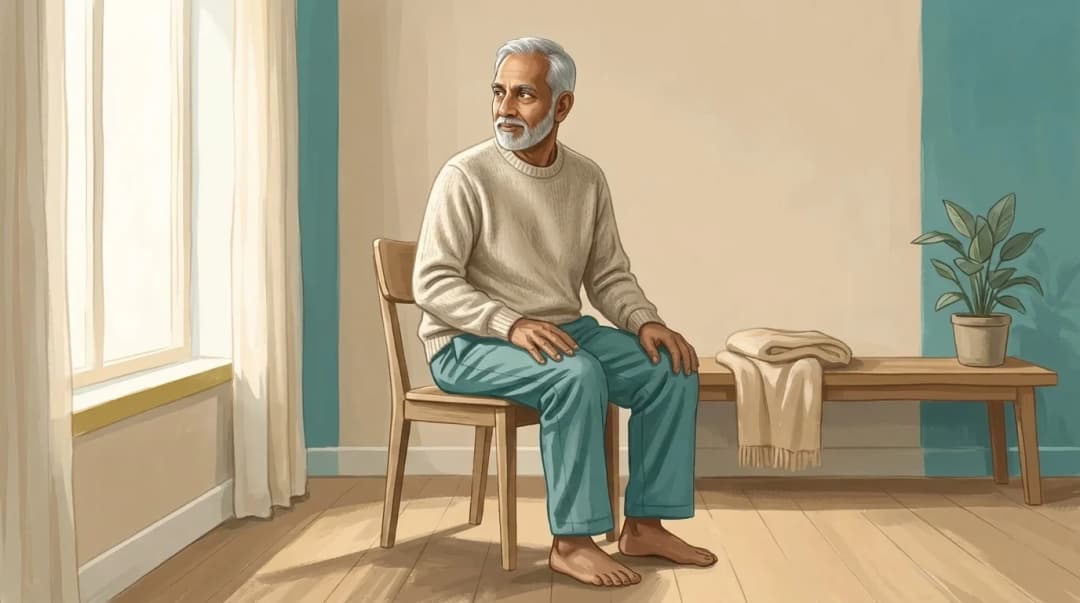
In the Feldenkrais Method®, we do not tell you how to sit. We invite you to notice what is already happening. At a rest stop, or before you set off, you can try a small experiment. Sit in the driver's seat with the engine off.
Notice which sit bone carries more of your weight. Is it the left or the right? Does it feel the same on both sides? Now let your pelvis rock a little, forward and back, in a small and easy movement. Somewhere in the middle, you may find a place where both sit bones share the load. Then rest your right foot on the pedal and ask: how hard am I gripping? Can the foot be lighter, and the thigh a little softer?
This sort of noticing is what Awareness Through Movement® is built on. Nothing needs to be achieved. As you sense how your weight sits, you gain more choice about where it goes. Our Feldypedia has more on lower back pain from sitting and on sciatica and nerve related back pain.
When to see a doctor about hamstring pain from driving
Most seat related thigh pain eases once you move. Still, some signs should not wait. See a doctor if:
- the pain began with a sudden pop, a pull or a bruise
- it has not eased after a few weeks of looking after it
- it stops you driving or sleeping
Also see a doctor for numbness, tingling or weakness in the leg. Go to the emergency department if the groin or buttock area feels numb, or if your bladder or bowel suddenly behaves differently. These signs are rare, but they need prompt care. A doctor can tell whether the cause is muscle, tendon or nerve. Gentle movement can sit alongside that care, never in its place.
A kinder way to sit, one small step at a time
Several small changes often suit better than one big one. Adjust the seat while parked, plan a stop before the ache starts, and let your weight shift between the sit bones at each rest stop. If your thighs ache in general, our explainer on hamstring pain for no reason may also help. If the pain travels down the leg, sciatica sitting exercises offers slow options to try at home. To learn the basics of this kind of attention, start with somatic exercises for beginners. With a guide beside you, Feldy has a free 7 day trial. Our body awareness page shows what else is there.
Find where to start
Bodies and days differ. Which kind of movement would suit you? Choosing can feel like a lot, and a brief quiz can lighten it.
Not sure which movement method fits you? Take the 60-second Movement Match quiz and find the approach that suits a body that sits a lot.
Learn to listen to your body
Now for the practice that trains it. The Feldy program sharpens your attention through slow, attentive Feldenkrais® lessons, so everyday movement feels lighter and more your own. Gentle, guided, and self-paced.
Start my free 7-day trialNo credit card needed.
Common Questions about hamstring pain when driving (FAQ)
Is it safe to keep driving with hamstring pain?
Many people can keep driving with a mild ache, if the pain does not distract them or slow their reaction to the pedals. If it is sharp, or your leg feels weak or numb, pull over somewhere safe and rest. Please see a doctor about pain that keeps coming back or limits your driving.
How often should I take a break on a long drive?
Many people find a short break about every hour or so helps. Get out of the car, walk a few steps and let the back of your thigh feel different. There is no exact number that suits everyone, so notice when the ache starts to build and plan your stops a little before that.
How long until hamstring pain from driving settles?
It depends on the cause. Pain from seat pressure often eases soon after you get out and move. Irritation where the hamstring joins the sit bone can take longer. Nobody can promise a timeline, so if it is not easing after a few weeks, ask a doctor or physiotherapist to take a look.
How is hamstring tendon pain different from sciatica?
Hamstring tendon pain tends to sit low in the buttock, close to the sit bone, and often rises when you sit on a hard seat. Sciatica is nerve pain that can travel further down the leg. It may feel burning or electric, and sometimes comes with tingling or numbness. Only a clinician can tell you which one you have.
What is the best seat position to ease hamstring pain when driving?
Many people like a seat height and distance that leave the knee a little bent when the pedal is pressed. The seat edge should not press into the back of the thigh. A small cushion tilt or a light lumbar support can also help. Make these changes only while parked.
When should I see a professional about hamstring pain from driving?
See a doctor if the pain began with a sudden pop or a bruise, if it does not ease after a few weeks, or if it keeps you from driving. Seek care promptly for numbness, tingling, leg weakness or sudden bladder or bowel changes. Gentle movement is a companion to medical care, not a substitute.
Learn to listen to your body
See the programRelated resources
Where Are Your Sit Bones? How to Find and Sit on Them
Two rounded bones at the bottom of your pelvis carry your weight in a chair. A two minute exploration to feel them, and what your spine does when you do.
Can Scoliosis Be Caused by Bad Posture? What Is True
A clear answer on slouching, sitting and scoliosis, how a true curve differs from a posture habit, and what gentle self awareness can offer.
Shoulders turned further after a slow, varied lesson than after repeating one twist
Ready to start moving better?
Gentle, guided lessons for your body. Try your first one free, no credit card required.