
How to Fix Posterior Pelvic Tilt: A Gentle Approach
How to fix posterior pelvic tilt without forcing your pelvis into place: a sensing based way to let the tucked tailbone and flattened low back find neutral.
In short
To fix posterior pelvic tilt, the gentlest route is not to force the pelvis into a new shape but to help it sense its whole range, from a tucked tailbone toward the natural low back curve, until an easy neutral becomes available again. Slow, attentive movement restores the choice that long sitting quietly took away.

Prefer to ease in gently?
See a few gentle exercises for body awareness to try.
Before you begin. This is general movement education, not medical advice or a diagnosis. A pelvic tilt is a normal postural variation, not a disease, and you cannot reliably diagnose a problem from a tilt alone. If you have ongoing or severe low back pain, nerve symptoms such as numbness, tingling, or weakness in the legs, or a diagnosed spine or hip condition, please consult a doctor or physiotherapist before changing how you move.
The gentlest way to fix posterior pelvic tilt is less about forcing your pelvis into a corrected position and more about giving it back the full range it quietly lost. Posterior pelvic tilt is when the top of the pelvis rolls backward, the tailbone tucks under, and the natural inward curve of the lower back flattens out. It is a normal position the pelvis can take, and a useful one; the trouble starts only when hours of slouched sitting turn it into the one position the pelvis knows how to rest in.
What a posterior pelvic tilt is
Picture the pelvis as a bowl. In a comfortable neutral, the bowl sits fairly level and the lower back carries a soft inward curve. In a posterior tilt, the back rim of the bowl drops, the tailbone tucks forward between the legs, and that low back curve flattens toward straight. Sit slumped on a sofa and you can feel it happen: the weight rolls back onto the tailbone and the lumbar curve disappears. There is nothing wrong with visiting that position. The pelvis is built to tip both ways, and a healthy back moves through a posterior tilt constantly. What deserves attention is a pelvis that has forgotten how to leave it.
Long, still sitting is the usual reason. A sore low back is one of the most common human experiences there is, with around 619 million people living with low back pain worldwide in 2020 (WHO, 2023), and much of that everyday stiffness traces back to how little variety our days ask of the pelvis. Our Feldypedia entry on lower back pain from sitting looks at that link in more detail.
Why a posterior tilt settles in
A habit posture is rarely a weakness so much as a groove. When you spend hours with the tailbone tucked, the nervous system starts to treat that shape as home, and the muscles that would restore the low back curve simply stop being invited to do their part. Over time the tucked position feels normal and neutral feels effortful, even alien. This is why willpower alone tends to fail: you straighten up, hold it for a few tense minutes, and slide back the moment your attention wanders, because you have added effort without changing what the body considers its resting default. Our overview of poor posture and its physical effects describes how these grooves form.
How to fix posterior pelvic tilt gently
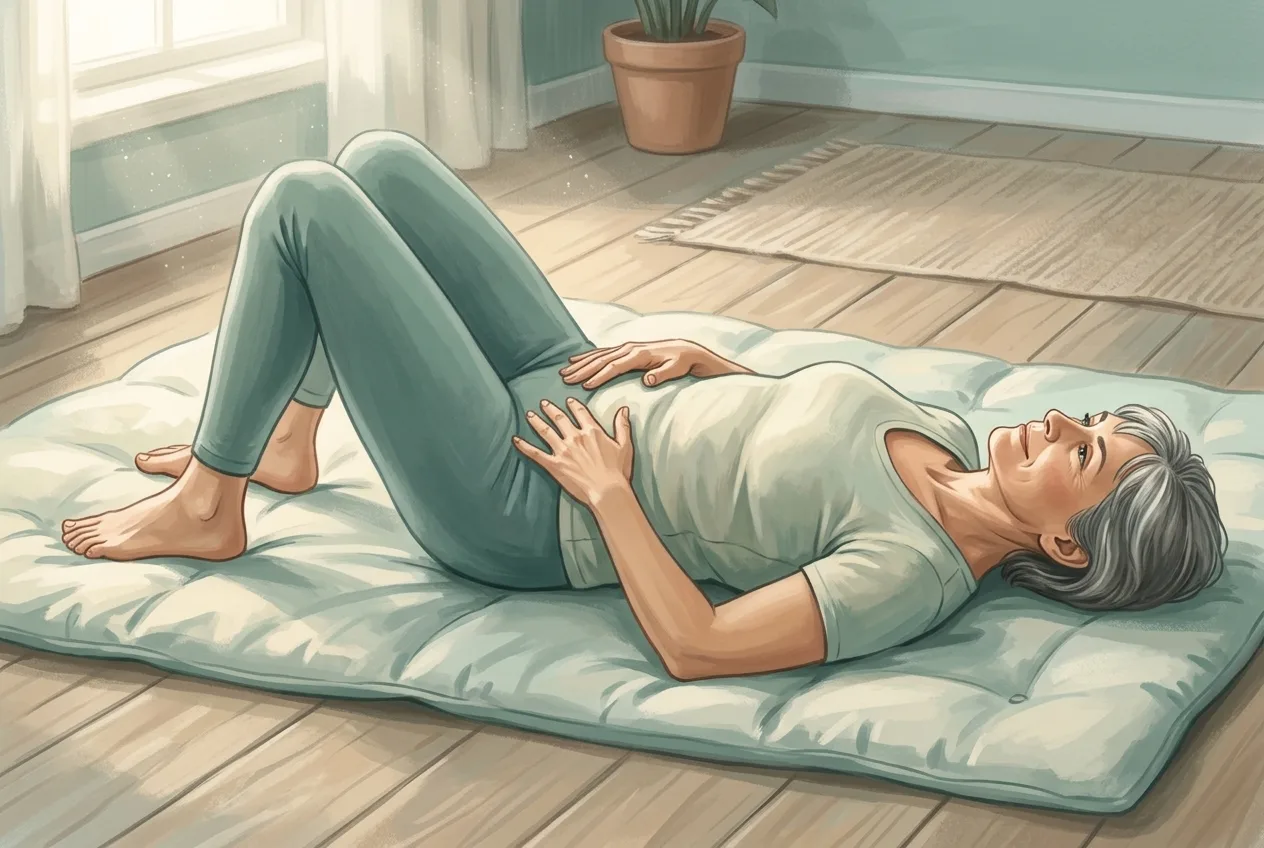
The way out is to make the whole range familiar again, so neutral becomes a choice rather than a struggle. Lie on your back with your knees bent and feet flat. Let the pelvis roll slowly toward the tuck, so the low back presses a little more into the floor. Then ease the other way, so the low back lifts a hair off the floor. Move a fraction of what you could, and pay close attention to the difference between the two directions. Kept slow and comfortable, this teaches the nervous system that the lumbar curve is still available, and an easier neutral begins to return by itself.
The Feldenkrais Method® grew up around precisely this sort of exploration: unhurried lessons that swap force for sensing. Our pelvic clock lesson guides exactly this movement, and somatic exercises for beginners is a gentle first lesson if lying on the floor to move is new to you. The Feldy program for body awareness turns that Feldenkrais® approach into short daily practice you can follow at home. Because the pelvis tips both ways, it helps to know its opposite too: our guide to an anterior pelvic tilt and our comparison of posterior and anterior tilt round out the picture.
When to check with a professional
A doctor or physiotherapist works well beside gentle practice like this, not instead of it. Please arrange an assessment if low back pain is severe, lingers beyond a few weeks, keeps worsening, or comes with numbness, tingling, or weakness down a leg, and before you change how you move if you have a diagnosed spine or hip condition. A pelvic tilt on its own is not a diagnosis, and a professional can tell you whether anything more specific deserves attention, so your gentle practice fits into a plan built around your own body.
Learn to listen to your body
Now for the practice that trains it. The Feldy program sharpens your attention through slow, attentive Feldenkrais® lessons, so everyday movement feels lighter and more your own. Gentle, guided, and self-paced.
Start my free 7-day trialNo credit card needed.
Common Questions about posterior pelvic tilt (FAQ)
What is posterior pelvic tilt?
Posterior pelvic tilt is when the top of the pelvis rolls backward, tucking the tailbone under and flattening the natural inward curve of the lower back. It is a normal position the pelvis can take, not a flaw, and everyone moves through it many times a day. It becomes worth attention only when it turns into a habit you cannot easily leave, often from hours of slouched sitting, and it starts to feel stiff or achy.
Can you actually fix a posterior pelvic tilt?
Yes, in the sense that most people can regain an easy neutral, though not by holding a single corrected posture. The pelvis is meant to move, so the aim is not to lock it into one right position but to restore the full range of choice, so it can rest in a comfortable middle and shift freely. Slow, sensing movement tends to bring that choice back faster than bracing or gripping ever does.
Is posterior pelvic tilt bad or dangerous?
Not inherently. A pelvis that can tuck is doing something normal and useful, and many people with a resting posterior tilt have no pain at all. It matters only when the position becomes fixed and one sided, so the low back rarely gets its natural curve and starts to feel tired or stiff. The concern is lost variety of movement, not the tilt itself, and variety is exactly what gentle practice restores.
What exercises help a posterior pelvic tilt, and are they safe?
Slow, small pelvic movements done lying down, where you gently explore rolling the pelvis toward and away from the tuck, are among the friendliest starting points, because they stay comfortable and teach sensing rather than force. They suit most bodies. Anyone with acute back pain, nerve symptoms, or a diagnosed spine condition should check with a professional first and keep every movement well inside comfort.
How often and how long until a posterior pelvic tilt changes?
Little and often works best. A few slow, attentive minutes on most days reminds the nervous system that the low back curve is available, and that repetition matters more than intensity. Many people feel a change in the same session; a more lasting shift in resting posture usually gathers over several weeks of unhurried practice, helped along by getting up from the chair more often.
How is this different from just strengthening or stretching to correct posture?
Strengthening and stretching work through effort and tissue length, and they can help, but posture is largely organised by the nervous system, which is why a posture you force rarely holds. Awareness based movement addresses that layer directly: it improves your felt sense of where the pelvis is, so an easier neutral becomes the default rather than something you must remember to hold. The two approaches sit comfortably alongside each other.
Learn to listen to your body
See the programRelated resources
Posterior vs Anterior Pelvic Tilt: A Clear Guide
Posterior vs anterior pelvic tilt explained: what each one is, how to tell which you tend toward, and what gentle movement can help. A calm, balanced comparison.
How to Fix an Anterior Pelvic Tilt, Gently
How to fix an anterior pelvic tilt without gripping or forcing, using slow daily awareness so the pelvis settles into an easier balance on its own. A gentle, practical guide.
Practising a new movement sideways and upside down helped about as much as repeating it
Ready to start moving better?
Gentle, guided lessons for your body. Try your first one free, no credit card required.