

How to Relieve Wrist Pain When Typing and Carrying Add Up
The wrist that aches from typing, phones, and carrying rarely works alone. Practical relief, the hidden habit of over-gripping, and when to get it checked.
In short
To relieve wrist pain from daily tasks, vary what the hand does, rest the forearm instead of hovering it, soften your grip, and let the shoulder and elbow share the work. Warmth and short frequent pauses help too. Numbness, night symptoms, or weakness deserve a professional assessment.

Prefer to ease in gently?
See a few gentle exercises for body awareness to try.
If you have been wondering how to relieve wrist pain that builds through a day of typing, mousing, phone holding, and carrying, the answer has two layers. The first is plain and practical: change what the hand is doing before the ache arrives, give the forearm somewhere to rest, warm the wrist when it feels tired. The second layer is the one most advice never reaches, which is that a wrist rarely aches because of the wrist alone. In my work teaching the Feldenkrais Method®, I have watched many aching wrists settle once the shoulder and elbow remembered they belong to the same arm. This guide covers both layers, and it is equally plain about the symptoms that call for a clinician instead of self care.
Start with the plain measures
An everyday working wrist responds well to everyday adjustments. Variety comes first: the wrist tolerates almost any task in moderation and almost no task repeated for hours, so alternate typing with reading, swap the mouse hand if you are able, move the phone between hands, and break long carrying into shorter trips. Angles matter too. A keyboard lying flat or tilted slightly away from you keeps the wrist closer to its easy middle line than one propped up on its little feet, and a mouse that fits your hand asks less of the fingers than a small one you must pinch.
Then there is the hovering habit. Many people type and mouse with the forearms suspended in the air for hours, which means the muscles crossing the wrist never stop working. Letting the forearms rest on the desk or on chair arms, so the hands work from a supported base, removes a surprising amount of background effort. Add short pauses, a few seconds every ten or fifteen minutes in which the hand simply falls open, and warmth for comfort in the evening, a basin of warm water or a heated wheat bag, and you have the whole first layer. Our Feldypedia entry on repetitive strain from keyboard use looks at the desk side of this picture in more detail.
It helps to know how common wrist trouble is before assuming the worst about your own. Carpal tunnel syndrome, the best known of the wrist's nerve complaints, has an incidence of 1 to 5 percent in the general population according to the StatPearls clinical review (StatPearls, 2023). Most aching wrists are not that; they are simply overworked. But the figure is a reminder that nerve involvement is common enough to take seriously when its particular signs appear, which we will come to.
How to relieve wrist pain by letting the whole arm work
Here is the part that changes how you think about the problem. Watch someone typing when they are tired and you will often see a still, lifted shoulder, a braced elbow, and two hands doing everything from the wrists down. The movement of reaching for a key, guiding a mouse, or lifting a shopping bag does not have to begin at the wrist. It can begin at the shoulder blade and travel outward, with the elbow and forearm sharing the journey and the wrist adding only the final, small refinement. When the shoulder goes silent, all of that shared work lands on the smallest joints in the chain, and the wrist is the one that files the complaint.
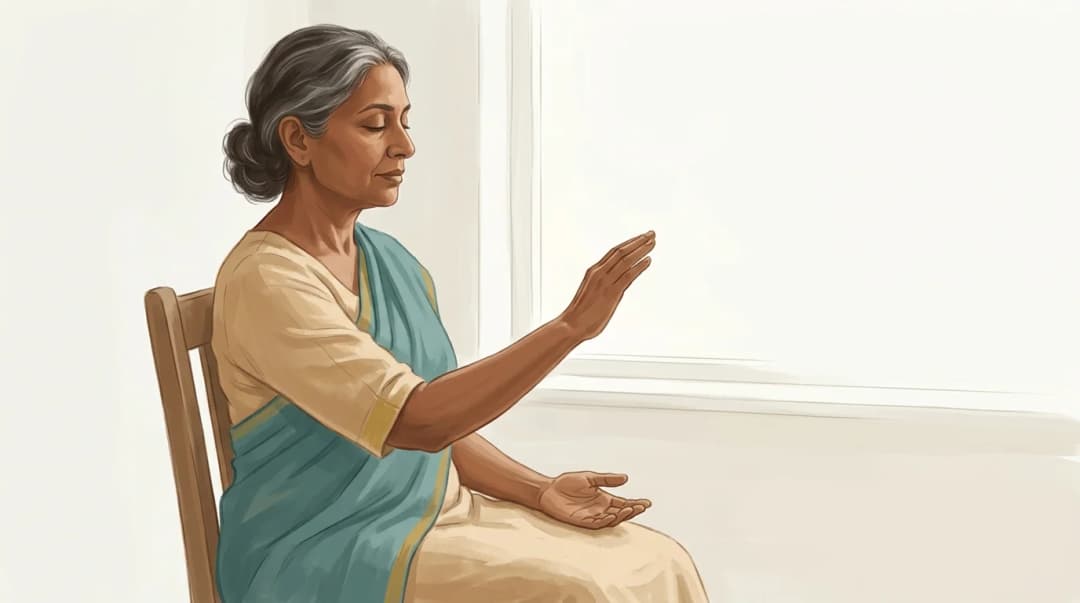
This is precisely the territory of the Feldenkrais approach: not strengthening the wrist or stretching it, but noticing where a movement actually starts and letting more of you take part in it. Try it now. Reach for your mouse or your cup, and notice whether anything moves above your elbow. Then reach again, letting the shoulder blade slide a little and the elbow float, so the hand arrives carried rather than stretched out alone. Most people feel the difference on the first try. The body awareness program is built around exactly this kind of noticing.
The grip you do not notice
There is a second hidden habit, and it costs the wrist more than any keyboard angle: gripping harder than the task requires. A computer mouse needs roughly the pressure you would use to hold an egg, yet tired hands clamp it. A phone can balance in a soft palm, yet thumbs and fingers pinch it as if it were about to leap. Pens get strangled, steering wheels get squeezed, shopping bags get held with locked fingers when the handle could simply hang from a relaxed hook of a hand. Every unit of unnecessary grip travels straight through the tendons that cross the wrist.
The remedy is not willpower but curiosity. A few times a day, without changing anything first, ask: how hard am I holding this? Then let the pressure drop by half and see whether the task still works. It nearly always does. People who lean on the heel of the hand, at a desk or pushing up from a chair, can run the same experiment, letting the forearm bones and even the elbow take the lean instead. If your wrists bend unusually far and feel wobbly rather than stiff, the emphasis shifts from softening toward steadiness, and our guide to wrist hypermobility follows that thread. If the ache lives more in the thumb base and finger joints than in the wrist itself, our guide to arthritis in the hand may be the better companion.
How to relieve wrist pain for the long run
Put the layers together and a routine emerges that costs almost nothing. Support the forearms and keep the wrist near its easy middle line. Vary the task before the ache tells you to. Pause for seconds, often. Use warmth when the day has been long. And underneath all of it, keep two questions alive: where does this movement begin, and how hard am I actually holding on? The daily audio lessons I voice for Feldy train that kind of attention across the whole body, ten to twenty unhurried minutes at a time, and the free 7 day trial needs no credit card. Movement practices such as stretching routines, yoga, or a strengthening program work through a different mechanism, building tissue length or capacity, and each has its own strengths for people who enjoy them.
When wrist pain deserves an assessment
Self management has limits, and some wrist symptoms are messages rather than tiredness. Book a professional visit if you notice numbness or tingling that keeps coming back or that wakes you at night, weakness on the thumb side of the hand when pinching or opening jars, pain that began with a fall onto an outstretched hand, or a wrist that is visibly swollen or warm to the touch. An ache that has ignored several weeks of sensible care belongs on that list too. None of these mean anything specific by themselves, and this page cannot tell you what is behind yours; that is exactly why they deserve a proper look. Clinical care from a doctor, hand therapist, or physiotherapist sits alongside everything described here, and the awareness work continues comfortably next to whatever they recommend.
Learn to listen to your body
Now for the practice that trains it. The Feldy program sharpens your attention through slow, attentive Feldenkrais® lessons, so everyday movement feels lighter and more your own. Gentle, guided, and self-paced.
Start my free 7-day trialNo credit card needed.
Common Questions about wrist pain (FAQ)
Is it safe to keep working through wrist pain, and who should be careful?
A dull ache that settles with an evening away from the keyboard is usually tissue tiredness, and carrying on while you vary tasks, rest the forearm, and soften your grip is generally reasonable. Caution belongs to a different set of situations. If the pain began with a fall onto the hand, if the wrist is swollen or warm, if you live with a diagnosed condition such as inflammatory arthritis or diabetes, or if any numbness or weakness has appeared, let a doctor take a look before you press on as usual.
How often should I pause or change what my wrist is doing?
Think in minutes rather than hours. Letting the hand fall open and the forearm go heavy for a few seconds every ten to fifteen minutes does more for a working wrist than one long break taken at lunch. Pair those micro pauses with variety across the day: alternate mouse and trackpad if you can, swap the carrying hand, switch the phone between hands, and let dictation or shortcuts absorb some of the typing. The wrist copes well with almost anything except the same demand repeated without relief.
How long until wrist pain starts to ease?
The setup changes tend to pay off first. Resting the forearm, adjusting the keyboard and mouse, and adding warmth can soften the very next working day. The habit side moves more slowly. Catching the silent over-grip and inviting the shoulder back into reaching and carrying usually shows its value across two to four weeks of ordinary days, as the ache arrives later and leaves sooner. Pain that has not budged after several weeks of this kind of care is a reason to book an assessment rather than simply wait longer.
How is this different from wearing a wrist splint?
A splint quiets the joint from the outside, holding it in a neutral line so irritated tissue gets a break, and clinicians often suggest one at night or during a flare. The approach in this guide works from the opposite direction: instead of restricting the wrist, it reduces what the wrist is asked to do, by softening grip and letting the elbow and shoulder carry more of each task. The two are not rivals, and many people use a splint for recovery hours while retraining their habits during working hours.
Why would my shoulder matter for my wrist?
Every task the hand performs travels through a chain: fingers, wrist, forearm, elbow, shoulder, and the trunk behind them. When the shoulder stays parked and still, the wrist and fingers are left to produce every small adjustment on their own, which concentrates hours of effort into the smallest joints in the chain. When the shoulder stays quietly involved, floating the hand to the mouse or sharing the weight of a bag, the same work spreads across much larger muscles, and the wrist has less to complain about.
When should I see a professional about wrist pain?
Some patterns ask for an appointment rather than another round of adjustments at home: numbness or tingling that keeps returning or wakes you at night, weakness on the thumb side when you pinch or grip, pain that started with a fall onto the hand, a wrist that looks swollen or feels warm, or an ache that has stayed put after several weeks of sensible care. A doctor, hand therapist, or physiotherapist can sort out what is actually going on, and everything in this guide keeps its place beside their advice.
Learn to listen to your body
See the programRelated resources
What Does Feldenkrais® Feel Like? A Practitioner Explains
A sensory tour of your first lesson: the floor, the voice, the tiny movements, the long rests, and the light, tall feeling many people stand up with.
Is Feldenkrais® Safe? What to Know Before Your First Lesson
Why this slow, gentle method asks less of your body than almost any other practice, and the few situations where a doctor should weigh in first.
Your balance got better, but did your sense of where your body is get better too
Ready to start moving better?
Gentle, guided lessons for your body. Try your first one free, no credit card required.