
Fibro and Heat: Why Warmth Soothes and Hot Days Hurt
A warm bath can feel kind while a muggy afternoon leaves you flattened. Here is why heat can go both ways with fibromyalgia, and how to find your own balance.
In short
Fibro and heat can pull in two directions. Gentle local warmth, such as a warm bath or heat pack, soothes many people. Hot, humid weather or overheating leaves many with more fatigue, pain and poor sleep. Research is mixed, so your own pattern is the best guide.

Prefer to ease in gently?
See a few gentle exercises for fibromyalgia to try.
Before you begin. Fibromyalgia needs a diagnosis and ongoing care from your doctor or care team. This page is general education that sits alongside that care. It is not a treatment and does not diagnose. Check with your doctor before using heat if you have reduced sensation, diabetes or circulation problems. Seek urgent care for fever, fainting or any new, severe symptom, and call emergency services for chest pain, collapse, or confusion on a hot day.
Fibro and heat is a puzzle many people know well: a warm bath melts some of the ache, yet a hot, sticky afternoon leaves you drained and sore. Both experiences are real, and they do not contradict each other. This page explains why warmth can soothe in one setting and weigh on you in another, then offers gentle, practical ideas. It is general information that sits alongside your medical care.
Fibromyalgia is common. The NHS says it may affect nearly 1 in 20 people to some degree (NHS, 2022). So if heat seems to play tricks on your body, you are in large company.
Two kinds of heat, two different effects
It helps to separate two things that share a word.
Local warmth is heat you choose and control for a short time: a warm shower, a bath, a heat pack on a sore neck. Many people with fibromyalgia find this soothing. Warmth can help muscles feel softer and can make it easier to settle.
Whole body heat is different. It comes from hot or humid weather, a stuffy room, a long walk in the sun. Your body has to work to stay cool, and you cannot simply switch it off. Many people report more fatigue, more pain and worse sleep after days like this.
One is a pleasant signal that you can end at any moment. The other is a steady demand on your energy. That difference explains a lot.
Why fibro and heat can be so uneven
Temperature sensitivity is common in fibromyalgia. A plain way to picture it: the nervous system seems to turn the volume up on incoming signals. Touch, pressure, noise, light and temperature can all come through louder than they do for other people. You can read more in our Feldypedia guide to fibromyalgia and widespread sensitivity.
Heat adds to that load in a few ways:
- Cooling costs energy. Sweating and widening blood vessels keep you comfortable, but they use up effort you may not have to spare.
- Sleep suffers. A warm bedroom can make it harder to fall asleep and to stay asleep, and poor sleep tends to turn pain up the next day.
- Muscles may tire sooner. Many people notice their limbs feel heavy and weak on hot days.
- Fluid and salt shift. Sweating changes what your body needs, and some medicines can affect how you handle heat. Your pharmacist or doctor can tell you if yours do.
Research on weather and fibromyalgia is mixed. Some studies find a link between conditions like heat or humidity and symptoms, and others find little. Part of the reason is that people differ. What flattens one person may not trouble another. So there is no honest rule that fits everyone, and your own pattern counts most.
Using warmth gently: baths, showers and heat packs
If warmth soothes you, here are some ways to keep it kind.
- Aim for warm, not hot. Water that feels comfortably cosy is plenty. Very hot water can leave you light headed or wrung out afterwards.
- Keep it short. A brief soak, then time to cool and rest, often suits better than a long one. Our guide to a hot tub for fibromyalgia goes deeper on warm water.
- Stand up slowly. After a bath, give yourself a minute before you rise. Dizziness is a sign to sit down.
- Protect your skin with a heat pack. Wrap it in a cloth, check your skin every few minutes, and use it for short spells.
- Never fall asleep on a heat pack. Switch an electric blanket off before sleep unless its instructions say it is made for overnight use. If you drift off, you may not notice a burn.
- Take extra care if sensation is altered. Numbness, tingling, diabetes or poor circulation can hide the early signs of a burn. Ask your doctor before using heat in that case.
Pacing yourself on hot days with fibro and heat
When the weather turns hot, many people find it works better to plan around it than to push through.
- Do the main tasks early or late. The cooler hours of the day ask less of you.
- Rest before you need to. A short break in a cool, shaded room often helps more than waiting until you are spent.
- Choose a cooler spot to move in. A shaded room, a fan, or a lukewarm shower beforehand can help.
- Keep a light plan. If you do too much on a good day, the next day often pays for it. Our page on the boom and bust cycle looks at that pattern.
- Make your night kinder. A cooler, airy bedroom and light bedding may help sleep, which in turn helps pain.
Cold days bring their own challenges. If winter is when you struggle, see fibro and cold weather.
When to talk to your doctor
Heat sensitivity can be part of fibromyalgia, but it is not the only possible explanation for feeling unwell in the heat. Please talk to your doctor if:
- your reaction to heat has changed or become stronger than usual
- you have new symptoms that do not fit your usual pattern
- you are unsure whether a medicine affects how you cope with heat
Heat exhaustion, with heavy sweating, headache, dizziness or sickness, usually eases within about 30 minutes of resting somewhere cool and sipping water. Seek urgent care for a fever, fainting, or a racing heart that will not settle. Call emergency services if you still feel unwell after that half hour of cooling, or for signs of heatstroke: confusion, feeling very hot but no longer sweating, fast breathing, a seizure or collapse. Chest pain also needs emergency services.
A Feldenkrais® way to be with heat
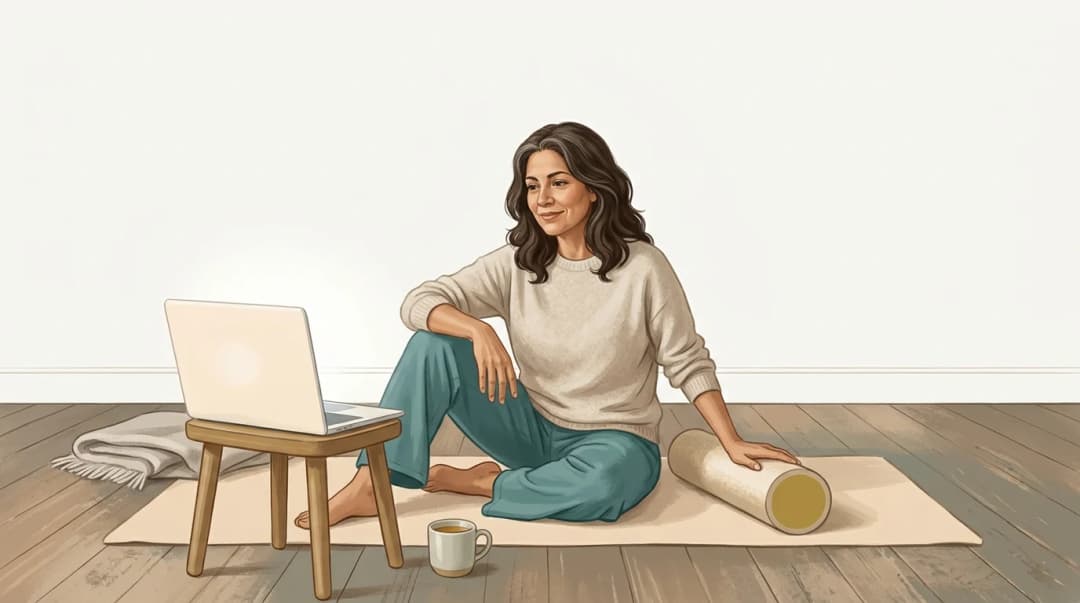
In the Feldenkrais Method®, we move slowly and by feel, using small movements and plenty of rest. That suits a body that is sensitive to temperature. You can lie on your back on a mat in a comfortably cool or neutral room, knees bent and feet standing, and let one knee drift a little to one side and back. Then stop and notice what changed. You set the size, you set the pace, and doing less is always allowed.
This approach does not treat fibromyalgia or promise relief. It offers a way to stay in touch with your body without adding strain. Feldy has short guided lessons built this way, and our page on exercises for fibromyalgia shows what gentle movement can look like. More ideas live in our fibromyalgia hub.
One thing to notice this week: after a warm bath or a hot afternoon, pause and ask how your body feels an hour later, not just in the moment. That small habit shows you how heat really treats you.
Small, safe movement for a sensitive body
Now for movement that respects a sensitive body. The Feldy program stays well below pain, giving the nervous system room to soften through gentle Feldenkrais® lessons. Gentle, guided, and self-paced.
Start my free 7-day trialNo credit card needed.
Common Questions about fibro and heat (FAQ)
Does heat help or hurt fibromyalgia?
It can do either, depending on the kind of heat. Gentle local warmth, like a warm bath or a heat pack, soothes many people. Hot, humid weather or getting overheated leaves many people with more pain, fatigue and broken sleep. Studies on weather are mixed, so noticing your own pattern is more useful than any general rule.
Why does a warm bath feel good but a hot day makes me feel worse?
A bath warms your skin and muscles for a short time, and you can get out when you choose. A hot day asks your whole body to keep cooling itself for hours, which takes energy and can disturb sleep. A nervous system that already turns signals up may feel that extra load strongly.
Is it safe to use a heat pack with fibromyalgia?
For most people, a warm pack used briefly is fine. Keep it warm, not hot, and put a layer of cloth between it and your skin. Check your skin often. Never sleep on one. If you have diabetes, reduced feeling or circulation problems, ask your doctor first, because you may not notice a burn forming.
How long should a warm bath be?
There is no single right length. Many people do well with a short, comfortable soak, then slow time to cool down and rest. Water that is warm rather than hot is easier on the heart and on a tired body. Stand up slowly, and stop if you feel dizzy, faint or unwell.
How is gentle movement different from an exercise class on a hot day?
A class often follows a set pace and effort, and a warm room can add to the load. Feldenkrais® style movement is small, slow and done by feel, usually lying down, with rests between. You decide the size of each movement. On a hot day that freedom to do less matters.
When should I see a doctor about heat and my symptoms?
Talk to your doctor if heat brings a clear change in your usual symptoms, or if you are unsure whether a new symptom belongs to fibromyalgia. Seek urgent care for a fever, fainting or a racing heart that does not settle. Call emergency services for confusion in the heat, feeling very hot but no longer sweating, chest pain or collapse.
How can I tell if heat is really affecting my fibro?
Keep a simple note for a few weeks. Write the day's temperature, how long you were out, your sleep and your pain and energy on a scale of one to ten. Patterns often show up. Bring the note to your next appointment, which gives your care team something concrete to work with.
Small, safe movement for a sensitive body
See the programRelated resources
Exercises for Fibromyalgia: A Gentle Place to Start
Gentle exercises for fibromyalgia that work with a sensitive body, not against it, with a short paced lesson you can do on a tired day and simple cues to stay below your limit.
Fibro and Cold Weather: Why Winter Can Feel Harder
Why cold, damp days can turn up pain and stiffness, what the evidence does and does not show, and small, warm ways to stay comfortable and moving.
Fibromyalgia weighed less on daily life after six months of live online classes at home
Ready to start moving better?
Gentle, guided lessons for your body. Try your first one free, no credit card required.