
EDS and Heat Intolerance: Why Heat Hits So Hard
Why warm days can leave people with EDS or hypermobility dizzy, drained and foggy, and which gentle options are worth talking over with your doctor.
In short
EDS and heat intolerance often go together, likely because many people with hypermobile EDS also have dysautonomia, so heart rate and blood pressure adjust less smoothly. Heat widens blood vessels and blood can pool in the legs, bringing dizziness, a racing heart and fatigue.

Prefer to ease in gently?
See a few gentle exercises for hypermobility to try.
Before you begin. This page is general information, not a diagnosis and not a treatment. EDS, dysautonomia and POTS need care from your doctor or specialist team, so see them first and ask before changing fluids, salt, medicines or activity. Stop and lie down if you feel faint. Call emergency services for chest pain, fainting that is new or unlike your usual pattern, or a racing heart that will not settle, and do not wait to see if it passes.
EDS and heat intolerance often show up together, and if warm days leave you dizzy, drained and foggy, you are not imagining it. A likely reason is that heat opens up blood vessels, and when the automatic nervous system is slow to respond, blood gathers in the legs and less reaches your head. This page is general information and sits beside your medical care. It does not diagnose or treat anything.
Why EDS and heat intolerance can go together
Many people with hypermobile Ehlers Danlos syndrome (EDS) also have signs of dysautonomia, although studies differ a lot on how many. That word describes an automatic nervous system that does not adjust smoothly. This is the system that sets your heart rate and the width of your blood vessels without you thinking about it. The best known form is POTS, where the heart speeds up a lot on standing. I wrote about that link in POTS and Ehlers Danlos syndrome.
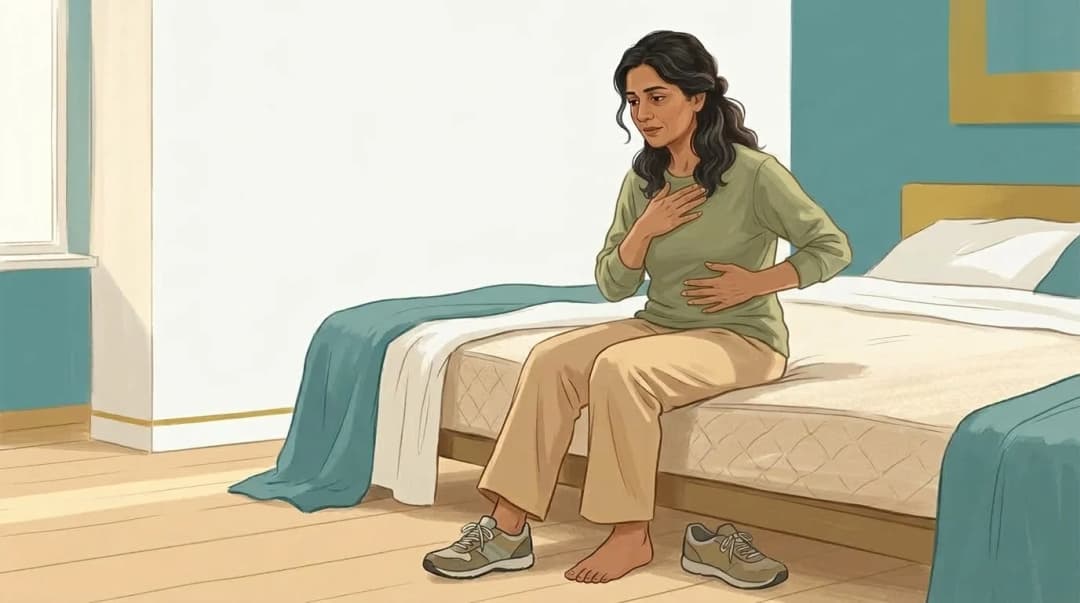
Now add warmth. Your body cools itself by widening the vessels near the skin. When the nervous system adjusts slowly, blood can settle in the legs instead of returning to the heart and head. Many people then notice:
- lightheadedness, especially on standing
- a pounding or racing heart
- sudden tiredness
- foggy thinking
- feeling shaky or queasy
Some researchers think that looser connective tissue in the walls of the veins may let blood pool more easily. This is not proven, and the work is ongoing. The NHS names getting too hot as something that can make POTS symptoms worse, and notes that POTS is more likely in people with joint hypermobility (NHS, 2026). So your reaction has a recognised pattern behind it.
What helps with EDS and heat intolerance
These are options to talk over with your doctor, not prescriptions. Your team knows your heart, your blood pressure and your medicines.
- Learn your own triggers. For some people it is a hot car. For others it is a long shower, a stuffy room or standing in a queue. A short note on what happened before a bad hour can show patterns.
- Cool the body, not only the room. A cool cloth on the neck or wrists, a fan, or a cooler spot to sit can take the load off.
- Fluids and salt, only as advised. Some doctors suggest more of both for dysautonomia. Salt is not right for everyone, for example with high blood pressure, so ask first.
- Pace the day. Spread tasks out, and leave rest before and after a warm outing.
- Lie down early. If you feel lightheaded, lying down with your legs raised often settles things sooner than pushing on.
- Use the cooler hours. Gentle movement fits better in the early morning or evening.
When to see your team about heat symptoms
Heat symptoms deserve a conversation if they are new, getting stronger or limiting your day. Describe what you feel and when. Chest pain, confusion, fainting that is new or unlike your usual episodes, or a racing heart that will not settle are emergencies, so call emergency services. Do not try to sit them out. If you already faint now and then with known POTS, agree a plan with your team for what counts as urgent for you.
Heat can also make joint pain and pain in the neck and shoulders feel louder. For that, see coat hanger pain in EDS.
Slow movement on hot days
In the Feldenkrais Method®, lessons are slow and small, and many are done lying down. Lying down asks much less of your blood pressure control than standing. So a lesson can be a way to keep moving on a day when upright activity is too much. It does not treat heat intolerance. Its offer is attention: you can notice when your breathing quickens, when a limb feels heavy, and when it is time to rest.
Feldy has short lessons you can do on a bed or sofa. If your joints slip easily, start with the ideas in exercises for hypermobility and keep every movement small. You can read more on hypermobility and joint instability, or browse our hypermobility hub.
One thing to notice
Next time heat hits, look back at the hour before. What were you doing, and how long had you been upright? That one answer is worth bringing to your doctor.
Stability without gripping
Now for stability that does not rely on gripping. The Feldy program builds a clearer sense of where the body rests, so steadiness grows from awareness, through Feldenkrais® lessons. Gentle, guided, and self-paced.
Start my free 7-day trialNo credit card needed.
Common Questions about EDS and heat intolerance (FAQ)
Why does heat make EDS symptoms worse?
Many people with hypermobile EDS also have signs of dysautonomia, where the automatic nervous system does not adjust heart rate and blood pressure smoothly. Heat widens blood vessels, so blood can pool in the legs. Dizziness, a racing heart, tiredness and brain fog may follow. Researchers are still working out why the two travel together.
Is heat intolerance a sign of POTS?
It can go with POTS, but it does not prove it. Many things make people feel unwell in the heat. If you feel dizzy on standing, or your heart races without a clear reason, ask your doctor about testing instead of guessing.
Should I drink more water and eat more salt in hot weather?
Only if your own doctor advises it. Some people with dysautonomia are told to raise fluids and salt, but salt is not right for everyone, for example if you have high blood pressure or kidney problems. Ask your team what suits you.
How is this different from ordinary heat discomfort?
Everyone feels slow in a heatwave. With dysautonomia the reaction can be larger and quicker, such as lightheadedness on standing or a pounding heart after a short walk. For some people it takes a day or more to settle. That pattern is worth describing to your doctor.
How often should I move gently when it is hot?
Short and often tends to suit, such as a few quiet minutes lying down or seated. Choose the cooler part of the day and stop if you feel faint. Your doctor may have advice on pace that fits you.
When should I see a doctor about heat symptoms?
See your doctor if heat regularly leaves you dizzy, faint or exhausted, or if symptoms are new. Call emergency services for chest pain, confusion, fainting that is new or different from your usual, or a racing heart that does not settle. Do not wait to see if it passes.
Can Feldenkrais help with heat intolerance?
It does not treat heat intolerance or dysautonomia. Slow Feldenkrais lessons done lying down or seated ask little of your blood pressure control. Many people find them a calm way to keep moving on hard days, alongside medical care.
Stability without gripping
See the programRelated resources
POTS and Ehlers Danlos Syndrome: How They Connect
Why dizziness on standing and a racing heart show up so often in people with very bendy joints, what researchers are exploring, and how gentle movement can fit around medical care.
Coat Hanger Pain and EDS: What the Pattern Means
Why the ache across your neck and shoulder tops may follow standing rather than effort, and why stretching harder is rarely the answer in EDS.
Getting out of breath may be the hypermobility symptom that quietly shrinks your day
Ready to start moving better?
Gentle, guided lessons for your body. Try your first one free, no credit card required.