
Same Exercises, Plus Awareness: What Two Trials Added to Core Stabilization
Two small trials kept a stabilization program exactly as it was and added a Feldenkrais part. What changed, what did not, and what we still do not know.
Between Sessions, No. 3: the Feldenkrais Method® alongside physiotherapy.
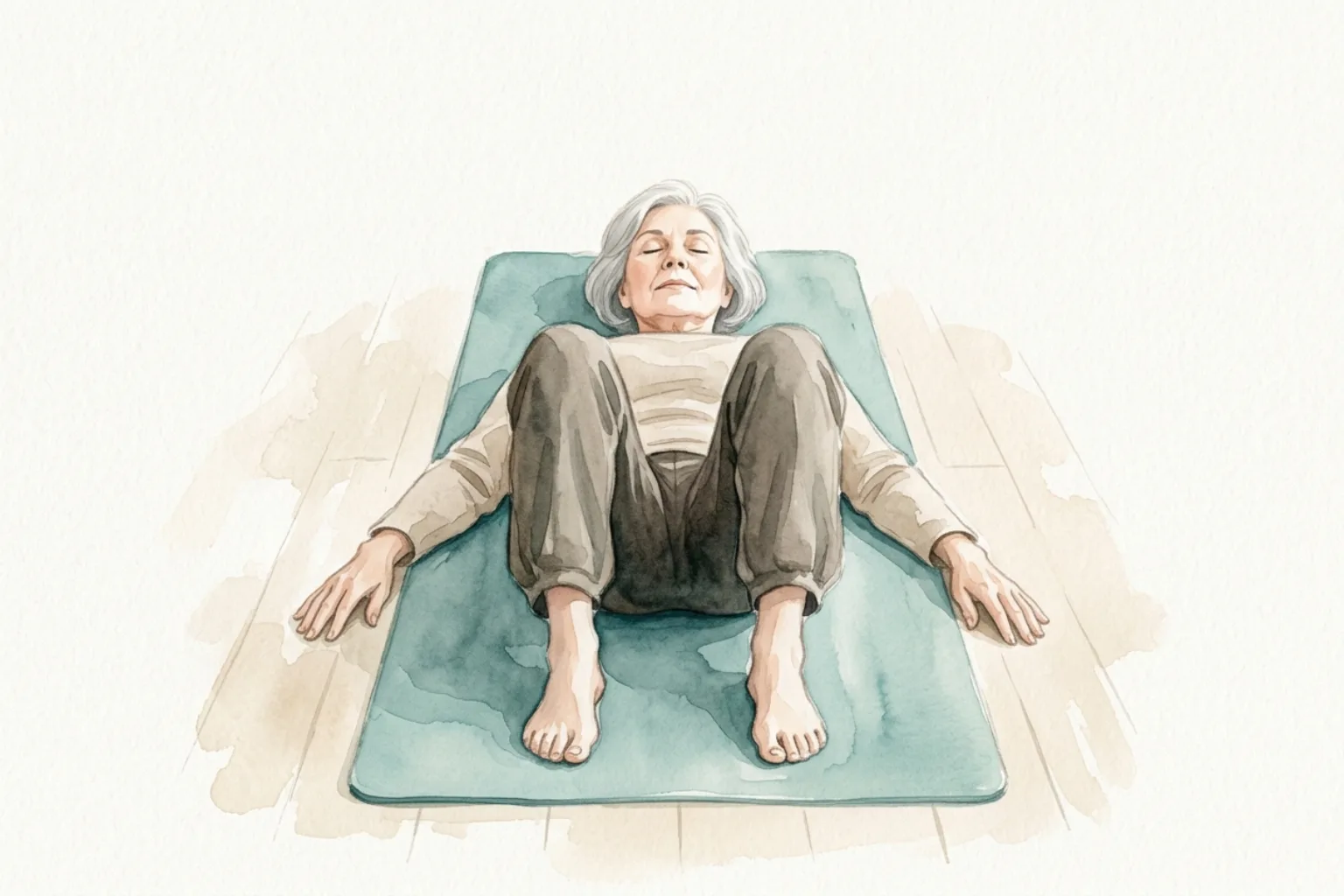
Your patient lies on her back for a stabilization exercise. Her trunk stays steady and the form looks good. But her jaw is tight, and her breath has stopped.
You have probably seen this many times. The exercise suits her. The question is what she notices while doing it.
I am not a physiotherapist. I am a Feldenkrais teacher, and many of the people in my classes, and many Feldy users, also see a physiotherapist. Two small trials recently looked at something close to this moment. They kept a stabilization program exactly as it was and added attention to how the movement feels.
What the two trials did
Both trials came from the same research group in Iran. Both studied women aged 60 to 80 with long-standing low back pain without a single clear cause.
Both compared the same two programs over eight weeks. In the first trial, one group did Dynamic Neuromuscular Stabilization (DNS), three sessions a week. The other group did the same DNS program, plus 30 minutes of Feldenkrais work in each session. This part used slow, small movements, with the attention on how each movement felt rather than how it looked. The women also had a short Feldenkrais practice to do at home each day. The second trial's published summary does not give these session details.
I wrote about the first trial for a general reader in April, and our research digest covered it in August. Here, I want to look at the findings from a physiotherapist's point of view.
What changed, and what did not
In the first trial, with 30 women, both groups improved, and the group with the added Feldenkrais work improved significantly more. On a 0 to 10 scale, pain fell by about 4 points with stabilization alone and by about 5 points with the added work. Fear of movement on the Tampa Scale fell by about 13 points alone and by about 21 points with the added work. Both differences between the groups were statistically significant. The lower back also bent and extended a little further (Saki and colleagues, 2025).
The second trial, with 37 women who completed the study, found a similar pattern for pain. The group with the added work also gained more hip strength. Balance improved in both groups, with no clear difference between them (Ziya and colleagues, 2026).
So less pain was the one result both trials shared. Balance, which only the second trial measured, showed no clear extra benefit.
The limits
These are small trials, and the limits matter.
- In the first trial, the added group had 30 more minutes in every session. Some of the improvement may have come from having more time and attention, rather than from the Feldenkrais work itself.
- Both trials came from the same team. An independent group has not yet repeated the studies.
- There was no follow-up after the eight weeks, so we do not know whether the improvements lasted.
- All the participants were women aged 60 to 80 with chronic, nonspecific low back pain. The results may not apply to other patients.
So this is a signal, not proof. I do not think it means you should change your program. It does suggest that attention to how an exercise feels is worth studying, and maybe worth a minute in practice.
Who this is not for
- Anyone with red flags: new weakness, bladder or bowel changes, numbness in the saddle area, or signs of spinal cord compression. They need prompt medical review.
- Patients with post-surgery precautions that you or the surgeon have not cleared.
- People who cannot follow spoken instructions.
A small idea from Feldenkrais teaching
In a Feldenkrais lesson, we rarely need to change the movement. We change the question.
Before the next repetition, a teacher might ask one simple question: "Where does this movement start?" Or: "Is your breath still moving?" Or: "Could you do it with a little less effort?"
Some physiotherapists already use questions like these. It takes about a minute, while the exercise and the dose stay exactly as you prescribed. You know your patient, so you can decide whether it fits.
Our page for physiotherapists explains what has been studied and how Feldy can sit alongside your care, and invites you to try it free for 7 days. Our post on why home exercises stall looks at what happens between visits, and does Feldenkrais work gives the wider research picture.
We are here to support the work you already do, not to replace it.
Try a Lesson Before You Suggest One
Try Feldy free for 7 days and do a lesson or two yourself. Notice what changes when the question moves from "Is this right?" to "What do I feel?", then decide if it fits any of your patients.
See Feldy for physiotherapists← Previous: Why Patients Do Their Exercises in Clinic but Not at Home
Start your free 7-day trial
Start free trialMore Articles
Adding Feldenkrais to Exercise Improves Back Pain Outcomes
A 2025 trial found adding Feldenkrais to stabilization exercise significantly reduced pain and fear of movement in older women with chronic low back pain.
Apr 12, 2026
Why Patients Do Their Exercises in Clinic but Not at Home
Home exercise program adherence often drops between visits. Why "three sets of ten" can stall at home, and one small idea from Feldenkrais teaching.
Oct 12, 2026
Curiosity: Gentler Than Correction
What changes when the question in your mind shifts from "Am I doing it right?" to "What do I notice?"
Oct 16, 2026Ready to Start Moving Better?
Try your first lesson for free. No credit card required.