
Anxiety that won't settle, and the weekly exercise dose 34 trials found
About 90 minutes a week of brisk walking or similar went with milder symptoms. What it adds on top of treatment is still unclear.
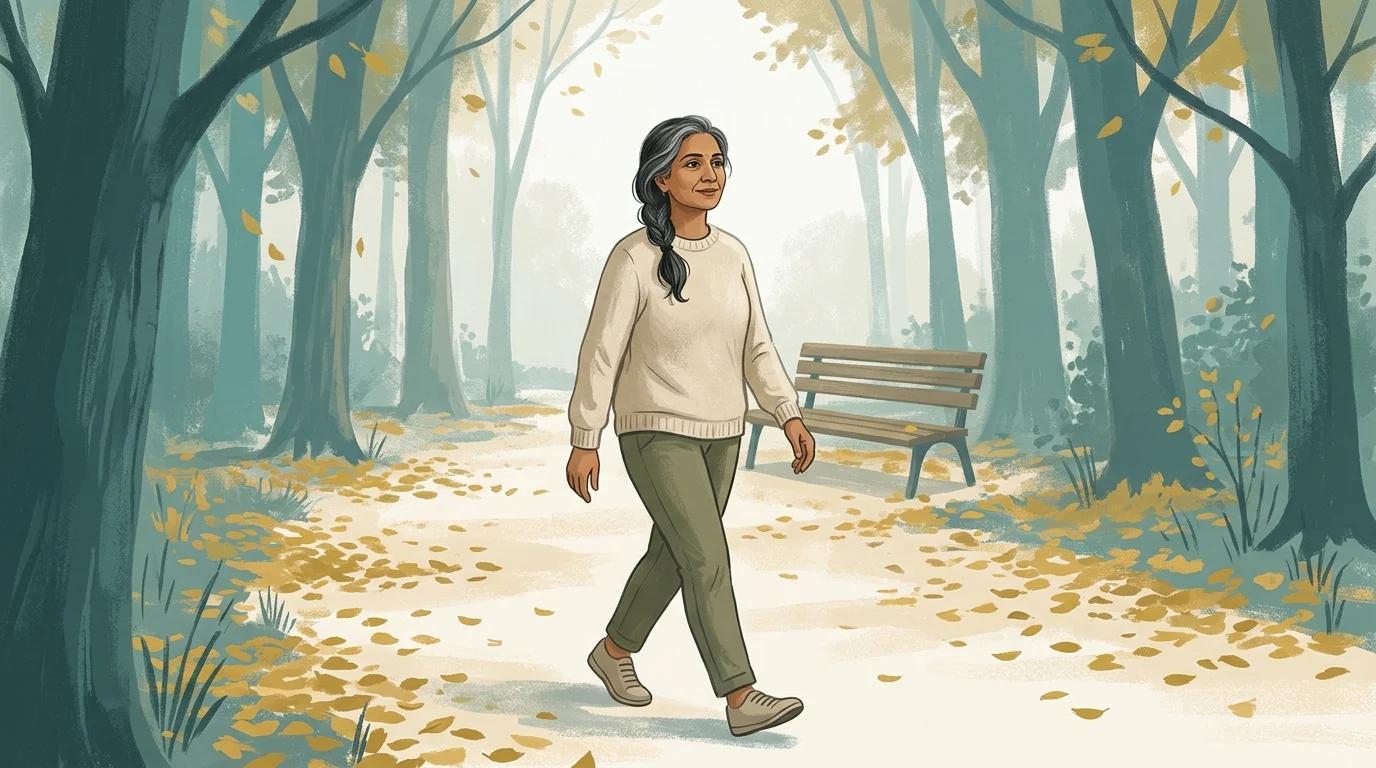
Ask most people how much exercise it would take to calm anxiety, and they picture something hard: a run every morning, a gym habit, a lot of sweat. Across 34 trials, the amount that went with a real drop in anxiety was far more ordinary. It came to about an hour and a half a week, at the pace of a brisk walk.
If worry has been sitting in your chest for months, exercise can sound like one more thing you're supposed to do, and every bit of advice seems to start several steps ahead of where you are. So this is worth hearing: you don't need to start with hard exercise, and you can build toward that amount slowly.
A weekly amount, not a workout
The review brought together trials in adults with a diagnosed anxiety disorder or with high anxiety symptoms (Journal of Anxiety Disorders, 2026). Trials in which people did more activity across the week tended to show bigger drops in anxiety. From this, the authors' analysis points to roughly 90 to 95 minutes of moderate activity a week. Their examples are everyday ones. Brisk walking, water aerobics, a stationary bike, resistance training. The authors are careful with the figure, saying only that this amount may be associated with a moderate reduction. Spread over the week, it isn't much on any one day, although the review doesn't say how people divided up those minutes.
If you live with anxiety, this means you don't need hard exercise to reach the weekly amount these trials point to. A steady weekly habit at a brisk walking pace is the kind of amount they describe.
A real change, not a dramatic one
In the 26 trials that tested exercise on its own, about 1,300 adults in all, it went with a moderate drop in anxiety, more than in the comparison groups. That is a real change, though not a dramatic one. By the end, fewer people were still counted as having anxiety. You can take this seriously; the evidence is rated moderate certainty, so it isn't settled yet.
Alongside treatment, less clear
Some trials added exercise to the anxiety treatment people were already getting, instead of using it alone. The results pointed the same way, but varied a lot from one trial to the next. That makes the evidence low certainty, and it is still unclear whether exercise adds any extra benefit. Only eight trials looked at this, which is not many.
Either way, exercise sits alongside the anxiety care your doctor or therapist has given you, not in place of it. If you take medication for anxiety, any change belongs in a conversation with whoever prescribed it. If anxiety ever feels overwhelming or unsafe, talk to a doctor, or seek emergency medical help if you need it now.
A moment, a session, a week
This review adds to the stress research we have followed here. Read together, these studies look at different spans of time. In September, a review of box breathing found that several of its eight trials showed short term easing of how stressed people felt, although the results were not consistent. The body's signals were mixed (Applied Psychophysiology and Biofeedback, 2026). In October, a study of people worn down by stress found that, for them, the heart rhythm stayed further from rest after a moderate bike ride than after a light one. People who were not exhausted showed no difference (European Journal of Applied Physiology, 2026). And a 2025 review found that in people under psychological distress, cortisol, the stress hormone, dropped most around a middle amount of weekly exercise. This amount was somewhat higher than the anxiety target. Beyond that point, more exercise went with less of a drop. Yoga and qigong led (Sports, 2025).
A moment, then a single session, then a week. In several trials, box breathing went with some short term easing. For people already worn down, the lighter ride left the heart rhythm closer to rest. The cortisol review found a middle weekly amount went with the biggest drop, not the most. What the anxiety review adds is a weekly amount linked to lower anxiety itself, rather than to the body's stress signals. If you have tried breathing exercises to calm a racing mind, that was the short end of the same question. The earlier studies are gathered in our arc on slow movement and stress.
The habit underneath
Anxiety often has a pace of its own. What I see again and again in my classes is that people who carry a lot of worry move the way they think: quickly, a little ahead of themselves, breath held high, finishing one thing while already reaching for the next. When they decide to exercise, that habit comes along, and the walk turns into one more thing to get through. In a Feldenkrais Method® lesson, the first step is simply to notice the pace, without judging it. Moving slowly for a few minutes, and only where it feels easy, pleasant, and comfortable, gives the nervous system a different experience of moving, and a chance to notice that you don't always have to hurry. That is a way in, not the dose itself; the trials measured moderate activity, and none of them tested Feldenkrais.
Start below the target
If an hour and a half a week sounds far away right now, you don't have to start there. The target can wait while you build the habit that reaches it: a walk short enough that you'd gladly do it again tomorrow, or a few minutes of slow movement on the floor on the days a walk feels like too much. The Feldypedia entry on anxiety held in the body looks at where worry tends to settle physically, and if anxious thoughts keep you awake, our page on tossing and turning all night explains what that restlessness can mean.
Start with an amount you would happily repeat tomorrow, and let the week grow from there.
Let Feldy guide you, eyes closed
A calm voice walks you through gentle moves so your attention stays in your body, not on the screen.
Try Feldy Free for 7 daysNo credit card needed.
Sources
- Effects of exercise as a stand-alone intervention or adjunct to standard treatment on anxiety outcomes in adults: A systematic review and meta-analysis— Journal of Anxiety Disorders, 2026
- Effects of exercise as a stand-alone intervention or adjunct to standard treatment on anxiety outcomes in adults (PubMed record)— PubMed, 2026
- Systematic Review of Randomised Controlled Trials Evaluating Box Breathing for Stress, Autonomic, and Clinical Outcomes— Applied Psychophysiology and Biofeedback, 2026
- Heart rate variability and cortisol responses to acute low- and moderate-intensity exercise in stress-related exhaustion— European Journal of Applied Physiology, 2026
- The Optimal Exercise Modality and Dose for Cortisol Reduction in Psychological Distress: A Systematic Review and Network Meta-Analysis— Sports, 2025
Movement Pulse is informational, not medical advice. See our editorial policy.
Move better with Feldy
See the programMovement Pulse Weekly
The week's best research, in your inbox Tuesday.
Movement science, gentle-practice ideas, and a practitioner's read on what's new. Free.
More from Movement Pulse
When stress has worn you out, gentler exercise was easier on the nervous system
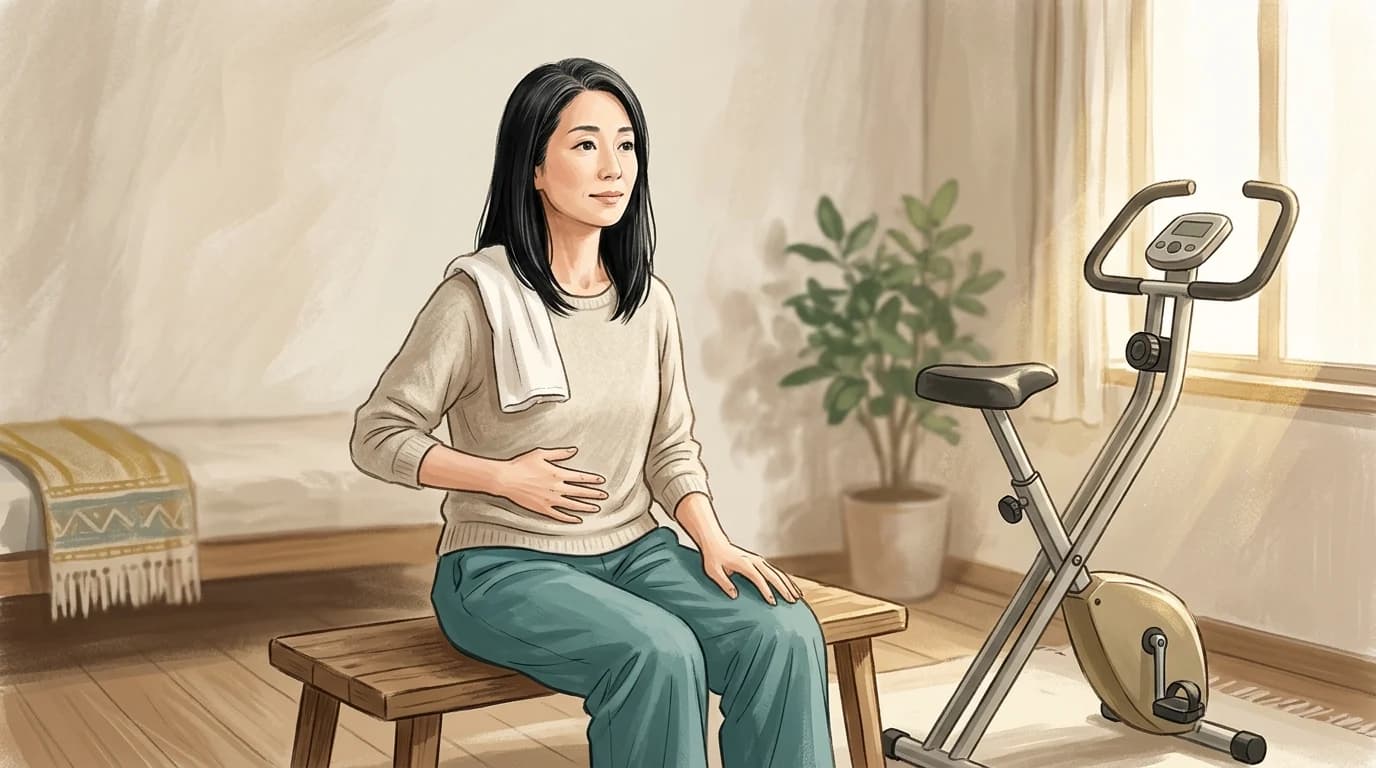
In a Stockholm study, people with stress related exhaustion showed a calmer heart rhythm after a light bike ride than after a moderate one. How hard you go seems to matter more once the system is already tired.
Oct 27, 2026
Box breathing calmed people in the moment, while deeper stress markers mostly held still
A September 2026 review went looking for every randomized trial of the counted breathing square and found eight. A practitioner's read on the counting, the holds, and what the breath does when you leave it alone.
Sep 29, 2026
Lying down is not the same as resting, and researchers have now measured the difference
A panel of 27 people and 162 adults living with fatigue helped build a scale for rest. One of its six parts is called lack of skill.
Sep 13, 2026Ready to start moving better?
Gentle, guided lessons for your body. Try your first one free, no credit card required.