
Fear of moving is linked to thinner bones, but the study cannot tell us which came first
A new cross sectional study found that fear of movement was common in people with osteoporosis and tracked with lower bone density. It cannot say which drives which, and that gap is the whole point.
Here is a headline waiting to be written: fear of moving weakens your bones. A study published this year in Frontiers in Endocrinology gives it just enough support to be tempting, and just enough nuance to be misleading. It is worth slowing down on, because the gap between what the study found and what a headline would claim is exactly the interesting part.
Researchers looked at 246 older adults admitted to orthopedic wards, most of them women, all with osteoporosis (Frontiers in Endocrinology, 2026). They measured fear of movement, the guarded sense that moving might cause harm, and they measured bone mineral density in the spine. Two findings stand out. First, fear of movement was not a fringe problem. More than three in four of these patients had it. Second, the ones who were more afraid to move tended to have lower bone density, and that association held even after the researchers accounted for age and other factors.
So far this sounds like a clean story. Here is what the headline would miss. This was a snapshot, a cross sectional study, which means everyone was measured once, at the same moment. A snapshot can show that two things travel together. It cannot show which one arrived first. It is entirely plausible that fear of movement leads someone to move less, and that a life with less loading in it leaves bone weaker over time. It is equally plausible that thin, fragile bone, and perhaps a fracture that already happened, is what taught the fear in the first place. The study itself is careful about this. The excitable version of it in your feed will not be.
Why labor the point? Because the two readings lead to very different advice. If you believe fear simply reflects real fragility, the sensible response is to protect the bone and accept the caution. If you believe fear is also quietly removing loading from a person's daily life, then the fear becomes something worth working with directly, because bone responds to being used. Both things are probably true at once, which is the honest and slightly frustrating answer, and it is why the direction of the arrow matters so much.
What is not in doubt is the ingredient bone actually wants. Bone is living tissue, and it holds itself according to the demands placed on it. Weight bearing and progressive resistance work are what build and defend bone density, and that belongs to a plan your doctor and physiotherapist set up, with the scans and the medication questions that osteoporosis genuinely requires. Gentle awareness work does not replace any of that. It sits alongside it. What gentle work can do is address the part the loading program cannot reach on its own, which is whether a frightened person actually shows up to load their bones at all.
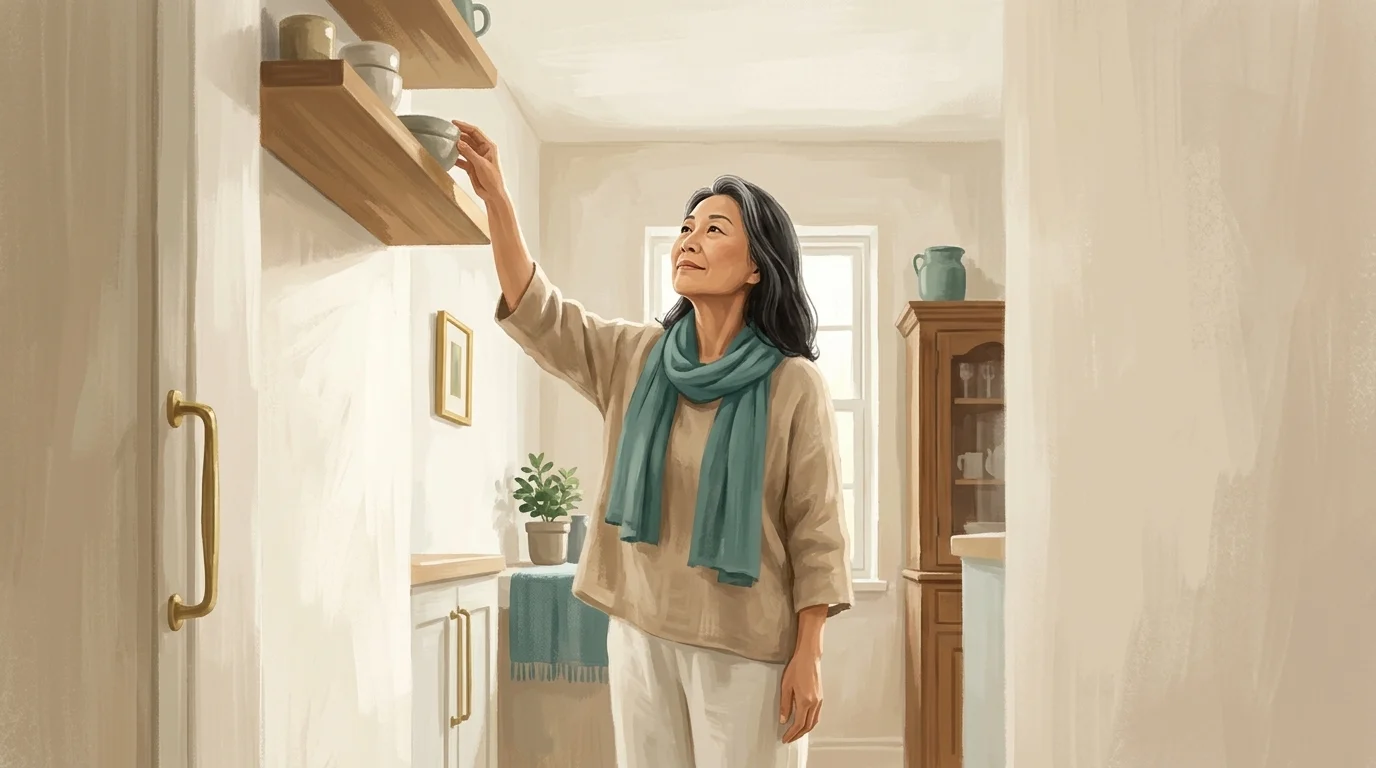
This is the part I see up close. When someone has been told their bones are fragile, the word lands in the body long before it reaches the mind. They start to move as though they are made of glass. They stop reaching for the top shelf, stop carrying the shopping on that side, stop trusting their own feet on a curb. Every one of those small retreats is a subtraction of exactly the loading bone needs. The fragility becomes a little self fulfilling, not because the person is weak, but because fear is efficient at shrinking a life one cautious choice at a time.
The way back is not a lecture about being brave. It is a slow accumulation of movements that feel easy, pleasant, and comfortable, so that the nervous system gathers its own evidence that moving is not the same as breaking. That is where work based on the Feldenkrais Method® earns its place, not as a treatment for osteoporosis, which it is not, but as a way to rebuild the confidence that lets the loading program and ordinary daily life continue. People with fragile bones have rarely lost the capacity to move. Many have lost trust that moving will help rather than harm, and that trust is rebuildable.
If you take one thing from the study, let it not be the frightening headline. Let it be the ordinary, encouraging fact underneath it: fear of movement is common, it is measurable, and unlike bone density itself, it is something a person can work on gently, patiently, and starting today.
Let Feldy guide you, eyes closed
A calm voice walks you through gentle moves so your attention stays in your body, not on the screen.
Try Feldy Free for 7 daysNo credit card needed.
Sources
Movement Pulse is informational, not medical advice. See our editorial policy.
Move better with Feldy
See the programMovement Pulse Weekly
The week's best research, in your inbox Tuesday.
Movement science, gentle-practice ideas, and a practitioner's read on what's new. Free.
More from Movement Pulse
The movement that builds bone and the movement that keeps you steady are not the same
A review published this week reaffirms that bone responds to how hard you load it. Here is where gentle movement fits, and where it honestly does not.
Jul 25, 2026
The bone research kept saying load it harder. The largest review added a quieter line
124 trials and 18,429 adults over forty. Brisk walking led at two of the three sites measured. The one result the authors rated most confidently was not a walking result.
Sep 16, 2026
Harder lifting built strength, but not more bone
A meta-analysis of 18 trials found heavier resistance training built more leg strength than lighter training, but the two came out about equal for bone density.
Jul 5, 2026Ready to start moving better?
Gentle, guided lessons for your body. Try your first one free, no credit card required.