

Exercises for Heel Spurs: Gentle Care for a Sore Heel
Seated, unhurried exercises for heel spurs that ask nothing of the painful spot, so standing and walking can feel a little easier through the day.
Before you begin. This is gentle self care, not medical advice. See a doctor or podiatrist if your heel pain is severe or sudden, follows a pop or a fall, comes with numbness or tingling, or does not settle over a few weeks. If you have diabetes, have any foot pain looked at promptly rather than managing it at home. Keep everything below pain.
The lesson
About 5-10 minutes. Move slowly, do less than you can, and stay well below any pain. Rest whenever you need to.
Prefer to listen than read?
Feldy voices gentle lessons like this for body awareness, so you can close your eyes and follow along.
- 1
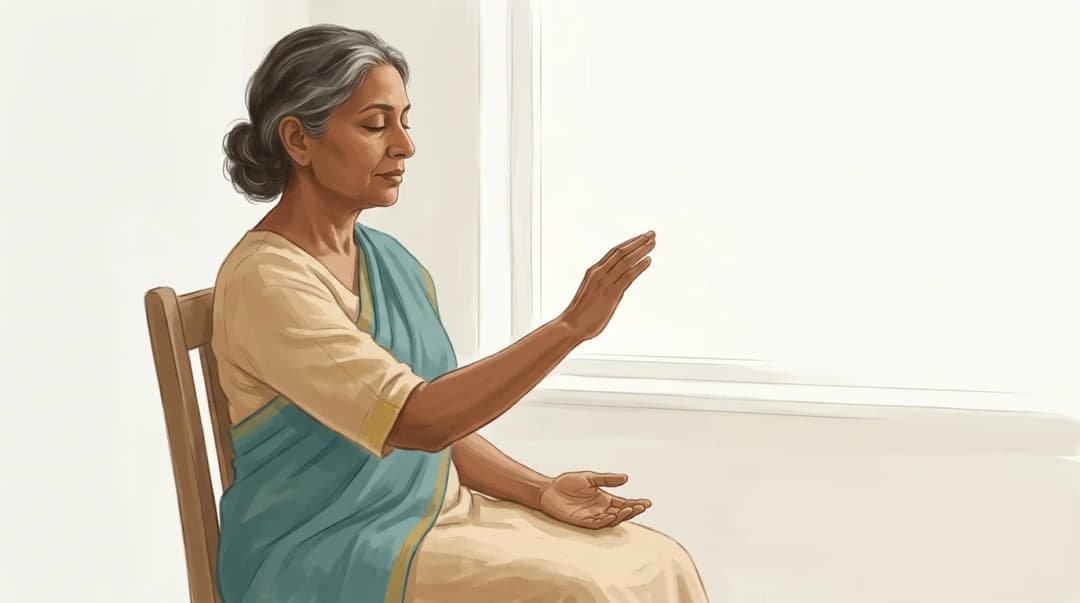
Settling into sitting. Please sit toward the front of a firm chair with bare feet resting on the floor, hip width apart. Take a moment to let the chair carry your weight.
- 2
Noticing how each sole meets the floor. Without moving anything, notice which parts of each sole touch the floor: the heel, the outer edge, the ball, the toes. Does the sore heel rest on the floor differently from the other one?
- 3
A tiny roll toward the outer edge. Let one foot roll very slowly a little toward its outer edge and back to the middle, so small it is barely visible. Only as far as feels easy, and nothing should press into the sore spot.
- 4
Rolling gently toward the inner edge. Now let the same foot tilt a tiny way toward its inner edge and back. Then pause and rest, leaving the foot where it is. Does the sole feel any different against the floor?
- 5
Toes lifting, heel staying. With the heel resting quietly, slowly lift all the toes of that foot a small way and lower them again, several unhurried times. If lifting them all is awkward, lift them a smaller amount, or simply imagine it.
- 6
Feeling the whole leg join in. As the toes lift and lower, notice how the ankle, the shin, even the knee take some quiet part in the movement. The foot never works alone.
- 7
Comparing the two feet. Let both feet rest and compare them: their warmth, their weight, how clearly you feel each sole. Is there any difference between the foot that moved and the one that waited, or between now and when you began?
Let Feldy guide you, eyes closed
You just read these steps. In the Feldy program, a calm voice guides you through each gentle move, so your attention can stay in your body instead of on the screen.
Try Feldy Free for 7 daysNo credit card needed.
If you are looking for exercises for heel spurs, the most useful thing to know first is that the spur itself is usually not what hurts. A heel spur is a small bony growth on the underside of the heel bone, and it very often turns up by chance on an X ray in people who have no heel pain at all, while plenty of people with real heel pain have no spur. The pain in that part of the foot far more often comes from the plantar fascia and the tissue around it, so movement advice for heel spurs is really advice for an irritated, guarded heel. The Feldenkrais Method® approaches this kindly: instead of pressing into or stretching the sore spot, the short seated lesson above invites the whole foot to move slowly and easily, so the heel can be part of standing and walking with less bracing.
Why exercises for heel spurs should stay gentle
Heel pain under the foot is remarkably common company. Plantar fasciitis occurs in about 10% of the general population, with peak incidence between the ages of 40 and 60 (StatPearls, NCBI, 2023). Spurs often show up in the same neighborhood, which is why the two get talked about together, but the tenderness you feel first thing in the morning or after a long day on your feet is usually the tissue, not the bone.
That distinction matters for what movement can offer. No exercise removes or shrinks a spur, and this page will not suggest otherwise. What slow, attentive movement can influence is everything around the sore spot: how much the foot and calf brace, how weight travels through the sole, and how willing the foot is to share work with the ankle, knee, and hip. An irritated heel tends to make the whole foot cautious, and that caution often adds more discomfort than the original trouble. Movement that stays small, slow, and entirely away from the painful spot gives the foot a chance to soften that guarding without asking the sore tissue to tolerate anything.
What the slow movements in this lesson are doing
Each step above asks you to notice something, not to accomplish anything. Sitting keeps body weight off the heel, so the foot can move without the sore spot carrying anything. The tiny rolls from the outer edge toward the inner edge let the ankle and the many small joints of the foot tilt through an easy arc, and comparing the two feet hands your nervous system a vivid picture of how each one actually rests and moves. A clearer picture tends to mean less bracing. Lifting and lowering the toes while the heel stays quietly on the floor wakes up the front of the foot without pulling on the sole, and noticing how the shin and knee join in is a gentle reminder that the heel never works alone.
None of it should feel like work, and nothing should press into or stretch the painful place. If a movement feels unpleasant, shrink it until it is easy, or picture it in your mind without moving at all; the foot learns even from movement it only imagines. The rests matter as much as the movements; they give the new sensations somewhere to land.
Keeping exercises for heel spurs safe and comfortable
A few habits keep this practice kind. Stay below pain, always: the sore spot should be left completely alone, not tested. Bare feet on a warm floor make the small movements easier to feel, and sitting means you can practice even on days when standing is unwelcome. Keep the ranges tiny even when the heel is having a better day, because irritated tissue under the foot tends to reply to enthusiasm the next morning rather than straight away.
This practice sits alongside your doctor's or podiatrist's care, never in place of it, and the same goes for anything a physiotherapist has given you for your heel. Book a visit promptly if the pain is severe or sudden, follows a pop or a fall, comes with numbness or tingling, or does not settle over a few weeks. Anyone with diabetes should have foot pain looked at promptly rather than managed at home. A sore heel also tends to change how you walk, often without your noticing, and our Feldypedia note on gait changes and walking difficulty looks at what that quiet adjustment does through the rest of the body.
More gentle movement in the same spirit
Once this seated lesson feels familiar, its quality of attention can extend to the rest of the foot. Our page on the plantar fascia stretch looks at that popular approach through the same sensing lens, and our guide to foot arch pain explores the arch that shares a wall with the heel. Feldy builds its daily audio lessons around this same principle: tiny, comfortable movement, guided at a pace that leaves room to notice.
Find where to start
One sore heel is not much like another, and the lesson that suits you today may not be the obvious one. A short quiz can point you somewhere sensible.
Not sure where to start? Take the Movement Match quiz, four quick questions in about two minutes, and find the movement method that fits you.
Whatever you pick, let comfort stay in charge.
Common Questions about exercises for heel spurs (FAQ)
What are the best exercises for heel spurs?
The kindest movements are ones that ask nothing of the painful spot itself: small, slow foot rolls and easy toe lifts done sitting down, like the lesson above. Since heel spur pain usually comes from the irritated tissue under the heel rather than the spur, gentle movement that lowers guarding around the foot tends to be more useful than anything forceful. Pick something so easy that returning to it most days feels like no effort at all.
What should I avoid with a heel spur?
Be cautious with anything that presses hard into the sore heel, such as rolling it on a ball, deep stretches that pull sharply on the sole, and long barefoot walking on hard floors while the heel is irritated. Pushing through pain rarely settles this kind of heel trouble. If something stings, shrink the movement, take it slower, or set it aside for another day.
Can exercises get rid of a heel spur?
No, and it is worth being upfront about that. A spur is a small bony growth, and movement does not shrink or remove it. The reassuring part is that the spur is usually not the source of the pain: many people have spurs and no pain at all. What gentle movement can influence is the irritated tissue and guarding around the heel, which is where most of the discomfort lives.
How often should I practice?
Little and often is friendlier to a sore heel than a rare long session. A few unhurried minutes most days is enough, and sitting makes it easy to do while the kettle boils or before putting shoes on. End the practice while it still feels pleasant.
How long until my heel feels better?
Some people notice their foot resting more softly on the floor right after a lesson, while change in how standing and walking feel usually builds over weeks. Heel pain of this kind is often slow to settle whatever you do, so patience is part of the picture, and the spur itself does not go anywhere.
How is this different from stretching for heel spurs?
Stretching works on tissue length, often by pulling on the calf or the sole of the foot, and it can have real value for heel pain. This lesson works through a different mechanism, using tiny, slow movement to sharpen your sense of the whole foot, so it can meet the ground with less bracing. Both can have real value, and they sit comfortably side by side.
When should I see a professional about heel pain?
See a doctor or podiatrist if the pain is severe or sudden, follows a pop or a fall, comes with numbness or tingling, or has not settled after a few weeks of taking care. Anyone with diabetes should have foot pain checked promptly rather than managing it at home. Everything on this page sits alongside that care, never in place of it.
Learn to listen to your body
See the programRelated resources
Foot Exercises for Ballet: Sensing the Foot Off the Barre
Foot exercises for ballet dancers that sharpen how clearly you sense the sole, toes, and ankle: slow, shoeless, one foot at a time, away from the barre.
Supinated Foot Exercises: Gentle Work for Feet That Roll Out
Supinated foot exercises that use slow, curious foot and lower-leg awareness to help you sense the outward roll and share your weight more evenly, without forcing.
Your balance got better, but did your sense of where your body is get better too
Ready to start moving better?
Gentle, guided lessons for your body. Try your first one free, no credit card required.