
Gentle Exercises for Stress and Sleep
Gentle exercises for stress and sleep are slow, calming movements that help a tense body wind down, by giving your attention something quiet and physical to settle on. Rather than trying to force relaxation, they let small, easy movements release held tension so the body can soften toward rest.
The lessons below come from the Feldenkrais Method®. You move slowly, often lying down, and let the body ease its way toward calm. Pick one, give it ten quiet minutes, and notice the difference before and after.
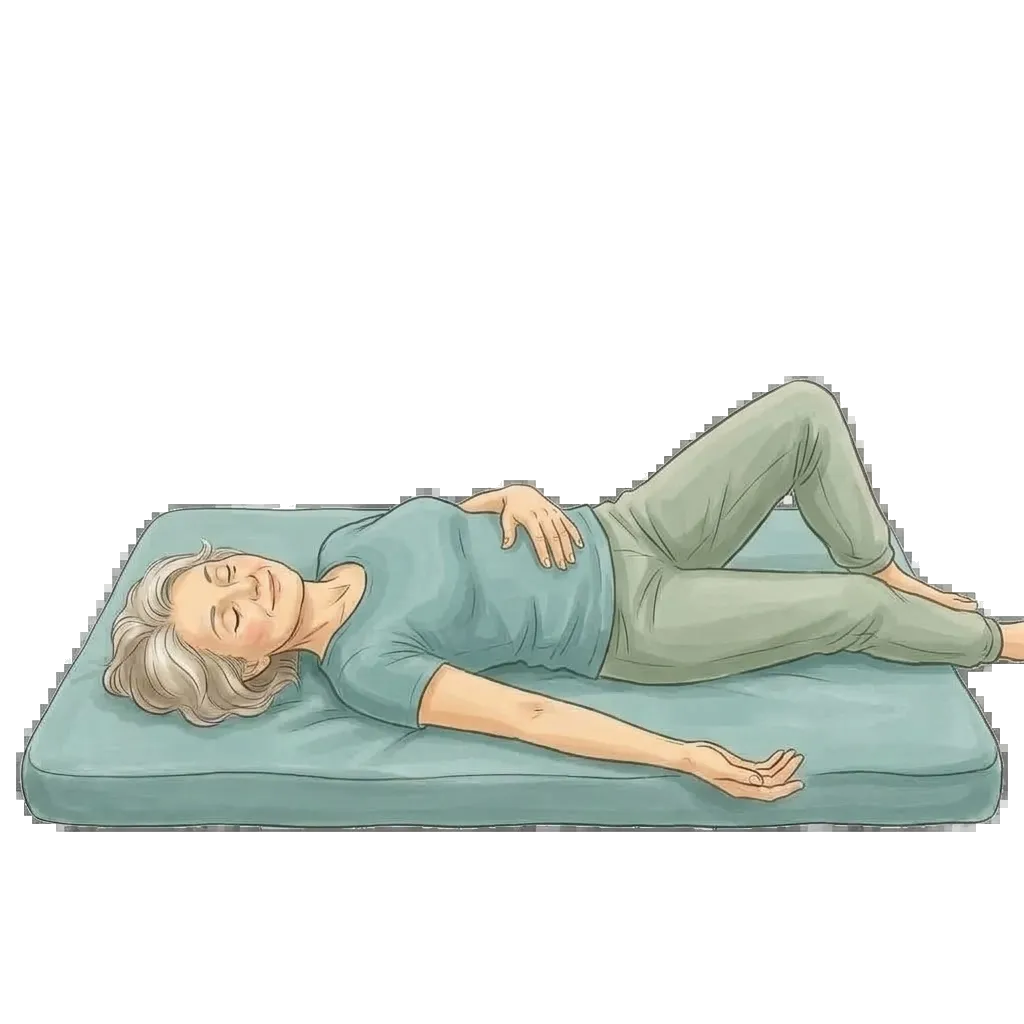
Somatic Exercises for Sleep: Wind Down Through Movement
Somatic exercises for sleep use slow, soothing movement to settle a busy body before bed. Learn why it helps a racing mind, with a short lesson to try tonight.
Vagus Nerve Exercises for Sleep: A Quiet Lesson in Bed
Vagus nerve exercises for sleep: small, slow movements in bed that many people find help the body feel quieter before drifting off.
Body Scan for Sleep: A Feldenkrais® Lesson to Do in Bed
A body scan for sleep from the Feldenkrais tradition: tiny movements give busy attention somewhere to land, done lying in bed with the lights off.
Progressive Muscle Relaxation for Sleep: Tense, Then Let Go
A guided progressive muscle relaxation lesson for bed: mildly tense each muscle group, let go fully, and notice the contrast that helps a braced body settle.
Eye Palming: A Quiet Rest for Tired, Screen Weary Eyes
Warm hands, closed eyes and a few minutes of dark. A gentle Feldenkrais® style lesson in palming for screen breaks and the last minutes before sleep.
Box breathing for sleep: a gentler bedtime version
A calm bedtime lesson in box breathing for sleep: even in and out breaths, small optional pauses, and full permission to rest instead of chasing sleep.
Restless Leg Exercises for the Evening Urge to Move
A slow evening lesson done in bed for restless legs: small foot and knee movements that give the urge to move somewhere quiet to go, and what to ask your doctor.
Breathing Exercises to Fall Asleep: Attention, Not Control
Breathing exercises to fall asleep that ask for attention rather than control: a short lesson done lying in bed, with no counting and no breath holding.
Frequently asked questions
Can gentle movement really help me sleep?
Many people find it does. Releasing physical tension and slowing your attention helps signal that it is safe to rest, which can make settling easier.
When should I do them?
In the evening or in bed as you wind down works well, and any time you feel wound up during the day. They are gentle enough to do lying down.
How are they different from a workout?
There is no exertion. The aim is to calm and soften the body, not to tire it, which is what makes them suit the end of the day.
How often should I do them?
As often as helps. A short wind down most evenings, or whenever stress builds, both work well.
See the Feldy program for Better sleep
Gentle, guided lessons. Try your first one free, no credit card required.