
Ulnar Wrist Pain: Why the Little Finger Side Hurts
Pain on the little finger side of the wrist usually comes from twisting and leaning. What sits in that corner, what stirs it up, and how the whole arm can help.
In short
Ulnar wrist pain is pain on the little finger side of the wrist, where the ulna meets the small wrist bones. Twisting, leaning on the hand, and gripping with the wrist bent outward usually stir it up. Care starts with less load and a turn the whole arm shares.

Prefer to ease in gently?
See a few gentle exercises for body awareness to try.
Before you begin. This page is general information about pain on the little finger side of the wrist, not a diagnosis or a treatment plan. Please see a clinician for pain that began with a fall, since a small bone in the hand called the hook of hamate can fracture and hide, and for clicking with weakness, swelling, numbness or tingling in the ring and little fingers, or pain that has lasted beyond a few weeks.
Ulnar wrist pain is pain on the little finger side of the wrist. The word "ulnar" simply names a bone. The forearm has two long bones: the radius on the thumb side, and the ulna on the little finger side. So ulnar wrist pain means the outer edge of the wrist hurts, the edge that rests on the desk while you type. People describe an ache after a day of twisting, a sharp catch when they turn a key, or a click as the hand turns over. This guide explains what lives in that corner, what stirs it up, and how the rest of the arm can share the work.
What sits on the little finger side
Several small structures crowd into that corner. Any of them can be the sore one, and only a clinician can tell you which.
The first is the TFCC, short for triangular fibrocartilage complex. It is a small cushion of cartilage and ligaments between the end of the ulna and the small wrist bones. It steadies the joint where the two forearm bones meet, and it takes load every time the hand turns over or leans on something.
The second is the ECU tendon. It belongs to a forearm muscle that bends the wrist toward the little finger, and it runs in a shallow groove along that side of the ulna. It can become irritated, and in some wrists it slips out of its groove with a snap.
The third is simple wear where the end of the ulna meets the small wrist bones. If the ulna sits a little long, or the wrist spends years turning and leaning, those surfaces can grow sore.
Less often the ulnar nerve is involved. It passes through a small tunnel on that side and serves the little finger and half of the ring finger. Tingling in those two fingers is its signature.
One finding is worth knowing before a scan worries you. A pooled analysis of 15 studies covering 977 wrists found TFCC changes on imaging in 27 percent of people under 30, rising to 49 percent at 70 and over (Chan et al., 2014). Many of those wrists had no pain at all. A change on a picture and the cause of your ache are two different things.
What stirs up ulnar wrist pain
Twisting is the big one: wringing a cloth, turning a stiff key, opening a jar, working a doorknob. Each turns the forearm while the hand grips, and that loads the little finger side.
Leaning on the hand is the second. Pushing up from a chair, resting on a handlebar, pressing into the floor in push ups or in yoga poses that bear weight on the hands. With the palm flat and the wrist bent back, the ulnar side takes a squeeze.
The third is a grip with the wrist bent outward, toward the little finger. Many people hold a mouse this way for hours without noticing. Hammering, racquet sports and carrying a heavy bag by its handle do it too.
The useful measure is not how the wrist feels during the task. Notice instead how it feels that evening and the next morning.
Care for ulnar wrist pain: less load first
Most guidance begins with subtraction. Find the two or three tasks that reliably provoke the ache and change how you do them. Turn the key with the whole arm rather than the wrist alone. Use two hands on a jar, or a rubber grip. Rise from a chair by pushing through a loose fist or the forearm instead of the flat palm.
A splint or a small strap can help, but let a clinician decide. Some wrists need the joint held quiet for a few weeks; others only need the load to change. A brace bought on a hunch can leave the arm stiffer while the task that hurts carries on.
Then there is movement. Stillness is not the goal. Small, comfortable turns of the forearm, well inside the easy range, keep the wrist supple while it settles. Warmth in the evening is welcome. Hard stretching into the sore corner is not, because an irritated cushion or tendon tends to answer force with more soreness.
How the forearm turns, and who shares the turn
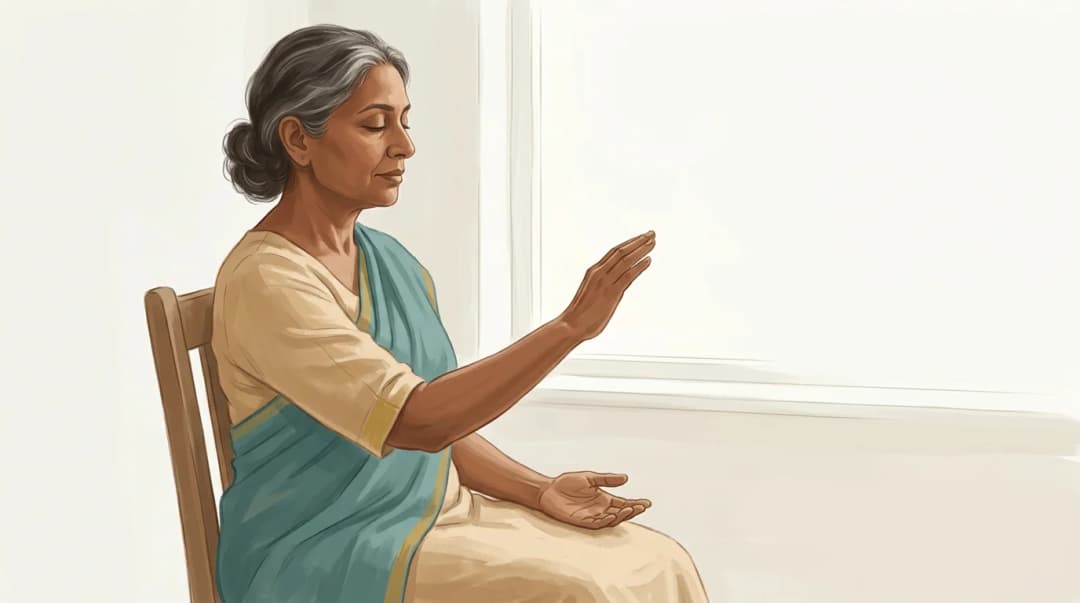
Here is the part most advice skips. Your hand turns palm up and palm down because the two forearm bones roll around each other. That roll happens near the elbow and near the wrist, right where the TFCC lives. Beyond those two places, the shoulder can add a great deal of turn, and the trunk a little more.
When the shoulder stays parked, the forearm has to produce the whole turn by itself. The end of the ulna and its small cushion take the difference. Let the elbow drift and the shoulder roll a little, and the same key turns with far less wrist.
This is the ground the Feldenkrais Method® works on. A Feldenkrais® lesson does not treat a tendon or a cartilage. It slows a movement down until you can feel where the effort gathers, then invites the rest of the arm to take part. In my teaching I often begin with the hand turning gently one way and the other. Then we follow that turn upward, past the elbow, into the shoulder. At Feldy the lessons are spoken aloud, so you can lie down, close your eyes, and let the whole arm learn the turn. Our Feldypedia article on repetitive strain from keyboard use shows how effort quietly gathers in the smallest joints during desk work.
Thumb side or little finger side?
Where the wrist hurts is a useful clue. Pain on the thumb side, worst when you pinch and lift, points to a different pair of tendons. Our guide to de Quervain tenosynovitis treatment covers that side. Ulnar wrist pain is the twisting and leaning story. If your ache moves around, our wider guide on how to relieve wrist pain covers the habits that keep any wrist busy. For something to do today, try our gentle wrist stretches lesson. Our somatic exercises for beginners lesson is the wider starting point for the whole arm.
When to see a clinician
Some signs ask for an appointment rather than patience. Pain that began with a fall needs checking, often with imaging, because the small hook of hamate bone can break and hide for weeks. A click with weakness, a swollen wrist, and tingling in the ring and little fingers all belong in a clinic. So does an ache that has outlasted a few weeks of sensible care. Everything here sits alongside a clinician's advice.
Find where to start
Several movement methods work with a wrist that dislikes twisting, and they work in quite different ways. Knowing which one fits you saves a few weeks of guessing.
Which approach suits a wrist that dislikes twisting? Take the 60-second Movement Match quiz: three questions, and you see the method most likely to suit you.
Learn to listen to your body
Now for the practice that trains it. The Feldy program sharpens your attention through slow, attentive Feldenkrais® lessons, so everyday movement feels lighter and more your own. Gentle, guided, and self-paced.
Start my free 7-day trialNo credit card needed.
Common Questions about ulnar wrist pain (FAQ)
What is the best way to settle ulnar wrist pain at home?
Change the two or three tasks that reliably provoke it, so the wrist twists and leans less for a few weeks. Keep the forearm moving in small, easy turns rather than holding it still. Let the elbow and shoulder join every twist, from keys to jar lids. If a clinician suggests a splint or strap, wear it for the tasks that hurt and pair it with those changes rather than relying on it alone.
What should I avoid when the little finger side of my wrist hurts?
Avoid gripping hard while the forearm turns: wringing, jar lids, stiff keys and screwdrivers. Avoid leaning your body weight on a flat hand with the wrist bent back, as in push ups and some yoga poses. Avoid a mouse hand that angles out toward the little finger for hours. And avoid forcing a stretch into the sore corner, since a cushion or tendon that is already irritated tends to answer force with more soreness.
Who should skip gentle movement for ulnar wrist pain and see someone first?
Anyone whose pain started with a fall, since a fracture can hide on that side of the hand. Anyone with a swollen or hot wrist, a click that comes with weakness, or tingling in the ring and little fingers. People with inflammatory arthritis or a recent wrist operation should follow their clinician's plan first. For everyone else, small comfortable movement is generally reasonable, and it sits alongside clinical care rather than replacing it.
How often should I practise the forearm turning ideas?
Little and often beats one long session. A minute or two of slow, easy turns a few times a day, with the elbow and shoulder joining, is plenty while the wrist settles. Bring the same attention to real tasks: notice how you turn a key or a tap, and let more of the arm take part. A full guided Feldenkrais® lesson two or three times a week is a good rhythm for learning the pattern deeply.
How many weeks before ulnar wrist pain usually eases?
Once the provoking tasks change, many wrists feel calmer within two to four weeks and settle over two to three months. Cartilage and tendon tissue take their time, so think in weeks, not days. A wrist that keeps being asked to twist under load can grumble for far longer. If nothing has shifted after six weeks of genuine care, ask a clinician to look rather than waiting on.
How is ulnar wrist pain different from de Quervain on the thumb side?
They sit on opposite edges of the same joint and have different triggers. De Quervain involves two thumb tendons and flares when you pinch and lift: a kettle, a baby, a phone. Ulnar wrist pain involves the little finger side and flares when the forearm twists under load or the hand bears weight. The care overlaps, since both ease when the shoulder and elbow share the work, but the tasks to change are different.
Which symptoms mean I should book an appointment rather than wait?
Pain after a fall onto the hand, because the small hook of hamate bone can fracture and go unnoticed. A click or clunk that comes with weakness in the grip. Visible swelling, or numbness and tingling in the ring and little fingers. An ache that has lasted beyond a few weeks despite changing the tasks that provoke it. A doctor or hand therapist can examine the wrist and decide whether imaging is needed.
Learn to listen to your body
See the programRelated resources
De Quervain Tenosynovitis Treatment: A Gentler Approach
The thumb side of the wrist hurts because of how often it is asked, not because it is weak. What treatment usually involves, and the daily habits that decide how fast it settles.
Pain in the Inner Elbow When Straightening the Arm, Explained
The inside of the elbow complains as the arm opens out. Usually that is a tendon, sometimes a nerve, and now and then a joint that stiffened after a knock.
Your balance got better, but did your sense of where your body is get better too
Ready to start moving better?
Gentle, guided lessons for your body. Try your first one free, no credit card required.