
Afraid to Move After a Flare? Start Smaller Than Feels Useful
Why fear of moving often stays after a pain flare, how pacing and small steps work in plain words, and a gentle way to begin again between physio sessions.
 Chava SoraniGuild Certified Feldenkrais Practitioner (GCFP)
Between Sessions, No. 6: the Feldenkrais Method® alongside physiotherapy.
Your back flared up last week. It is calmer now, and your physiotherapist says it is time to move again. But you are scared. Each time you bend down, part of you waits for the pain.
So how do you start again when you no longer trust your body? Start smaller than feels useful, and build from there.
Maybe last time you pushed through, and the flare came back worse. If so, it is understandable that you are more careful now. Fear after a flare is not weakness. It is something your body learned from pain.
Why fear matters after a flare
In the first days of a flare, fear does a useful job. It slows you down. But when it stays after the flare has settled, it can make your days smaller: shorter walks, less bending, less of what you enjoy.
A review that pooled data from more than 9,500 people in pain found a clear link. People who were more afraid of pain also tended to have more difficulty with everyday activities (Zale and colleagues, 2013). The studies measured both at the same moment, so they cannot tell us which came first. Still, they suggest the fear deserves some care too, not only the pain.
Our Movement Pulse piece looks at how fear of moving and confidence pull each other along, week by week.
Small steps, planned ahead
Physiotherapists often use two simple ideas.
Pacing means you decide how much to do before you start, and you stop there, even on a good day. On a harder day you do a little less, but not nothing.
Graded exposure means you return to a movement you have been avoiding. Start with a step you can manage, and build up over days or weeks.
Both share one rule of thumb: choose an amount you could repeat tomorrow, even on a harder day. It may feel too small to matter. That is fine. Your physiotherapist can help you choose the first step, so talk to them about your own program.
Where Feldenkrais fits
I am not a physiotherapist. I am a Feldenkrais teacher, and many of the people in my classes, and many Feldy users, also see a physiotherapist.
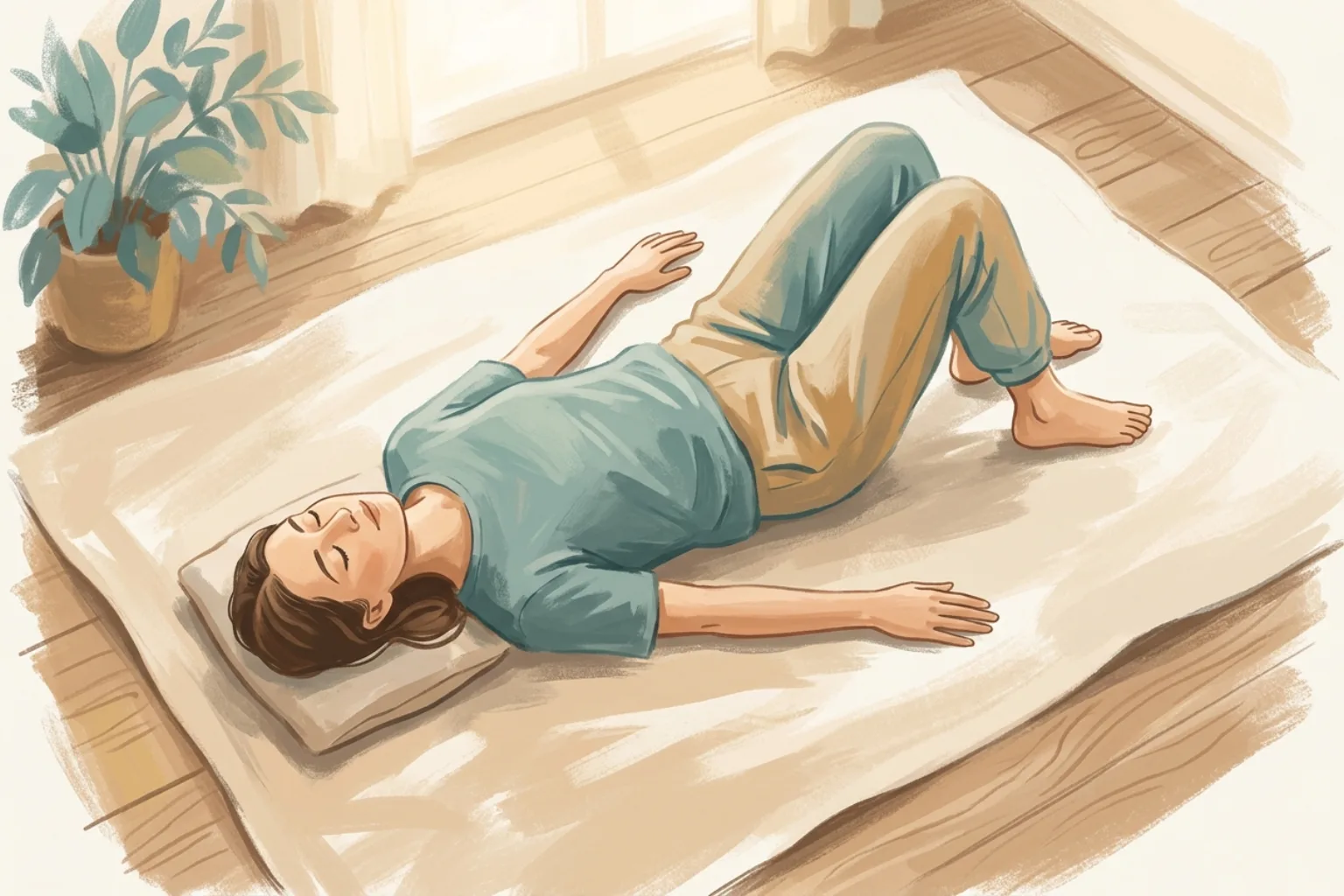
In an Awareness Through Movement® lesson, you move slowly and in a small range, usually lying down. You choose how far to go, and you rest often. When you are afraid to move, that can make a first step feel possible.
In a small trial, 30 women with long-lasting low back pain did the same stabilization exercises for eight weeks, and half also had Feldenkrais sessions. Fear of movement fell in both groups, and more in the group that added Feldenkrais. Their pain eased more too (Saki and colleagues, 2025). The trial was small and ran at one university. The Feldenkrais group also spent more time in each session, and nobody checked what happened after the eight weeks. Our Pulse piece tells more.
A lesson doesn't replace the exercises your physiotherapist gave you. It can sit beside them, on the days between sessions. Sore after a session rather than after a flare? See No. 1 in this series.
A small thing to try today
If it fits your physiotherapist's plan, here is one way to begin.
- Lie on your back on a bed or on the floor, knees bent, feet standing.
- Notice your back on the surface under you. Where does it press, and where does it lift?
- Tip both knees a little to the right, and bring them back to the middle. Keep it smaller than you think it needs to be.
- Do this a few more times, slowly, staying where it feels easy. Then rest.
- Tip both knees a little to the left, just as small. Is one side easier? Rest.
- Notice your back on the surface again. What has changed?
Tomorrow you can do the same again. When it has felt easy for a few days, ask your physiotherapist about a next step.
Who this is not for, and what to ask
A gentle lesson is not the place to start if this flare feels different from your usual ones, or if it came after a fall or an injury. New weakness, numbness in the saddle area (where you sit on a bike seat), or changes in bladder or bowel control need prompt medical review. And if you have precautions after surgery, check with your surgeon or physiotherapist first.
Some questions for your next session:
- What is a good first amount for me, and how will I know when to add more?
- Which movements am I avoiding that we could practise together, in small steps?
- Would a short, gentle lesson on the days in between fit my plan?
Your physiotherapist knows your body and your history. You know how your body feels from day to day. Questions like these help you both fit the plan to your days between visits.
Gentle Lessons for the Days After a Flare
Try Feldy free for 7 days. Slow lessons, mostly lying down, at your own pace. No credit card needed.
See if Feldy fits you← Previous: What a Feldenkrais Lesson Actually Is, for Physiotherapists · Next: When Pain Education Lands as "It's in Your Head" →
Start your free 7-day trial
Start free trialMore Articles
Sore After Physical Therapy? What to Do the Next Day
Soreness after physical therapy is often a normal part of the work. What to watch for, and how gentle movement can sit alongside your program.
Oct 4, 2026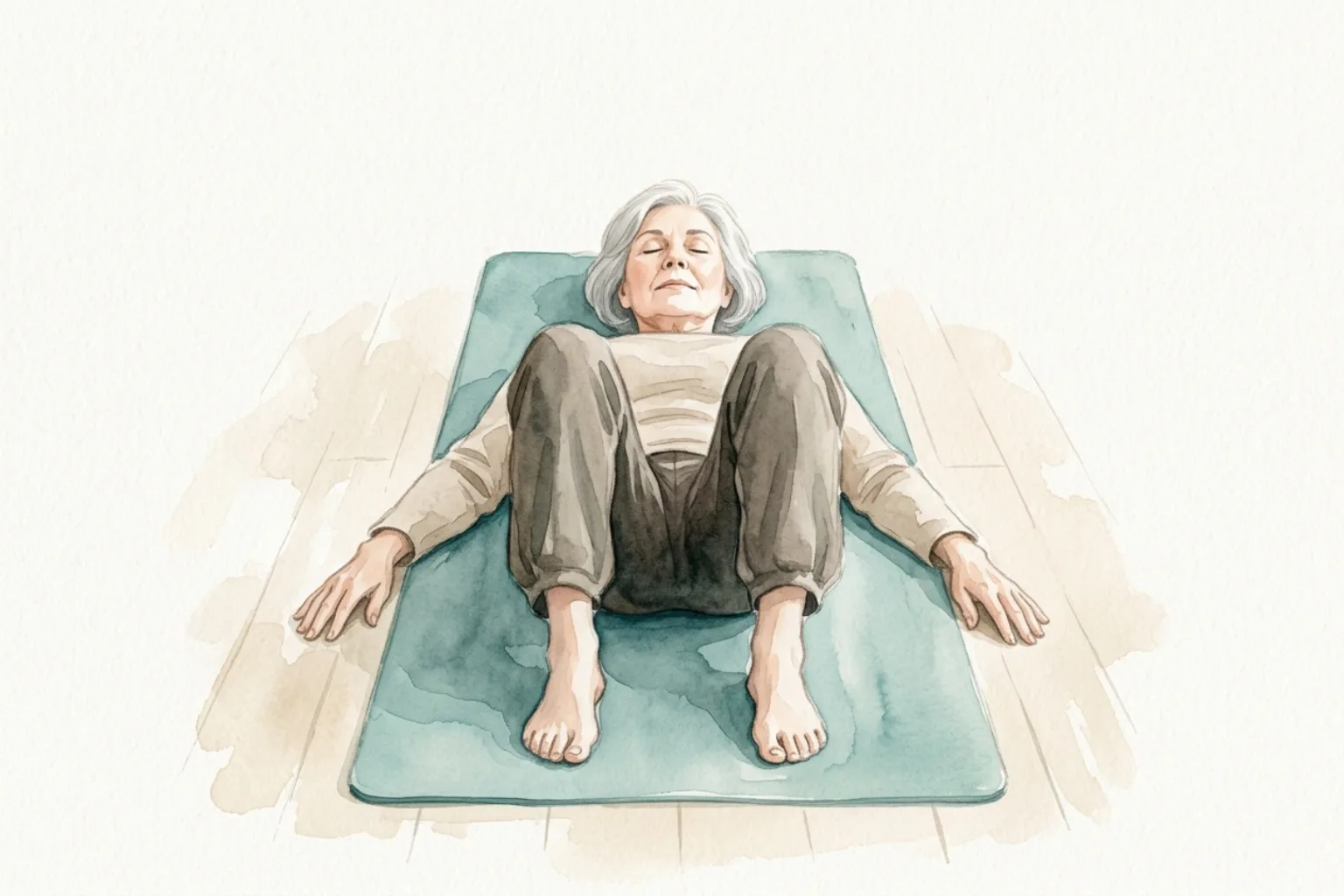
Same Exercises, Plus Awareness: What Two Trials Added to Core Stabilization
Two small trials kept a stabilization program exactly as it was and added a Feldenkrais part. What changed, what did not, and what we still do not know.
Oct 19, 2026
Somatic Movement: Where Feldenkrais Fits
Is Feldenkrais somatic movement? What the word somatic points to, and where the Feldenkrais Method sits among the many somatic practices.
Nov 20, 2026Ready to Start Moving Better?
Try your first lesson for free. No credit card required.