
Four studies on thinking after 60 point to attention, not effort
Slow practice, balance work and unusual walks each gave thinking a lift in recent research. What they share is where the attention goes.
The usual advice for keeping your mind sharp is to work it harder. Do the crossword. Learn a language. Count backwards while you walk.
Four recent pieces of research suggest something quieter. The movement that seemed to help thinking was the kind that holds your attention while you do it.
The slowest one ranked high
A review in Maturitas pooled 110 trials in adults over sixty, 8,130 people who were cognitively healthy at the start. The researchers grouped the trials by type of exercise and by the mental skill each one tested.
No type won everywhere. Aerobic exercise came out on top for overall thinking and for language. But mind body practice, the group that holds tai chi, yoga and qigong, ranked highest for attention, for planning and switching, and for how quickly the mind takes things in. These practices look different, but they have something in common. They ask you to keep noticing your body as it moves.
Staying upright is a thinking task
A review from Stony Brook University gathered 54 studies of balance training in 4,750 adults aged sixty and over. Thinking improved by a small amount. The clearest result was in processing speed, how quickly you take in information and respond.
That makes some sense. Balance is a constant conversation between the feet, the inner ear, the eyes and the brain. Your brain is always working out where your weight is and how to adjust. It is a skill that tends to change with age, and it leans heavily on attention.
A puzzle on top added nothing
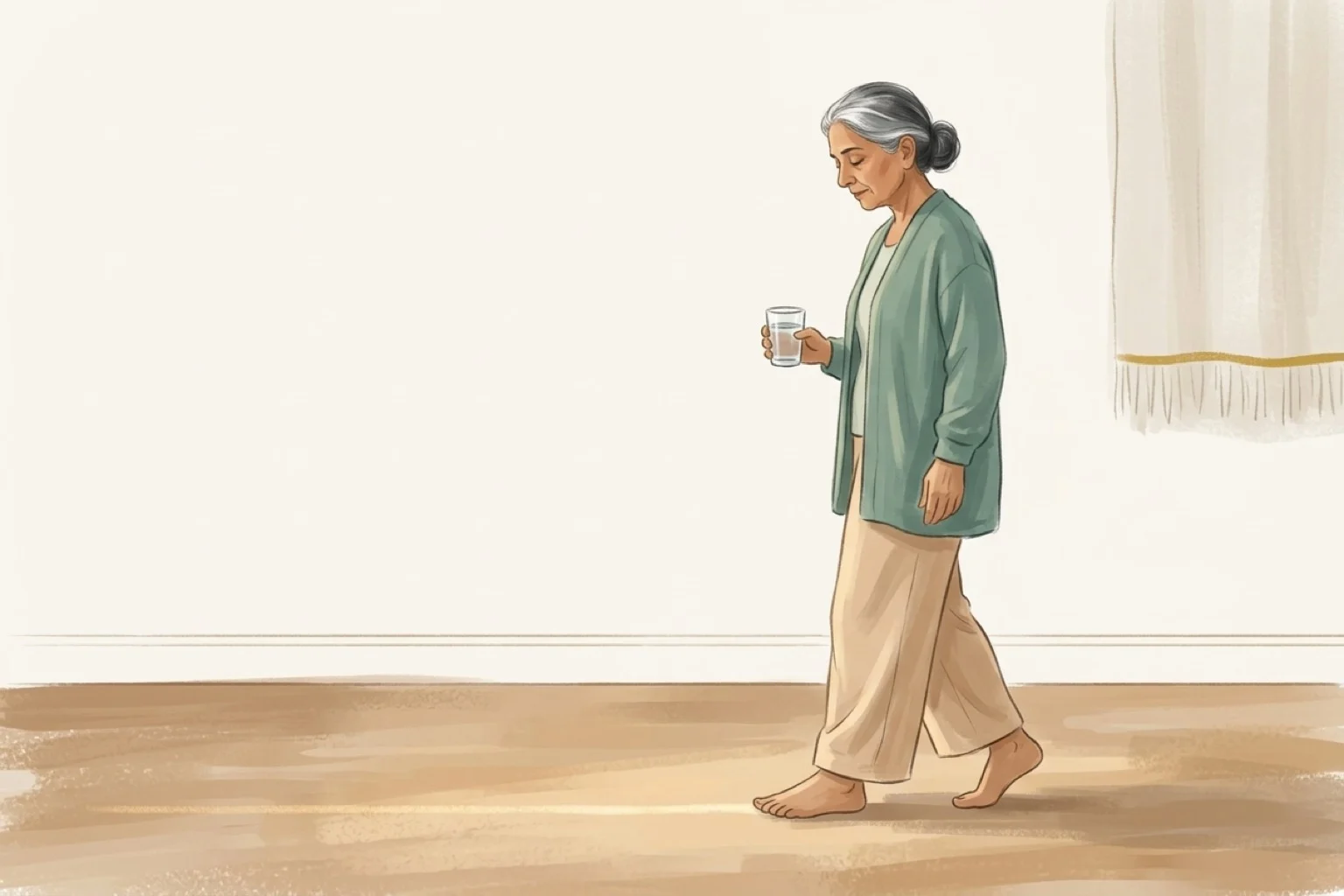
Then a small trial in Istanbul tested the "work it harder" idea directly. Ninety adults aged 65 and over, all living with brain fog, did twelve sessions of unusual walking: heel to toe, sideways, backwards, in a figure of eight, carrying a cup of water. Half also answered mental tasks as they walked.
Both groups improved on a standard thinking test. Adding the puzzles made no measurable difference. The trial lasted only four weeks and had no group that didn't walk, so it can't say how much came from the walking itself. Still, the walks were already demanding. Nobody walks backwards on autopilot.
Attention takes a season
The fourth piece looks at twelve years of reviews on qigong and tai chi for mild memory problems. The newest pooled 21 trials and 1,429 older adults, and scores rose on nearly every measure. Another found the benefit to overall thinking only in programmes that ran eleven weeks or more. Many of these trials are small and overlap, so the evidence may look stronger than it really is. But the question is starting to shift from whether slow practice helps to how long it takes to learn.
The better question
Most advice about the ageing brain asks how much. How hard, how fast, how many puzzles. The Feldenkrais Method® asks a different question: how. Where is your weight? Which side moves first? What changes when you turn the other way?
In an Awareness Through Movement® lesson I slow a movement down and change its usual order, so that attention has something new to notice inside the movement itself.
None of these studies tested Feldenkrais, and attention is my reading of what they share, not something they measured on its own. Coordination and simple routine may play a part too.
But the pattern is familiar from my classes. People often say their head feels clearer afterwards. Quieter.
Next time you walk, what might you notice if you stopped counting and simply paid attention to the walking?
Feel It for Yourself
A free 7-day trial of the Feldy online movement program. Voiced by Chava. No credit card needed.
See if Feldy fits youThese studies are shared for general interest. Gentle movement sits alongside, never in place of, advice from your doctor, especially if memory or thinking changes are new or getting worse.
Start your free 7-day trial
Start free trialMore Articles

Attention: Where You Place It, Change Begins
In a Feldenkrais lesson, moving more freely rarely comes from trying harder. It comes from where you place your attention. Here is what that quietly changes.
Aug 2, 2026
Same Exercises, Plus Awareness: What Two Trials Added to Core Stabilization
Two small trials kept a stabilization program exactly as it was and added a Feldenkrais part. What changed, what did not, and what we still do not know.
Oct 19, 2026
Curiosity: Gentler Than Correction
What changes when the question in your mind shifts from "Am I doing it right?" to "What do I notice?"
Oct 16, 2026Ready to Start Moving Better?
Try your first lesson for free. No credit card required.