

Piriformis Syndrome Exercises: Gentle Lying Down Movements
Piriformis syndrome exercises that help most are gentle, slow hip and pelvis movements done lying down, with no pressing into pain. Try one easy lesson.
Before you begin. Piriformis syndrome can look a lot like sciatica coming from the lower back, so please have the cause checked by a doctor or physical therapist. Stop if the pain spreads down the leg or tingling grows. Numbness, leg weakness, changes in bladder or bowel control, or pain after a fall need a clinician the same day.
The lesson
About 5-10 minutes. Move slowly, do less than you can, and stay well below any pain. Rest whenever you need to.
Prefer to listen than read?
Feldy voices gentle lessons like this for lower back pain, so you can close your eyes and follow along.
- 1
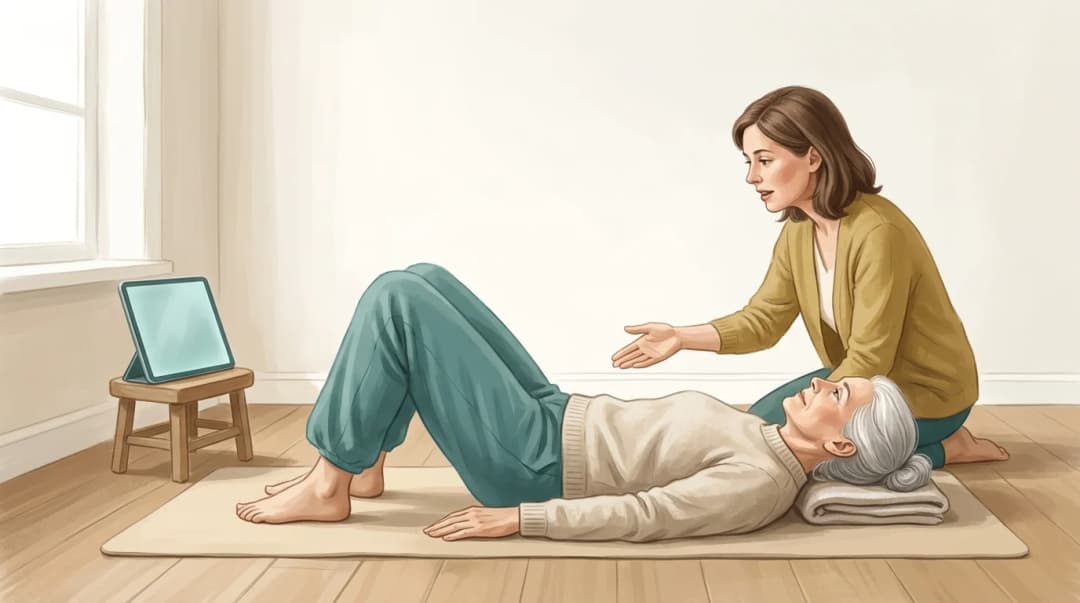
Settle on the floor. Rest on your back with both knees up and your feet planted. Which parts of your pelvis press into the floor?
- 2
Knees tilting. Tip both knees toward your right, an easy distance, and return them upright. Take your time with it.
- 3
The other side. Repeat toward the left, then rest. Is one direction easier than the other?
- 4
One foot turning. Lift nothing. Let your right foot roll a little outward, then inward, while the heel stays on the floor. Rest after a few turns.
- 5
The left foot. Do the same with your left foot, rolling out and in. Make it smaller if the buttock complains, or only imagine it.
- 6
Closing scan. Stand both feet and lie quietly. Notice the back of your pelvis on the floor. What feels different from the start?
Let Feldy guide you, eyes closed
You just read these steps. In the Feldy program, a calm voice guides you through each gentle move, so your attention can stay in your body instead of on the screen.
Try Feldy Free for 7 daysNo credit card needed.
Piriformis syndrome exercises work best when they are gentle, slow hip and pelvis movements done lying down, such as tilting the knees a little and turning the foot in and out, without pressing into pain. This page starts with one short lesson, then explains why this kind of movement suits a sensitive buttock and who should check with a clinician first.
The piriformis is a muscle under the glutes, and the sciatic nerve passes close beside it. When the muscle is tense, it can ache. It may also irritate the nerve. Piriformis syndrome is thought to account for only about 0.3% to 6% of low back pain and sciatica cases (StatPearls, 2023). So the same ache can have other sources, and an assessment is worth having.
Why gentle piriformis syndrome exercises suit a sensitive buttock
A guarded muscle tends to grip harder when it is pulled. Slow movement lying down gives it an easier message. Your weight is on the floor, so the buttock does not have to hold you up. You can then explore small turns of the hip and pelvis, and see what feels comfortable.
This is the thinking behind the Feldenkrais Method®: attention and ease first, effort second. We are not trying to lengthen the muscle by force or reach a position. We are looking for a lighter way to move. If your pain travels down the leg, our article on sciatica and nerve related back pain is a good next read.
When to try it, and when to check first
Try this when the ache is dull or tight, and sitting or turning over in bed feels stiff. Do it on a firm, padded surface, at a time you are not rushed.
Check first with a doctor or physical therapist if you have numbness, weakness, or changes in bladder or bowel control. The same goes for pain after a fall, or pain that is sharp and getting worse. These need a clinician the same day, not a movement lesson. If you are unsure what is behind your pain, our page on the piriformis syndrome test explains what the usual checks look at.
How this differs from forceful stretching
Many online routines ask you to pull a knee to the chest or pin the ankle across the thigh and lean in. That can be too much for a nerve that is already touchy. Our guide to piriformis syndrome exercises to avoid lists the common ones. For a different gentle sequence on the same area, see piriformis stretches.
Night can be the hard part. If lying down is when it bites, read how to sleep with piriformis syndrome.
If you would like guidance you can follow with your eyes closed, Feldy offers audio lessons in this unhurried style, and you can start a free week to try them.
Find where to start
If you are not sure whether Feldenkrais is the right kind of movement for your hip, there is a short way to find out.
Not sure which movement method fits you? Take the 60 second Movement Match quiz, answer three quick questions and get one movement method that suits you.
Common Questions about piriformis syndrome exercises (FAQ)
Are piriformis syndrome exercises safe if I have sciatica?
Gentle ones usually are, but the cause matters. Piriformis syndrome and sciatica from the lower back can feel alike, so have it assessed first. Keep every movement slow and small, and stop if the pain spreads down the leg or tingling grows. Numbness or weakness needs a clinician.
How often should I do piriformis syndrome exercises?
A short, easy round once or twice a day suits most people. Calm and regular does more than one long session. If a movement makes the ache sharper, make it smaller or rest for the day. There is no number of repetitions to reach.
How long until piriformis syndrome exercises ease the ache?
Some people notice a softer feeling in the buttock within one session. Lasting change usually comes over a few weeks of gentle, regular practice, and it varies from person to person. If nothing changes or it gets worse, see a professional.
How is this different from stretching or physical therapy exercises?
Forceful stretches pull on the muscle, which can bother a sensitive nerve nearby. These movements are slow, small and comfortable, so you explore rather than push. Physical therapy exercises can sit alongside this, and a therapist can tailor them to your own findings.
When should I see a professional?
Please book a visit with a doctor or physical therapist if you notice numbness, weakness in the leg, changes in bladder or bowel control, or pain after a fall. Also go if the ache keeps getting worse or does not ease over a few weeks. This page is gentle self-care, not a diagnosis.
What is the best exercise for piriformis syndrome?
There is no single best one, and it depends on the person. Many people find slow knee tilting while lying on the back the most comfortable place to start, because nothing is pulled hard. The best movement is the one that stays easy and does not wake the pain.
What exercises should I avoid with piriformis syndrome?
Avoid anything that pulls hard on the buttock or sends pain, tingling or numbness down the leg. Deep forceful hip stretches, bouncing, and long hard sitting twists are common examples. If a movement sharpens the ache, stop and choose a smaller one.
A gentler way through back pain
See the programRelated resources
Piriformis Stretches: Gentle Relief for the Glute
Soft piriformis stretches that ease the deep glute without straining a sensitive nerve. Slow, small, beginner-friendly movements you can return to any time.
Gentle Sciatica Exercises: A Soothing Daily Set
A simple set of gentle movements that ease sciatica-related discomfort. Slow, small, and beginner-friendly, so you can return to it any time.
Online back programs that eased pain noticeably all included a person
Ready to start moving better?
Gentle, guided lessons for your body. Try your first one free, no credit card required.