
Pelvic Floor Exercises for Pregnant Women: A Gentle Awareness Lesson
A gentle awareness lesson for pregnancy that adds the quieter half of pelvic floor work: sensing, breathing, and letting go, in safe supported positions.
Before you begin. This is gentle self care, not medical advice, and not a substitute for care from your midwife, obstetrician or pelvic health physiotherapist. Ask them before starting anything new, especially with a high risk pregnancy, bleeding, pelvic girdle pain, a cervical stitch, or any advice to limit activity. From the second trimester avoid lying flat on your back for long. Stop for pain, contractions, dizziness, bleeding or leaking fluid.
The lesson
About 8-10 minutes. Move slowly, do less than you can, and stay well below any pain. Rest whenever you need to.
Prefer to listen than read?
Feldy voices gentle lessons like this for menopause, so you can close your eyes and follow along.
- 1
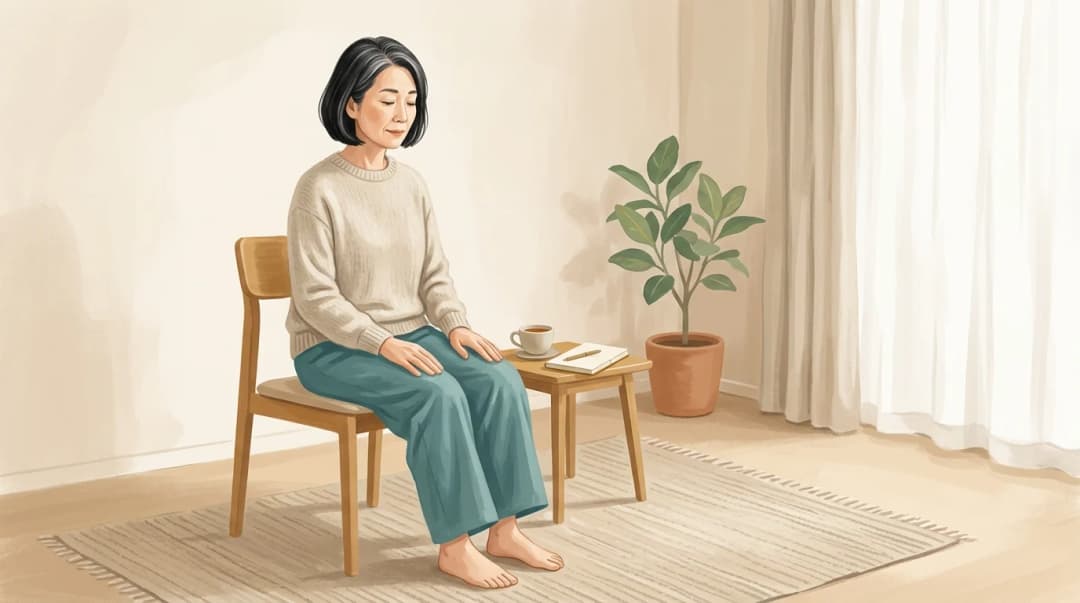
A supported position first. Please lie on your side with a pillow under your head and another between your knees, or sit on a firm chair with your feet flat on the floor. In pregnancy we do not lie flat on the back, so let one of these supported positions carry your weight.
- 2
Noticing the starting state. Take a moment to feel where your weight rests on the mattress or the chair. Does anything around your pelvis feel held, without you having asked it to?
- 3
The breath arriving low. Notice your breathing without changing it. Can you feel a faint echo of each breath low in your belly, somewhere between your hip bones?
- 4
A very small tilt of the pelvis. Let your pelvis tip a tiny bit forward and back, so small that someone watching would see nothing. If even this feels like too much, make it smaller still, or simply imagine it.
- 5
Softening on the in breath. As the air comes in, notice whether the soft area between your sitting bones can let go a little, the way your belly does. If you like, follow it with the lightest imaginable lift as the air leaves, then let even that go completely.
- 6
A quiet rest. Stop, and rest in your supported position for a few slow breaths. Let everything settle.
- 7
Comparing with the beginning. Before you get up, bring your attention to the area around your pelvis once more. What, if anything, feels different from when you began?
Let Feldy guide you, eyes closed
You just read these steps. In the Feldy program, a calm voice guides you through each gentle move, so your attention can stay in your body instead of on the screen.
Try Feldy Free for 7 daysNo credit card needed.
Most pelvic floor exercises for pregnant women begin and end with squeezing. Midwives and pelvic health physiotherapists often suggest Kegels, where you tighten and lift the muscles at the base of the pelvis as if pausing the flow of urine, then let them go again. That advice is sound, and this page does not argue with it. It adds the half that is taught far less often: letting go. A pelvic floor that only knows how to tighten is not a well coordinated pelvic floor, and many people in pregnancy quietly hold tension there all day without noticing. The short lesson above, drawn from the Feldenkrais Method® and its Awareness Through Movement® lessons, is about sensing this area and letting it soften with your breath, in positions that remain safe as your pregnancy grows.
Why pelvic floor exercises for pregnant women include letting go
The pelvic floor is a sling of muscle at the base of the pelvis. It supports the bladder, the bowel and the womb, and in pregnancy it carries a growing weight month after month. It is not a still structure. It moves a little with every breath, drifting down as air comes in and back as air leaves, and it changes shape whenever the pelvis tilts. That is why quiet breathing and tiny pelvic movements are a real doorway into this area. They let you feel it without gripping it.
Some context, held lightly. A review in the StatPearls medical library notes that pelvic floor dysfunction can affect up to 50% of women who have borne children (StatPearls, NCBI, 2023). Pelvic floor dysfunction is a broad label for times when these muscles do not manage their everyday jobs smoothly, such as leaking a little urine or feeling heaviness low in the pelvis. The figure describes how common the topic is across a lifetime of childbearing. It says nothing about you or your pregnancy, and this lesson makes no promise to change it. What it offers is more modest: a clearer, kinder acquaintance with a part of your body that pregnancy asks a lot of. For a closer look at the quiet holding many of us carry in this area, see our Feldypedia entry on pelvic floor awareness and tension.
How to keep pelvic floor exercises safe during pregnancy
From around the second trimester, maternity care providers usually advise against lying flat on your back for long. The weight of the womb can press on a large vein that returns blood to the heart, which can leave you feeling faint. So this lesson never asks for that position. Lie on your side with a pillow between your knees, sit on a firm chair, or lean back propped up on cushions, whichever feels most comfortable today.
Some pregnancies need a conversation before any new practice, however gentle. If your pregnancy is high risk, if you have bleeding or a cervical stitch, if you have pelvic girdle pain, which is pain around the joints of the pelvis and is common in pregnancy, or if you have been advised to limit activity, please speak with your midwife, obstetrician or pelvic health physiotherapist first. Their care is clinical and personal, and a quiet awareness practice like this one sits alongside it, never in place of it. Whatever your situation, stop if you feel pain, contractions, dizziness, bleeding or leaking fluid, and let your care team know.
Pelvic floor awareness in pregnancy alongside Kegels and other movement
Kegels remain the familiar half of this work, and for good reason. They are simple, they are widely recommended, and a pelvic health physiotherapist can tailor them to your situation. This lesson is the quieter companion, the letting go between the squeezes. Prenatal yoga and Pilates are different again. They reach the same region through classes, postures and sequences, a different mechanism from the slow unstructured attention used here, and many people happily combine them.
If this way of sensing appeals to you, our broader lesson on exercises for the pelvic floor muscles explores the same region without a pregnancy focus, so keep to the supported positions described above if you borrow its ideas. For hips that ache as your posture shifts, these stretches for hips during pregnancy carry the same gentleness into another area that works hard in these months. The same patient spirit runs through the wider Feldy program for women's changing bodies, and Feldy's free 7 day trial lets you hear how a fully guided audio lesson feels from home.
Find where to start
Pregnancy changes what your body wants from movement, sometimes week by week. If you are unsure whether breath, hips, back or something else is the kindest place to begin right now, a short quiz can point the way.
Looking for one clear place to begin in pregnancy? The Movement Match quiz asks four quick questions and returns the movement method that fits you, plus a complementary one.
Common Questions about pelvic floor exercises for pregnant women (FAQ)
Are pelvic floor exercises safe during pregnancy, and who should check first?
Gentle breathing and small comfortable movement in supported positions suits most pregnancies, but ask your midwife, obstetrician or pelvic health physiotherapist before you start anything new. Check first especially if your pregnancy is high risk, if you have bleeding, pelvic girdle pain or a cervical stitch, or if you have been told to limit activity. Stop and contact your care team if you feel pain, contractions, dizziness, bleeding or leaking fluid.
How often should I practise this awareness lesson while pregnant?
Two or three unhurried minutes on most days is enough. Since there is no effort involved, you can come back to it whenever it crosses your mind, seated in the afternoon or side lying before sleep. Let comfort, not a timetable, set the pace.
How long until I notice anything?
Many people can feel the breath moving low in the body, and a little softening around the pelvis, within the first session or two. That is the whole aim of the practice: clearer sensing, not a measured result. If nothing feels different yet, that is a common and completely fine answer.
How is this different from Kegels?
Kegels ask you to squeeze and lift the pelvic floor muscles on purpose, and midwives and pelvic health physiotherapists often recommend them in pregnancy. This lesson looks after the other half of the skill: noticing the area and letting it soften with the breath. The two sit comfortably side by side, and neither replaces the other.
What are the best pelvic floor exercises for the third trimester?
By the third trimester, comfort and position matter most. Breathing practice and tiny pelvic movements done side lying, seated, or propped up on cushions stay workable when many other positions are not, and your midwife or pelvic health physiotherapist can shape any squeezing work to fit you. Whatever you practise, keep it small and stop the moment anything feels uncomfortable.
What pelvic floor exercises should I avoid while pregnant?
From around the second trimester, avoid anything that keeps you lying flat on your back for long, since the weight of the womb can press on a large vein and leave you feeling faint. Also avoid holding your breath, straining, and any movement that brings pain or a bearing down feeling. If a routine was designed before your pregnancy, ask your midwife or a pelvic health physiotherapist to look at it with you before you continue.
Softer movement through menopause
See the programRelated resources
Exercises for the Pelvic Floor Muscles: Sensing Comes First
A gentle awareness lesson for the pelvic floor muscles: slow movement of the pelvis, hips, and breath that makes the area easier to feel, before any squeezing.
Feldenkrais® for Pelvic Floor: Not Every Floor Is Weak
Not every pelvic floor problem is a weak one. How Feldenkrais lessons compare with pelvic health physiotherapy, Kegels, Pilates, hypopressives, and yoga.
The menopause symptoms few women mention, and what eight weeks of pelvic floor work did
Ready to start moving better?
Gentle, guided lessons for your body. Try your first one free, no credit card required.